Iraq Declares Force Majeure as Iran Expands Strikes to Kuwait Refineries
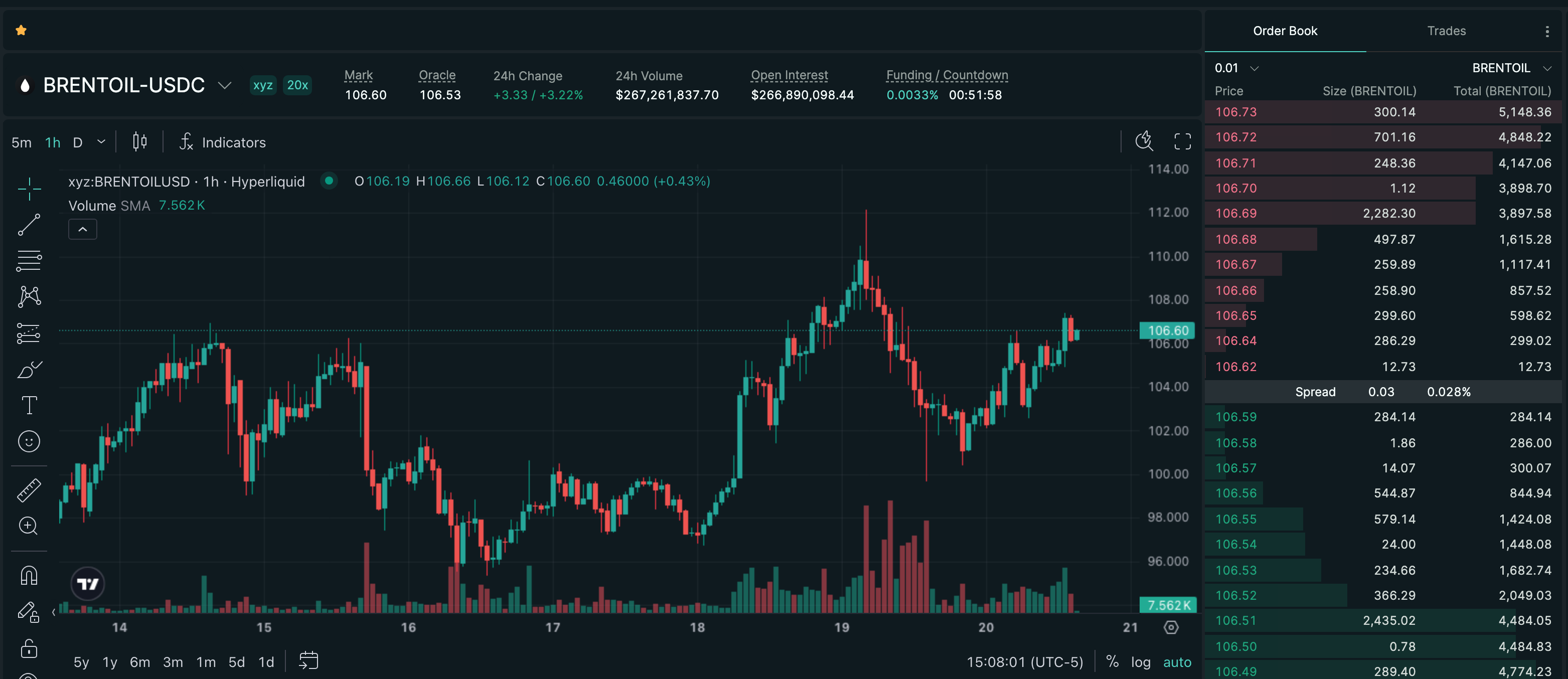
Iraq declared force majeure at all oilfields operated by foreign companies on March 20, unable to ship crude through the Strait of Hormuz after 20 days of near-total closure. Iranian drones struck Kuwait's Mina al-Ahmadi refinery for the second consecutive day, shutting down units at a facility that processes 730,000 barrels daily. The global market now faces a daily supply deficit estimated at 14 million barrels, and Brent crude settled above $112.
Mover Brief
Iraq Shuts the Door
Iraq's oil ministry declared force majeure at all oilfields operated by foreign companies on March 20, the clearest signal yet that the Strait of Hormuz closure has moved from a shipping disruption to a production shutdown. Baghdad cannot export crude through the strait, and Iraq's southern exports — which account for roughly 95% of the country's oil revenue — have cratered by 70% since the waterway went dark.
That is approximately 3 million barrels per day offline from a single producer. Iraq is OPEC's second-largest member after Saudi Arabia, and its force majeure declaration effectively tells international operators — BP, TotalEnergies, ExxonMobil, and others — that contractual obligations are suspended because the oil has nowhere to go. Storage is full, pipelines to Turkey have limited capacity, and the alternative Oman route that tankers had been using was hit by Iranian drones earlier this month.
The declaration is a legal mechanism, but the market reads it as something more fundamental: a major oil-producing nation admitting it cannot function as an exporter.
Iran's Expanding Target List
While Iraq's force majeure grabbed the headline, Iran spent March 20 expanding its campaign against Gulf energy infrastructure. Drones struck Kuwait's Mina al-Ahmadi refinery for the second consecutive day, starting fires across multiple units and forcing a partial shutdown of a facility that processes 730,000 barrels per day. The Mina Abdullah refinery was also hit.
The strikes came on Eid al-Fitr. Iran's targeting has now expanded well beyond the Strait of Hormuz chokepoint to hit upstream and midstream infrastructure across five countries. In a single 24-hour window, Saudi Arabia intercepted over a dozen drones, the UAE reported incoming threats at al-Dhafra airbase, Bahrain reported fires from shrapnel, and Qatar's Ras Laffan LNG terminal remained offline after losing 17% of global LNG export capacity earlier in the week.
The pattern is clear: Iran is systematically degrading its neighbors' energy export capacity, not just blocking transit. QatarEnergy's CEO said the Ras Laffan damage may require three to five years to repair at a cost of $20 billion in annual lost revenue. That is not a war premium that unwinds on a ceasefire headline — it is physical destruction with a multi-year recovery timeline.
The Supply Math and What Banks Are Pricing
The numbers are stark. The global market faces an estimated daily shortfall of 10 to 14 million barrels even after the IEA's record 400-million-barrel strategic reserve release. That reserve release delivers roughly 1.4 million barrels per day — against a strait that normally carries 16 million.
Goldman Sachs raised its Brent forecast above $100 for March and now models a 21-day low-flow scenario at 10% of normal Hormuz capacity followed by a 30-day gradual recovery. Their two-month disruption scenario puts Q4 Brent at $93. BofA, Barclays, Standard Chartered, and S&P Global have all raised forecasts in the past week.
The outlier calls are getting louder. Wood Mackenzie projects Brent could hit $150, and several analysts now describe $200 as plausible if the strait stays closed through Q2. Dubai crude has already traded above $150 — a $50+ spread over Brent that reflects the acute physical shortage in the Gulf. The oil shock is also pushing Fed rate cut expectations further out, as every sustained 10% oil price increase adds an estimated 0.4% to global inflation.
The bear case rests entirely on diplomacy. Netanyahu said Israel would heed Trump's call not to repeat strikes on Iranian energy sites, and Israeli officials suggested the war may end sooner than expected. If Hormuz reopens, the $30–40 war premium could unwind fast. But the physical damage to Ras Laffan, Kuwait's refineries, and Oman's port facilities means some of the supply disruption has already moved from temporary to structural.
Sources & Provenance
Citations below are preserved as structured Postgres source rows for this brief.
Citations Preserved
7
Reference links carried forward from the published mover record.
Original Signal
Open source tweetMarket Route
Direct route preserved for readers who want to inspect the tracked Hyperliquid market behind this archive entry.
Already onboarded? Open tracked market- 1CNBC — Oil prices top $112 after Iraq declares force majeure, Kuwait refineries attackedcnbc.com
- 2Al Jazeera — Iran hits Kuwaiti oil refinery as Israel renews attacks on Tehranaljazeera.com
- 3Al Jazeera — Could oil hit $200 a barrel? Analysts no longer think it is far-fetchedaljazeera.com
- 4Reuters — Goldman Sachs flags upside risks to oil prices near-termreuters.com
- 5Reuters — Another oil price jump further pushes out Fed rate cut oddsreuters.com
- 6Xinhua — Daily brief: U.S.-Israeli strikes on Iran, Day 20english.news.cn
- 7Fortune — Current price of oil as of March 20, 2026fortune.com
This content is for informational purposes only and does not constitute financial advice. Trading perpetual futures involves substantial risk of loss.
Trade BRENTOIL on Hyperliquid
Use referral code HIPERWIRE for 4% off trading fees on your first $25M in volume.
Live Market Metrics
Monitor real-time open interest and funding for BRENTOIL.