Three Ships Hit in Hormuz as the Largest Oil Reserve Release in History Fails to Hold
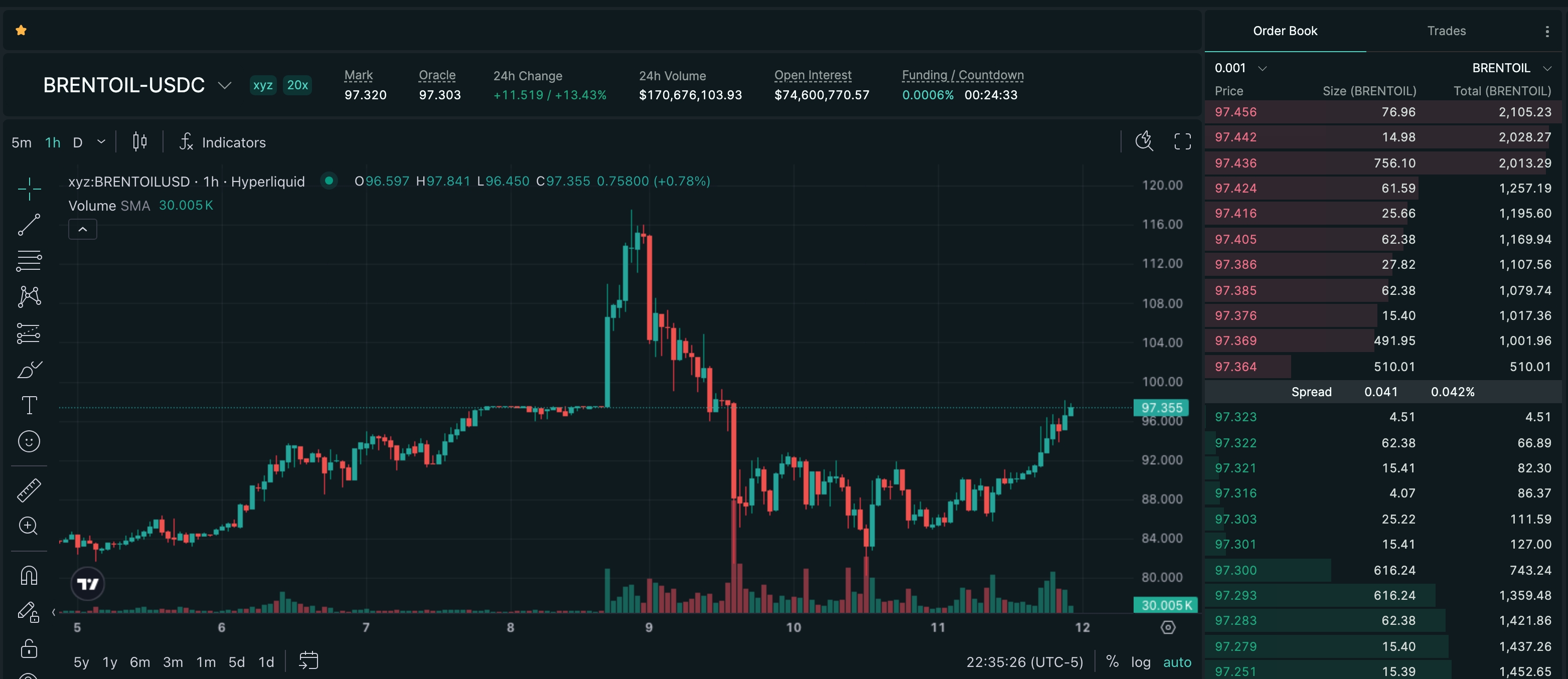
Brent crude extended above $97 on March 11 after Iran's IRGC claimed direct attacks on three commercial vessels in the Strait of Hormuz and declared that no oil would transit the waterway. The IEA's unanimous 400-million-barrel strategic reserve release, the largest in the agency's history, failed to cap the move. JPMorgan analysts noted that emergency releases peak at 1.4 million barrels per day against a 16 million barrel shortfall from the strait closure.
Mover Brief
The IRGC Claims Its Kills
The IRGC announced on March 11 that its navy struck two commercial vessels — the Liberian-flagged *Express Room* and the Thai-flagged *Mayuree Naree* — claiming both ships were "ignoring alerts and warnings from the IRGC Navy." A third vessel was hit approximately 11 nautical miles north of Oman. Three crew members from the Mayuree Naree are reported missing.
IRGC naval commander Admiral Alireza Tangsiri declared that "every vessel intending to pass must obtain permission from Iran." Ebrahim Zolfaqari, spokesperson for Iran's Khatam al-Anbiya military command, went further: "get ready for oil to be $200 a barrel." The IRGC added that any vessel linked to the U.S., Israel, or their allies would be "considered a legitimate target."
This is a meaningful escalation from the initial closure on March 2, when commercial traffic mostly stopped voluntarily. Now Iran is actively firing on ships that didn't comply. An Iranian drone also struck Oman's largest oil storage facility on March 11, extending the conflict to a non-belligerent Gulf state's infrastructure.
400 Million Barrels Weren't Enough
The IEA's 32 member countries unanimously agreed on March 11 to release 400 million barrels from emergency reserves — more than double the 182-million-barrel release after Russia's invasion of Ukraine in 2022. The U.S. will contribute 172 million barrels over approximately 120 days. Japan committed 80 million barrels. South Korea, the UK, Germany, and France pledged between 13.5 and 22.5 million barrels each.
The market's reaction was blunt. Brent briefly dipped below $85 on early reports of the release, then reversed and pushed through $97. JPMorgan Chase analysts explained the math: emergency SPR releases historically peak around 1.4 million barrels per day, but the Strait of Hormuz normally carries more than 16 million bpd. The reserve release covers less than 10% of the shortfall.
The structural problem is simple. Reserve releases are a flow tool being used against a stock problem. You can drain the SPR at 1.4 million bpd, but as long as 16 million bpd sits behind a closed waterway, you're bailing water with a teacup.
What $97 Brent Is Pricing
CENTCOM reported destroying 16 Iranian minelayers on March 10 and has struck more than 5,500 targets inside Iran, including over 60 naval vessels. But military superiority and commercial reopening are different problems. Mine clearance alone could take weeks to months, and the IRGC is still actively laying new threats while CENTCOM destroys old ones.
Meanwhile, Iran continues to ship its own crude through the waterway. At least 11.7 million barrels have moved to China via shadow-fleet tankers since the war started, though Iran's export rate has dropped from 2.16 million bpd pre-war to roughly 1.22 million bpd. The strait isn't closed to everyone — just to everyone who isn't Iran.
The IMF estimates every 10% oil price increase correlates with a 0.4% rise in inflation and a 0.15% reduction in economic growth. With Brent up nearly 50% from pre-war levels, the Dow down 500 points on March 11, and retail gasoline averaging $3.57 per gallon, the oil shock is now a macro event. Brent at $97 is pricing in a Hormuz closure that lasts longer than anyone in Washington is willing to say out loud.
Sources & Provenance
Citations below are preserved as structured Postgres source rows for this brief.
Citations Preserved
7
Reference links carried forward from the published mover record.
Original Signal
Open source tweetMarket Route
Direct route preserved for readers who want to inspect the tracked Hyperliquid market behind this archive entry.
Already onboarded? Open tracked market- 1Al Jazeera — IRGC says 'not a litre of oil' will pass through Hormuzaljazeera.com
- 2ABC News — Attacks in Strait of Hormuz intensify as Iran claims targeting commercial shipsabcnews.com
- 3NBC News — IEA 400-million-barrel release fails to bring down pricesnbcnews.com
- 4OilPrice — Iran warns oil could hit $200 per barrel as Hormuz threat escalatesoilprice.com
- 5CNBC — Iran ships oil to China through Hormuz even as war chokes waterwaycnbc.com
- 6Al Jazeera — IEA agrees to release 400 million barrels from strategic reservesaljazeera.com
- 7Al Jazeera — Oil prices swing wildly amid mixed messages over Iran waraljazeera.com
This content is for informational purposes only and does not constitute financial advice. Trading perpetual futures involves substantial risk of loss.
Trade BRENTOIL on Hyperliquid
Use referral code HIPERWIRE for 4% off trading fees on your first $25M in volume.
Live Market Metrics
Monitor real-time open interest and funding for BRENTOIL.