Brent Snaps Back 8% as Iran Escalates and Mines Appear in the Strait
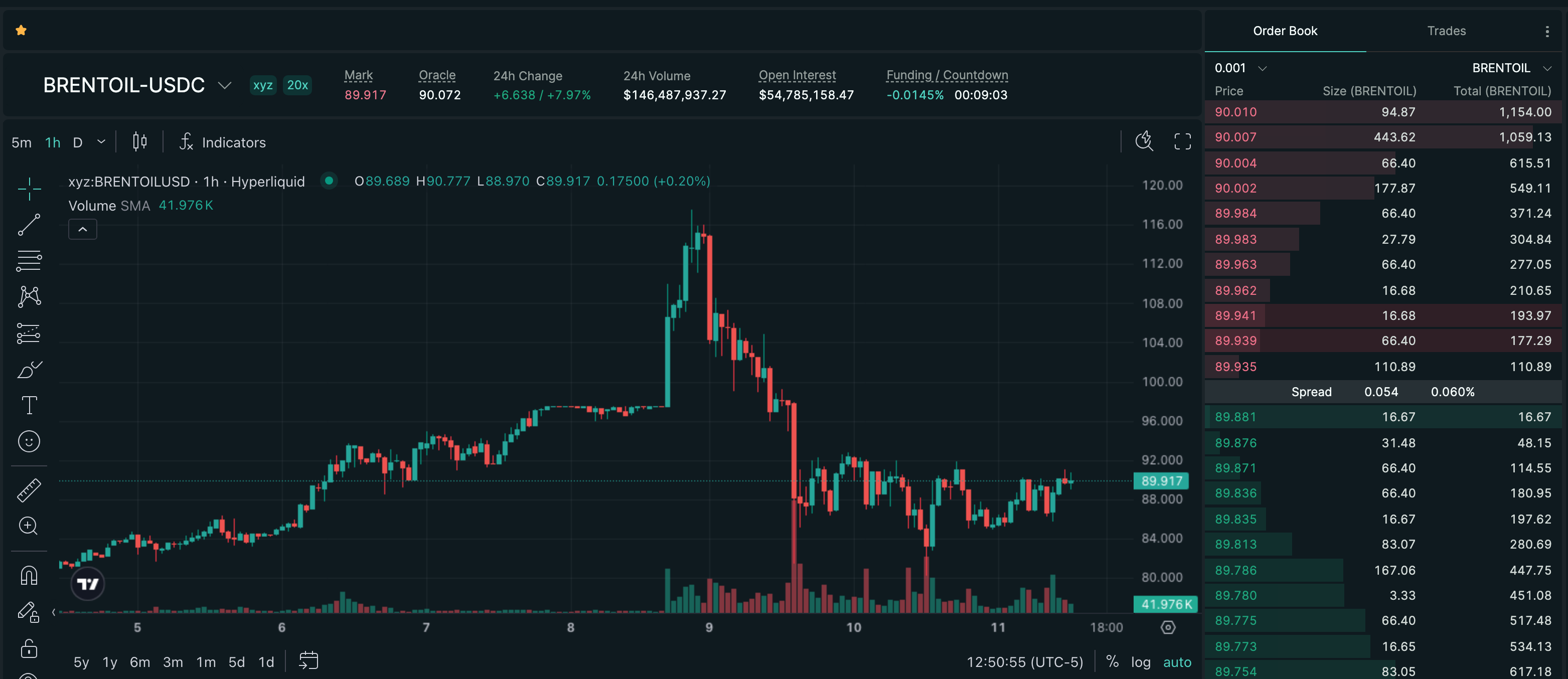
Brent crude rebounded roughly 8% on March 11 after Iran launched what state media called its most intense operation since the war began, three vessels were hit by projectiles near the Strait of Hormuz, and U.S. intelligence reported Iran is now laying mines in the waterway. The bounce erased most of the previous session's 11% crash, which had been driven by Trump's premature de-escalation signals. Even the IEA's announcement of a record 400-million-barrel strategic reserve release failed to cap the move.
Mover Brief
The Selloff That Didn't Stick
On March 10, Brent crude crashed more than 11% from above $100 to settle at $87.80 after Trump told CBS the Iran campaign was "very complete" and Saudi Aramco announced it would ramp crude flows through its East-West pipeline to the Red Sea port of Yanbu. Markets priced in a rapid de-escalation and the unwinding of the war premium that had built since late February.
That narrative lasted about 12 hours. Brent opened March 11 moving higher and touched nearly $93 before settling around $90, up roughly 8% from the previous close. The reversal came on hard evidence that the conflict is intensifying, not winding down.
Iran Escalates, Hormuz Gets Worse
Three developments drove the repricing. First, Iran launched what state media described as its "most intense and heaviest operation" since the war began on February 28, while Israel announced an additional wave of strikes on Tehran.
Second, three vessels were hit by unknown projectiles near the Strait of Hormuz, according to the UK maritime agency — a direct signal that transit risk is rising, not falling.
Third, and most consequentially, two people familiar with U.S. intelligence told CNN that Iran is now laying mines in the strait. Mine warfare is a slow-burn supply threat. Clearing mines from a shipping lane takes weeks to months even after hostilities end. If confirmed at scale, this changes the timeline for any Hormuz reopening from days to potentially quarters.
Meanwhile, Iran continues to ship its own crude through the waterway. At least 11.7 million barrels have moved to China since the war started via shadow-fleet tankers, though volumes are running at roughly 1.22 million barrels per day — well below the 2.16 million bpd Iran exported in February before hostilities.
The IEA Fires Its Biggest Gun
The IEA announced its largest-ever coordinated reserve release: 400 million barrels from member countries' strategic petroleum reserves, dwarfing the 182 million barrels released after Russia's invasion of Ukraine in 2022. Japan, South Korea (22.5 million barrels), the UK (13.5 million), Germany (19.5 million), and France (14.5 million) are among the contributors. Countries have up to 90 days to deliver.
The problem is scale. Macquarie analysts noted that 400 million barrels equals roughly four days of global oil production and 16 days of crude that normally transits the Gulf. IEA members hold over 1.2 billion barrels in emergency stocks, so this isn't close to exhausting reserves — but it also isn't close to replacing the Strait of Hormuz if the closure drags on. ING strategist Francesco Pesole put it plainly: reserve releases are "a temporary measure, and only military de-escalation can drive crude sustainably lower."
The EIA's updated forecast reinforces this. The agency revised its 2026 Brent average from $57.69 to $78.84, projecting prices above $95 per barrel for the next two months before declining to around $70 by year-end — assuming the conflict doesn't worsen.
What the Rebound Tells You
The speed of this reversal — an 11% crash followed by an 8% snap-back within 24 hours — reflects a market that has no conviction on the trajectory of the war. Trump's signals moved prices violently on March 10, but the physical reality at Hormuz moved them right back.
The structural picture hasn't changed. The strait is effectively closed to commercial traffic. Kuwait and Iraq remain in force majeure. Iranian mine-laying, if it continues, makes reopening a naval operation, not just a diplomatic one. Brent at $90 is still pricing in some probability of a near-term resolution. If the mines are confirmed at scale, the floor for crude moves meaningfully higher.
The 400-million-barrel SPR release buys time but doesn't solve the problem. Traders are now watching for two things: whether the U.S. Navy attempts a full escort operation through the strait, and whether Iran's mine-laying forces a longer closure timeline than anyone had modeled.
Sources & Provenance
Citations below are preserved as structured Postgres source rows for this brief.
Citations Preserved
6
Reference links carried forward from the published mover record.
Original Signal
Open source tweetMarket Route
Direct route preserved for readers who want to inspect the tracked Hyperliquid market behind this archive entry.
Already onboarded? Open tracked market- 1CNN: Oil prices rise as more vessels attacked near Hormuzedition.cnn.com
- 2Al Jazeera: IEA agrees release of 400M barrels from strategic reservesaljazeera.com
- 3Rigzone: EIA boosts Brent forecast in wake of Iran conflictrigzone.com
- 4CNBC: Iran ships millions of oil barrels to China through Hormuzcnbc.com
- 5Reuters: Brent crude futures fall more than 7% on de-escalation signalsreuters.com
- 6Reuters: Oil soars 25%, gold drops as Iran war jolts commodity marketsreuters.com
This content is for informational purposes only and does not constitute financial advice. Trading perpetual futures involves substantial risk of loss.
Trade BRENTOIL on Hyperliquid
Use referral code HIPERWIRE for 4% off trading fees on your first $25M in volume.
Live Market Metrics
Monitor real-time open interest and funding for BRENTOIL.