Brent Hits $110 After Israel Strikes South Pars and Iran Fires on Qatar's LNG Hub
Brent crude pushed above $110 per barrel on March 18 after Israeli and U.S. forces struck Iran's South Pars gas field, the world's largest, for the first time since the war began. Iran retaliated within hours, firing missiles at Qatar's Ras Laffan Industrial City and causing extensive damage to the complex that houses roughly a fifth of global LNG export capacity. Tehran published a list of five additional Gulf energy targets across Saudi Arabia, the UAE, and Qatar, and the IRGC declared them legitimate targets.
Mover Brief
South Pars Changes the War
Every previous strike in this conflict targeted downstream infrastructure — ports, storage tanks, shipping lanes. The Israeli strike on South Pars on March 18, coordinated with the United States, hit Iran's upstream production for the first time. South Pars is the world's largest natural gas field, producing 730 million cubic meters per day in 2025. Facilities at Asaluyeh, the onshore processing hub, were also hit.
Iranian state media reported the fire was brought under control with no immediate casualties. But the strategic signal matters more than the damage assessment. South Pars is shared with Qatar — Iran's side feeds its domestic grid and gas exports to Iraq, while Qatar's North Field supplies roughly a fifth of global LNG. Striking this field introduces the possibility that the war could disrupt not just oil transit through Hormuz, but actual hydrocarbon production on both sides of the Persian Gulf.
Iran's gas flows to Iraq halted after the attack. Iran supplies between 30% and 40% of Iraq's electricity and gas needs. The downstream effects of this single strike extend well beyond oil markets.
Iran Fires on Qatar and Names Five More Targets
Tehran's response was immediate and deliberately escalatory. The IRGC published a target list of Gulf energy facilities and declared them "direct and legitimate targets":
- Qatar: Ras Laffan refinery, Mesaieed petrochemical complex
- Saudi Arabia: Samref oil refinery, Jubail petrochemical hub
- UAE: Al Hosn gas field
Iran didn't just threaten. Missiles struck Qatar's Ras Laffan Industrial City, and Qatar's state oil company reported "extensive damage" to the complex. Qatar — a non-belligerent — responded by condemning the strikes as "a dangerous and irresponsible step" and expelling two senior Iranian diplomats. Saudi Aramco evacuated personnel from the Samref refinery in anticipation of further strikes.
This is the broadest geographic escalation since the war began on February 28. Iran is now actively striking energy infrastructure in countries that aren't party to the conflict, specifically because those countries host alternatives to the export routes Iran has already closed.
What $110 Brent Is Pricing
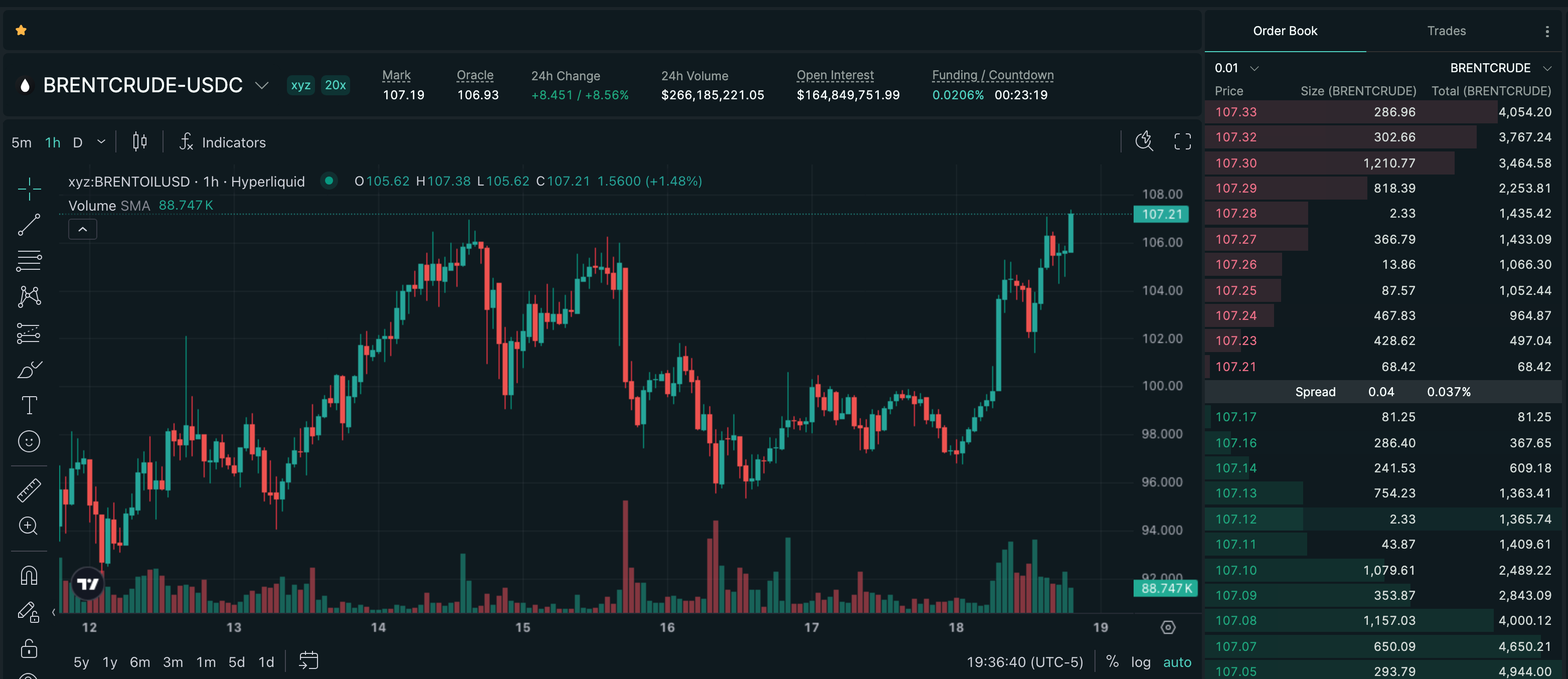
Brent settled up 3.8% at $107.38, then ran to nearly $110 in post-settlement trading. That's roughly 80% above where it traded when the conflict started three weeks ago. WTI lagged at around $96-98, producing an unprecedented $50+ spread against Asian benchmarks like Dubai crude, which hit an all-time high above $150 last week.
The IEA's record 400-million-barrel reserve release — still the largest in history — continues to have zero visible effect on price. The structural math hasn't changed: emergency releases deliver around 1.4 million barrels per day against a 16+ million bpd shortfall from the closed Strait of Hormuz. Now the supply risk extends beyond transit disruption to actual production damage.
BofA and Standard Chartered raised their 2026 Brent forecasts on Hormuz disruption risk. Goldman hiked its average Brent forecast above $100. Citi projected Brent could reach $120 in the near term. U.S. diesel prices surpassed $5 per gallon for the first time since 2022.
The bearish case rests on two things: rising U.S. crude inventories and the possibility that Trump, who reportedly opposes strikes on Iranian energy infrastructure, forces a de-escalation. The White House issued a 60-day Jones Act waiver allowing foreign tankers to move oil between U.S. ports — a domestic supply patch, not a fix for the global problem. Until the Strait reopens or someone credibly guarantees Gulf production safety, the war premium stays.
Sources & Provenance
Citations below are preserved as structured Postgres source rows for this brief.
Citations Preserved
6
Reference links carried forward from the published mover record.
Original Signal
Open source tweetMarket Route
Direct route preserved for readers who want to inspect the tracked Hyperliquid market behind this archive entry.
Already onboarded? Open tracked market- 1Al Jazeera — Iran threatens Gulf energy facilities after South Pars attackaljazeera.com
- 2Fortune — Oil prices hit nearly $110 as Iran vows to escalatefortune.com
- 3OilPrice.com — Iran threatens regional energy sites after South Pars strikeoilprice.com
- 4CBC News — Iran hits Qatar energy hub after South Pars struckcbc.ca
- 5Middle East Eye — Iran tells Saudi Arabia, Qatar and UAE to evacuate energy facilitiesmiddleeasteye.net
- 6Euronews — Oil surges to $110 after Israel strikes Iran's energy facilitieseuronews.com
This content is for informational purposes only and does not constitute financial advice. Trading perpetual futures involves substantial risk of loss.
Trade BRENTOIL on Hyperliquid
Use referral code HIPERWIRE for 4% off trading fees on your first $25M in volume.
Live Market Metrics
Monitor real-time open interest and funding for BRENTOIL.