CL Sheds Its War Premium as the Iran Ceasefire Holds
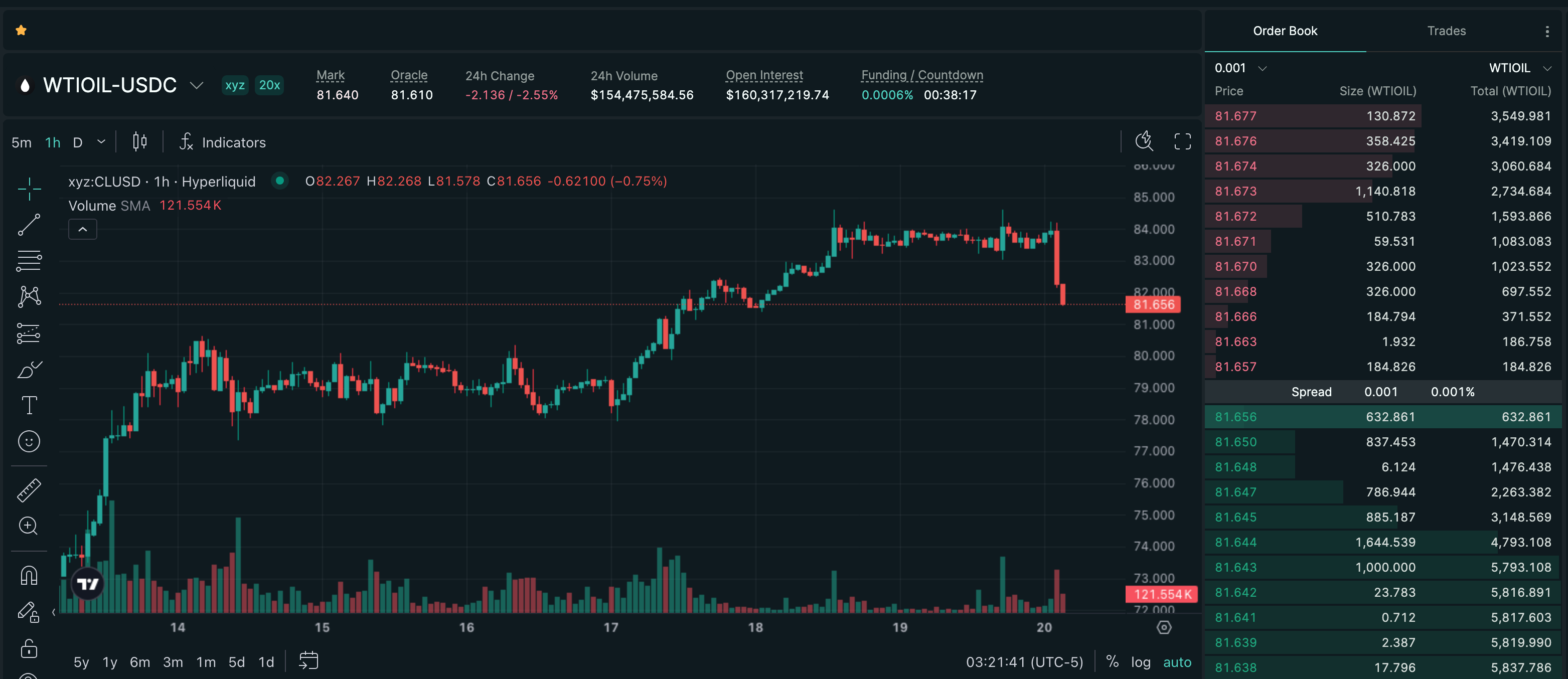
CL is down 3.40% to $81.73 over ten hours, giving back the risk premium oil has carried since the US and Israel struck Iran in February. The move tracks firming de-escalation: US-Iran ceasefire talks in Doha are holding, Strait of Hormuz tanker traffic is recovering, and the extra OPEC+ barrels promised for August are finally reaching a market that had priced a closed chokepoint. With WTI having peaked near $120 in March and pre-war levels sitting around $70, the $81.73 mark still carries premium that unwinds further if the truce sticks.
Mover Brief
Why the War Premium Is Bleeding Out
HIPERWIRE has spent the last week documenting the war premium building into oil — the Kuwaiti desalination strike, the Hormuz blockade, the collapsing tanker count. This slide is the other side of that trade. Crude is handing geopolitical insurance back as the US-Iran de-escalation track firms up: negotiators have been meeting in Doha, and an initial deal to extend the ceasefire and reopen the Strait of Hormuz put a 60-day clock on the final terms. Every headline that makes the truce look durable takes a few dollars of that insurance out of the price, and a 3.40% leg lower is what that looks like in real time.
The Supply Side Catches Up
This is not just sentiment — the physical barrels are actually showing up. On July 5, OPEC+ approved a 188,000 bbl/d output increase for August, and with the Strait of Hormuz reopening the quota bumps the group promised on paper for months are finally reaching the water. Roughly a fifth of the world's seaborne oil and gas moves through that chokepoint, so restoring it is the single largest supply switch in the market. The EIA's global balance already leaned toward surplus into the back half of 2026, and J.P. Morgan has Brent averaging around $60 on soft fundamentals — a structural weight the war had been masking. FX Leaders put the near-term read plainly: Iran supply return keeps oil under pressure.
Where This Leaves the Level
Zoom out and the tape is a round trip. WTI spiked toward $120 in March after the February strikes; pre-war it traded near $70. At $81.73 the CL perp still sits well above that floor, which is another way of saying there is residual war premium left to lose if the ceasefire holds — the de-escalation-driven selloff has been running since late spring. The risk to the short side is that this truce is fragile, and HIPERWIRE has watched it break before: any strike on Gulf energy infrastructure or a re-closure of Hormuz can put the premium back on within hours. One caveat specific to this venue — the CL perp can drift from spot WTI on funding and roll, and a 10-hour move on roughly $154M of volume is as much positioning as it is fresh headline.
Sources & Provenance
Citations below are preserved as structured Postgres source rows for this brief.
Citations Preserved
7
Reference links carried forward from the published mover record.
Original Signal
Open source tweetMarket Route
Direct route preserved for readers who want to inspect the tracked Hyperliquid market behind this archive entry.
Already onboarded? Open tracked market- 1PBS NewsHour: US-Iran initial deal to extend ceasefire and open the Strait of Hormuzpbs.org
- 2CNBC: Oil prices fall as US-Iran talks in Qatar progresscnbc.com
- 3Egypt Oil & Gas: OPEC+ approves 188,000 bbl/d output increase for August 2026egyptoil-gas.com
- 4Wikipedia: 2026 Strait of Hormuz crisis timelineen.wikipedia.org
- 5EIA Short-Term Energy Outlook: global oil markets balanceeia.gov
- 6J.P. Morgan Research: 2026 oil price outlookjpmorgan.com
- 7FX Leaders: Iran supply return keeps WTI under pressure below $72fxleaders.com
This content is for informational purposes only and does not constitute financial advice. Trading perpetual futures involves substantial risk of loss.
Trade CL on Hyperliquid
Use referral code HIPERWIRE for 4% off trading fees on your first $25M in volume.
Live Market Metrics
Monitor real-time open interest and funding for CL.