WTI Pulls Back as Trump's Hormuz Coalition Finds No Takers
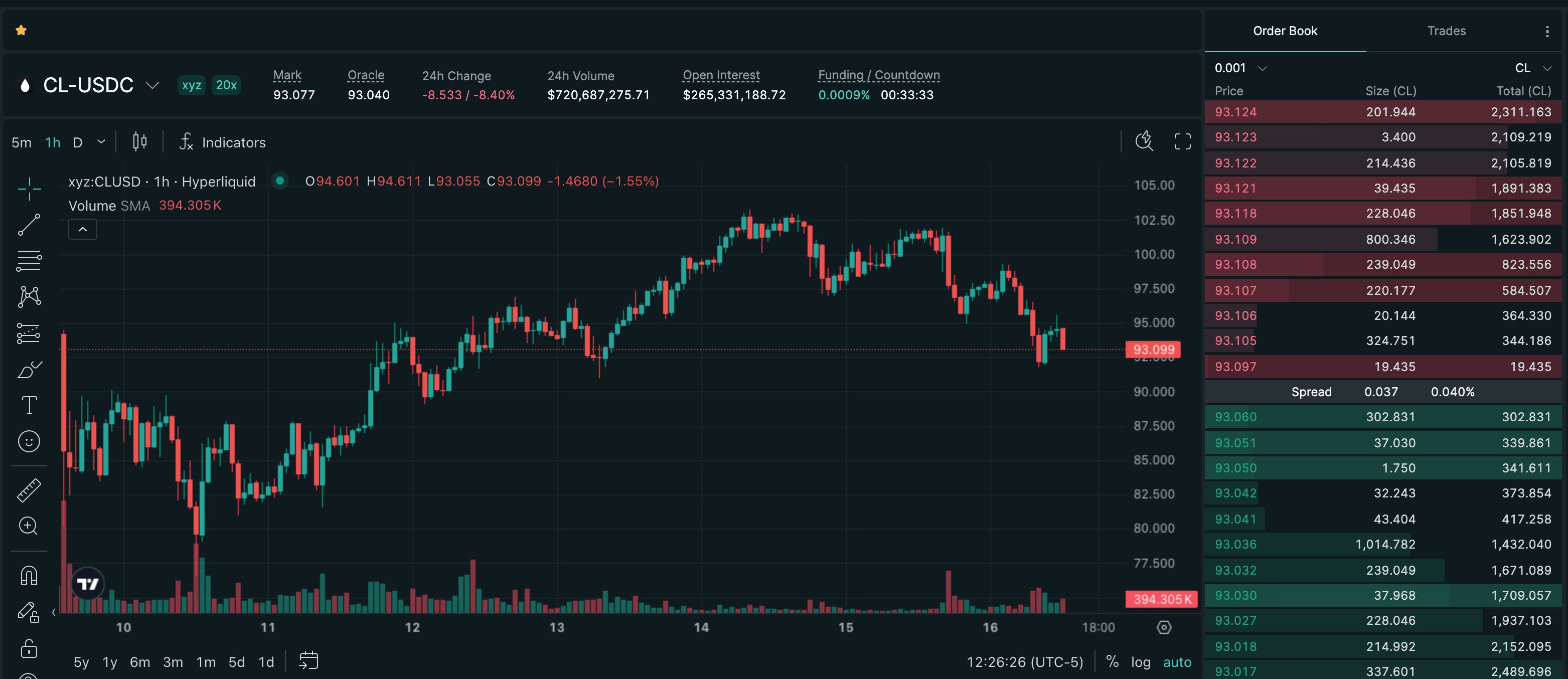
WTI crude fell 8% on March 16 as President Trump called on NATO allies, China, Japan, and the UK to form a military coalition to reopen the Strait of Hormuz with warships. No country has publicly committed. The market is discounting a possible end to the strait blockade even as Iran keeps the waterway effectively closed and over 500 tankers remain idle in the Persian Gulf.
Mover Brief
The Coalition Pitch
Trump called on NATO, China, Japan, France, and the UK to join what the White House is calling a "Hormuz Coalition" — a multinational naval force to escort tanker traffic through the strait and reopen the world's most critical oil chokepoint. Countries would be asked to contribute warships, command-and-control support, and drones. Trump warned NATO would face a "very bad" future without cooperation, and indicated the U.S. Navy would deploy once Iran's military capacity was further degraded.
The pitch landed against a backdrop of historically extreme supply disruption. The IEA called the strait blockade the largest disruption to global energy supplies in history, with daily transits collapsing from 138 ships to roughly five. At least 16 commercial vessels have been attacked since the war began on February 28, and seven tankers have been directly struck by projectiles or explosive-laden boats. Over 500 tankers are sitting idle in the Persian Gulf with nowhere to go.
A Coalition Without Members
The market's reaction reflects the gap between the coalition's ambition and its current membership: zero. Japan and Australia have both stated they have no plans to send ships. China, the world's largest crude importer and Iran's primary oil customer, has shown no inclination to join a U.S.-led naval operation. France and the UK have not committed publicly.
Trump framed this as a shared responsibility problem — the Strait of Hormuz carries crude bound primarily for Asian markets, not American ones. The U.S. produces more oil than it imports. But that framing hasn't translated into allied commitments. He specifically called out China, arguing Beijing benefits most from Hormuz traffic and should contribute accordingly.
The market read this as de-escalation signaling regardless. Even discussing multinational escort operations implies a path to restored tanker flows, which would unwind the war premium that has added $30–40 per barrel since late February. The coalition talk alone was enough to push WTI below $95, even without a single allied warship in the water.
The Price Action in Context
The 8% decline is the latest chapter in the most violent stretch for crude since futures began trading in 1983. WTI went from the low $60s to $119.48 on March 9 as Hormuz closure fears peaked, then fell 32% in a single session to $81.25 after Trump first signaled the war would end. It rebounded above $86 when fresh cargo ship attacks proved the shooting hadn't stopped, then pushed back above $100 on March 13 as the strait stayed shut.
The pattern is consistent: rhetoric moves price faster than physical flows. Every diplomatic signal triggers violent repositioning, and every physical escalation snaps it back. Oil prices have risen over 40% since the war began despite the IEA's record 400 million barrel reserve release and repeated assurances from Washington.
At $93.25, WTI is trading below its recent $100+ range but well above the pre-war $60s. The market is caught between two scenarios: a coalition that actually materializes and reopens the strait, sending prices back toward the $70s, or a prolonged blockade with no multilateral solution that puts $120 back in play. Until a warship from someone other than the U.S. actually shows up in the Persian Gulf, the Hormuz Coalition remains a press conference, not a fleet.
Sources & Provenance
Citations below are preserved as structured Postgres source rows for this brief.
Citations Preserved
6
Reference links carried forward from the published mover record.
Original Signal
Open source tweetMarket Route
Direct route preserved for readers who want to inspect the tracked Hyperliquid market behind this archive entry.
Already onboarded? Open tracked market- 1AP News — Trump urges China, allies to help reopen Strait of Hormuzapnews.com
- 2Al Jazeera — Oil prices as Trump seeks coalition to reopen Strait of Hormuzaljazeera.com
- 3CNBC — Oil prices fall as Trump pressures allies on Hormuz tanker protectioncnbc.com
- 4IEA — Oil Market Report, March 2026iea.org
- 5Axios — Trump eyes Hormuz Coalition, seizure of Iran's Kharg Island oil hubaxios.com
- 6Fortune — Current price of oil, March 16, 2026fortune.com
This content is for informational purposes only and does not constitute financial advice. Trading perpetual futures involves substantial risk of loss.
Trade CL on Hyperliquid
Use referral code HIPERWIRE for 4% off trading fees on your first $25M in volume.
Live Market Metrics
Monitor real-time open interest and funding for CL.