WTI Gives Back Post-Ceasefire Rebound as Israel-Lebanon Negotiations Cap Risk Premium
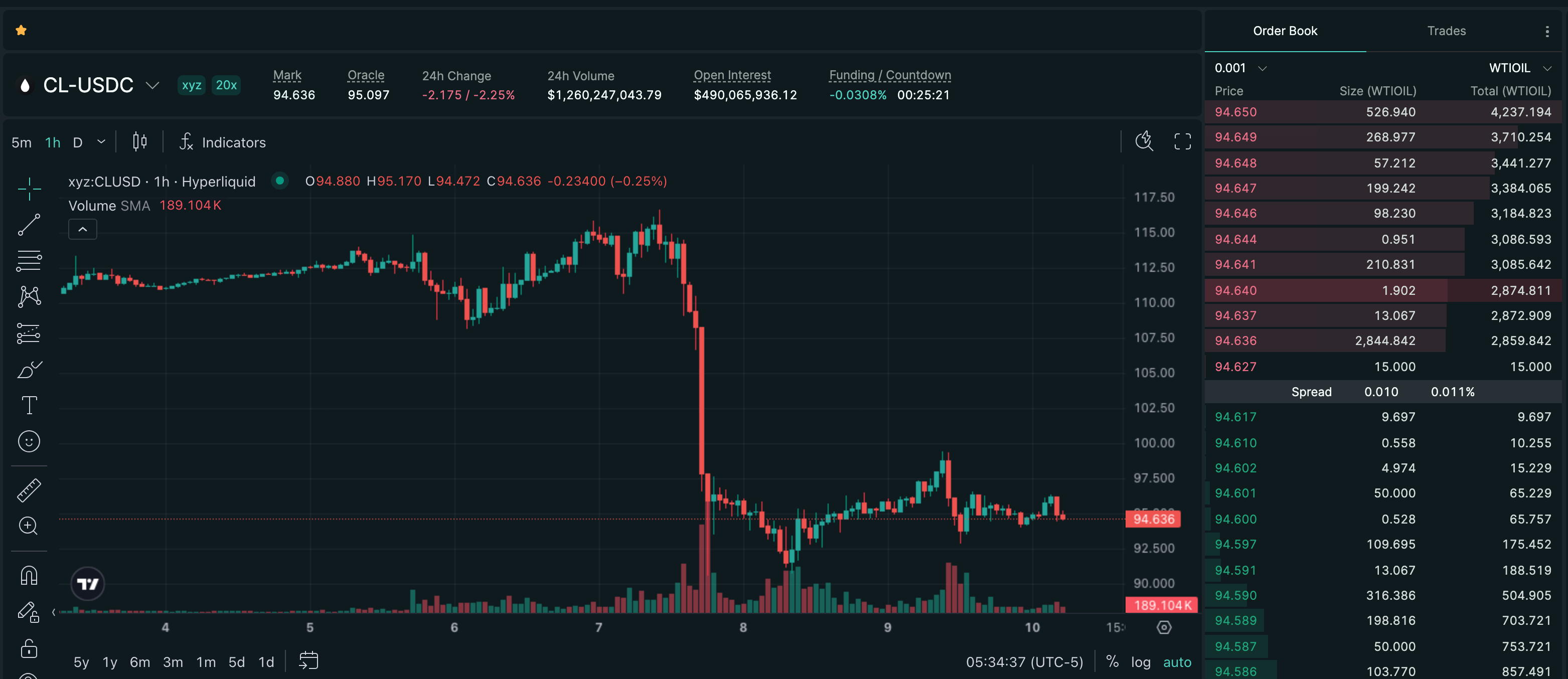
WTI crude slid back below $95 after briefly touching $102.64 during Wednesday's session. The reversal came after Israeli Prime Minister Benjamin Netanyahu announced Israel would engage in direct negotiations with Lebanon, removing a key escalation vector that had been propping up the risk premium. Oil had rebounded from its ceasefire-day crash as traders realized the Strait of Hormuz was barely functional despite the US-Iran truce, but the diplomatic progress on the Lebanon front gave the market permission to lean bearish again.
Mover Brief
The Reversal
WTI crude briefly topped $102.64 on Wednesday as traders questioned whether the US-Iran ceasefire was worth the paper it was written on. Only four to five ships per day were transiting Hormuz compared to hundreds before the conflict, and Abu Dhabi's oil chief openly stated that "the Strait of Hormuz is not open — access is being restricted, conditioned and controlled."
Then Netanyahu announced Israel would pursue direct negotiations with Lebanon "as soon as possible," focusing on Hezbollah disarmament. This was the escalation vector that had been keeping risk premium bid — Iran had cited Israeli strikes on Lebanon as grounds to keep Hormuz restricted. A credible path to de-escalation on that front pulled the rug out from under the rally, and WTI dropped from $102.64 to settle at $97.87 before continuing lower to around $95.
The Inventory Overhang
The EIA's weekly petroleum report landed on the same day, showing U.S. crude stockpiles rose by 3.1 million barrels for the week ending April 3 — more than five times the 0.6 million barrel build analysts expected. That pushed total commercial inventories to 464.7 million barrels, 2% above the five-year seasonal average and the seventh consecutive weekly build.
The inventory data undercuts the scarcity narrative. Even with Hormuz effectively closed for a month, U.S. supply buffers are substantial enough that JPMorgan described the price rebound as "quite modest in the face of an unprecedented reduction in global energy supply." The market is telling you it believes this disruption is transitory.
What the Ceasefire Actually Looks Like
The two-week US-Iran ceasefire is nominally in effect but operationally hollow. Iran has halted oil tanker traffic through Hormuz and is running the strait as a permission gate, charging ships $1 million or more in crypto for passage. Trump called Iran's conduct "very poor" and "dishonourable" on Truth Social, while VP Vance leads mediated talks in Islamabad.
The catch: oil is still priced at $95 — up roughly 35% from the pre-conflict baseline near $70. The ceasefire took the tail risk off the table but hasn't unwound the structural premium. If Lebanon talks progress and Hormuz gradually normalizes, that $25 of embedded risk premium has a long way to deflate. If the ceasefire collapses — and Hezbollah fired rockets at Israel on April 10 in what it called a ceasefire violation response — the premium rebuilds fast.
What to Watch
The ceasefire clock matters. Trump's two-week window expires around April 21, and the market will start pricing in expiration risk well before that. If Vance's Islamabad talks produce a framework for permanent Hormuz access, crude could test the low $90s. If Lebanon talks stall or Hezbollah escalates, the $100+ rebound attempt gets a second look.
The next EIA report drops April 15. Another inventory build above expectations would reinforce the narrative that U.S. supply can absorb the disruption, giving sellers more room. Refineries are running at 92% capacity — there's room to draw down stockpiles if needed, which limits the upside case even in a renewed supply scare.
Sources & Provenance
Citations below are preserved as structured Postgres source rows for this brief.
Citations Preserved
7
Reference links carried forward from the published mover record.
Original Signal
Open source tweetMarket Route
Direct route preserved for readers who want to inspect the tracked Hyperliquid market behind this archive entry.
Already onboarded? Open tracked market- 1Investing.com — Oil Rebounds as Lebanon Strikes Test Ceasefireinvesting.com
- 2NBC News — Oil Prices Hover Around $100 as Ceasefire Doubts Persistnbcnews.com
- 3EIA Weekly Petroleum Status Reporteia.gov
- 4WSJ — U.S. Crude Oil Stockpiles Rise for Seventh Straight Weekwsj.com
- 5Irish Times — Trump Criticises Iran Over Continued Hormuz Blockadeirishtimes.com
- 6OPB — Netanyahu Authorizes Direct Talks with Lebanonopb.org
- 7NPR — Oil Prices Plunge as U.S. and Iran Agree on Ceasefirenpr.org
This content is for informational purposes only and does not constitute financial advice. Trading perpetual futures involves substantial risk of loss.
Trade CL on Hyperliquid
Use referral code HIPERWIRE for 4% off trading fees on your first $25M in volume.
Live Market Metrics
Monitor real-time open interest and funding for CL.