WTI Gives Back the Spike as Pakistan's Ceasefire Framework Hits the Table
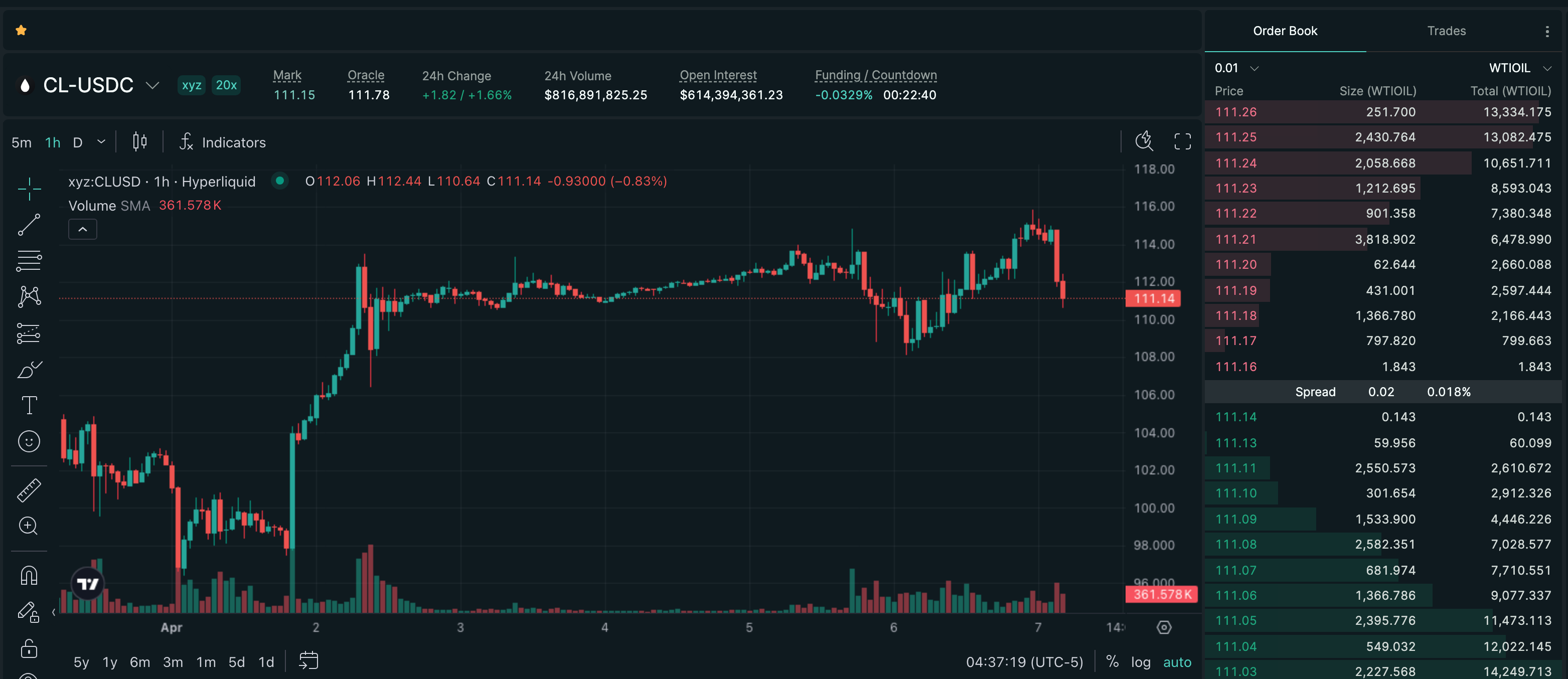
WTI crude reversed sharply from a session high near $115.50 to $111, erasing most of the geopolitical premium built on Israel's strike against Iran's largest petrochemical facility. The catalyst for the unwind was Pakistan's two-phase ceasefire framework, dubbed the Islamabad Accord, which represents the first structured diplomatic off-ramp since the Strait of Hormuz closure began on February 28. Iran publicly rejected reopening the strait under a temporary deal, but selective vessel passages and the existence of a negotiating table were enough for traders to start taking profits.
Mover Brief
The Spike and the Fade
WTI hit $115.48 in early Monday trading as Asia-session panic buying followed Israel's strike on Iran's largest petrochemical facility — a single target accounting for roughly half the country's petrochemical output. The move extended Thursday's 11% single-session gain, the largest absolute WTI increase since 2020.
Then the headlines flipped. Pakistan's Army Chief Field Marshal Asim Munir, who had been in contact overnight with VP Vance, envoy Witkoff, and Iranian FM Araghchi, surfaced a two-phase ceasefire framework. The market did what it does with geopolitical spikes when a diplomatic off-ramp appears — it sold. WTI dropped from $115.48 to roughly $111 in a textbook sell-the-spike unwind, shedding the war premium that had been layered on across Thursday and early Monday.
The Islamabad Accord
Pakistan's proposal — tentatively called the Islamabad Accord — is structured in two phases: an immediate ceasefire with reopening of the Strait of Hormuz, followed by a 15–20 day window to negotiate a permanent settlement covering Iran's nuclear commitments, sanctions relief, and the release of frozen assets.
Iran's public response has been cold. Foreign Ministry spokesman Esmaeil Baghaei called the framework "extremely ambitious, unusual, and illogical", and a senior official told Reuters that Tehran will not reopen the strait under a temporary ceasefire or accept imposed deadlines. But the diplomatic posture and the on-the-water reality are diverging: an Omani-operated tanker, a French container ship, and a Japanese gas carrier have all transited the strait since Thursday under what appears to be a back-channel passage deal brokered by Pakistan. Iran is rejecting a broad reopening while quietly permitting selective traffic — and the market is pricing the gap between those two stances.
What Keeps a Floor Under Price
The sell-the-spike trade makes sense, but the structural supply picture hasn't actually changed. The Strait of Hormuz still handles 20% of global oil supply, and throughput remains down roughly 95% from prewar levels. A few selective passages don't restore 17–18 million barrels per day of transit capacity.
Trump's Tuesday 8 p.m. ET deadline is still live. He has threatened to rain "hell" on Tehran if Iran doesn't agree to reopen Hormuz by then, and Defense Secretary Hegseth has said Tuesday's strikes would be the largest since February. If the deadline passes without a deal, the risk premium snaps back hard.
On the supply side, OPEC+ agreed to a modest 206,000 barrel/day production increase for May, and Saudi Arabia set a record May crude premium at $19.50 per barrel above benchmark — a signal that physical tightness remains severe even as futures sell off. API weekly inventory data due later today could add another variable, but the real price driver remains binary: does the Islamabad Accord produce an actual ceasefire, or does Tuesday's deadline escalate the war?
Sources & Provenance
Citations below are preserved as structured Postgres source rows for this brief.
Citations Preserved
6
Reference links carried forward from the published mover record.
Original Signal
Open source tweetMarket Route
Direct route preserved for readers who want to inspect the tracked Hyperliquid market behind this archive entry.
Already onboarded? Open tracked market- 1BNN Bloomberg — Oil prices fall after US and Iran receive ceasefire proposalbnnbloomberg.ca
- 2Al Jazeera — Pakistan offers two-phased truce deal to end US-Israel war on Iranaljazeera.com
- 3MarineLink — Oil prices fall as US, Iran consider ceasefire proposalmarinelink.com
- 4Market Minute — Oil prices pare gains as 45-day ceasefire negotiations beginmarkets.financialcontent.com
- 5Business Upturn — The secret Pakistan-brokered Hormuz passage dealbusinessupturn.com
- 6Fortune — Current price of oil as of April 6, 2026fortune.com
This content is for informational purposes only and does not constitute financial advice. Trading perpetual futures involves substantial risk of loss.
Trade CL on Hyperliquid
Use referral code HIPERWIRE for 4% off trading fees on your first $25M in volume.
Live Market Metrics
Monitor real-time open interest and funding for CL.