WTI Holds Above $110 as UN Delays Hormuz Force Vote
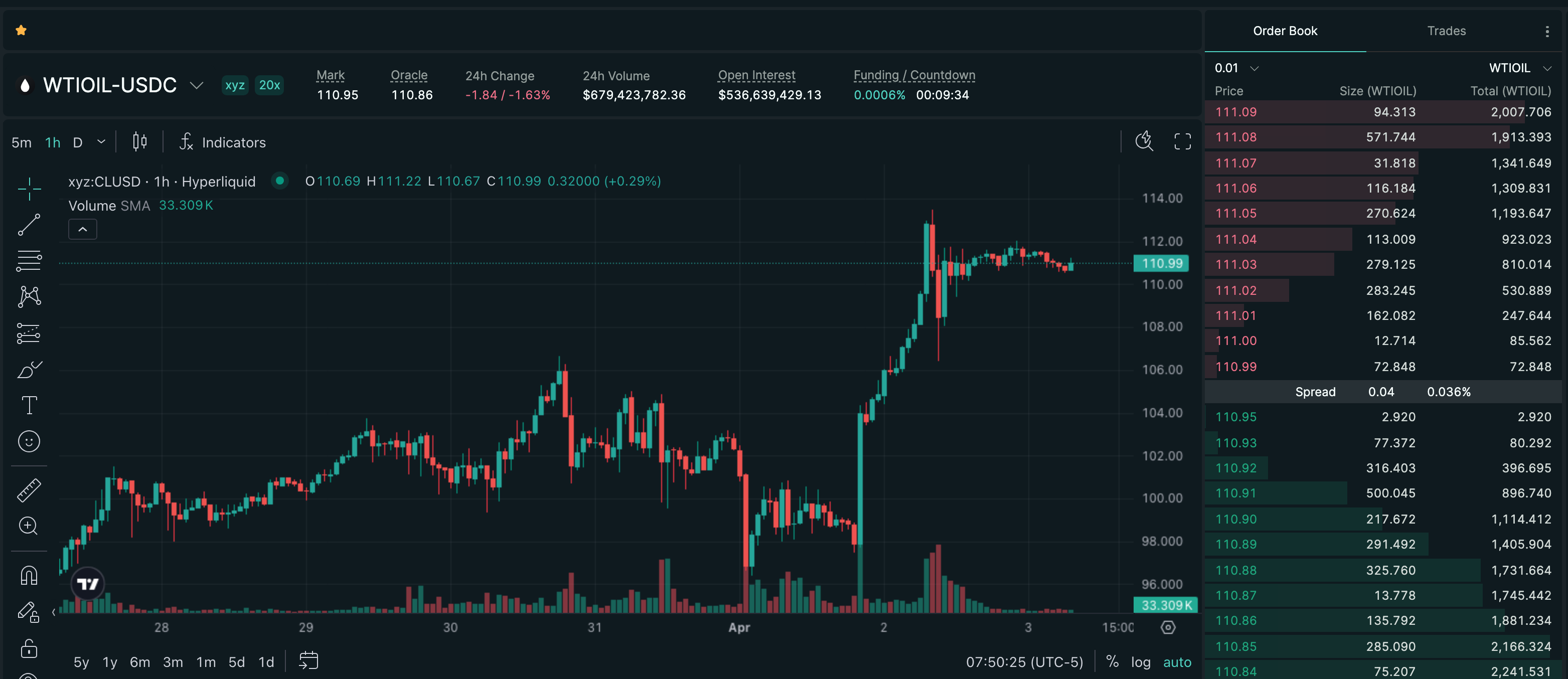
WTI crude consolidated above $110 after the UN Security Council delayed its vote on a Bahrain-backed resolution to authorize defensive force in the Strait of Hormuz, removing the nearest diplomatic off-ramp from the calendar. OPEC+ meets Saturday to decide on a planned 206,000 barrel-per-day output increase, a largely symbolic gesture while Gulf tanker traffic through the strait remains at zero.
Mover Brief
The Diplomatic Stall
The UN Security Council was set to vote Friday on a Bahrain-backed resolution authorizing "all defensive means necessary" to secure passage through the Strait of Hormuz. The vote was delayed for Good Friday, and the proposal itself had already been significantly watered down — stripped of offensive force authorization after opposition from China, Russia, and France. Beijing's UN envoy Fu Cong argued the resolution would amount to "legitimizing the unlawful and indiscriminate use of force."
Even if the diluted resolution eventually passes, it authorizes defensive action only — not the kind of offensive naval operation that would actually break Iran's chokehold on the strait. The market read the delay and the diplomatic resistance correctly: there is no multilateral solution coming this week, and probably not next week either.
An Output Hike With Nowhere to Go
OPEC+ meets Saturday to decide on a planned 206,000 barrel-per-day output increase for May. On paper, that's incremental supply. In practice, it's almost irrelevant. The Strait of Hormuz handles roughly 20% of global oil trade during peacetime, and tanker traffic through the waterway has dropped to effectively zero since Iran tightened its blockade. Saudi, Iraqi, Kuwaiti, and Emirati crude that would normally transit the strait has nowhere to go.
The meeting is more about signaling than barrels. If OPEC+ proceeds with the hike, it signals confidence that demand will absorb the disruption. If it reverses, that's an implicit admission the supply picture is worse than priced. Either way, 206k b/d is a rounding error against the 4.5–5 million barrels per day the world has already lost.
Bearish Data, Unbreakable Bid
The EIA reported a 5.5-million-barrel build in US crude inventories for the week ended March 27 — the largest weekly build in months and a classically bearish signal. The market shrugged it off entirely. WTI didn't flinch.
That tells you where sentiment sits. Domestic inventory builds don't matter when the market is pricing in a prolonged Gulf supply disruption with no diplomatic off-ramp. Near-term crude futures are trading at record premiums over later contracts, a backwardation structure that reflects persistent physical tightness. US gasoline hit $4.08 per gallon — up 36% in a month — and the inflationary pass-through is only beginning.
Sources & Provenance
Citations below are preserved as structured Postgres source rows for this brief.
Citations Preserved
7
Reference links carried forward from the published mover record.
Original Signal
Open source tweetMarket Route
Direct route preserved for readers who want to inspect the tracked Hyperliquid market behind this archive entry.
Already onboarded? Open tracked market- 1Washington Post: Bahrain waters down UN Hormuz resolutionwashingtonpost.com
- 2Al-Monitor: UN Security Council delays Hormuz force voteal-monitor.com
- 3US News: China opposes UN authorization of force at Hormuzusnews.com
- 4CNN: Live updates on Iran war, UN vote, and oil pricescnn.com
- 5Reuters: US crude stocks rise to near 3-year high (EIA)reuters.com
- 6PBS: US oil tops $110, gasoline hits $4.08 per gallonpbs.org
- 7Economy Middle East: OPEC+ 206k b/d output increase for Aprileconomymiddleeast.com
This content is for informational purposes only and does not constitute financial advice. Trading perpetual futures involves substantial risk of loss.
Trade CL on Hyperliquid
Use referral code HIPERWIRE for 4% off trading fees on your first $25M in volume.
Live Market Metrics
Monitor real-time open interest and funding for CL.