Circle Reverses Downgrade Slide as Senate Returns With CLARITY Act Markup on Deck
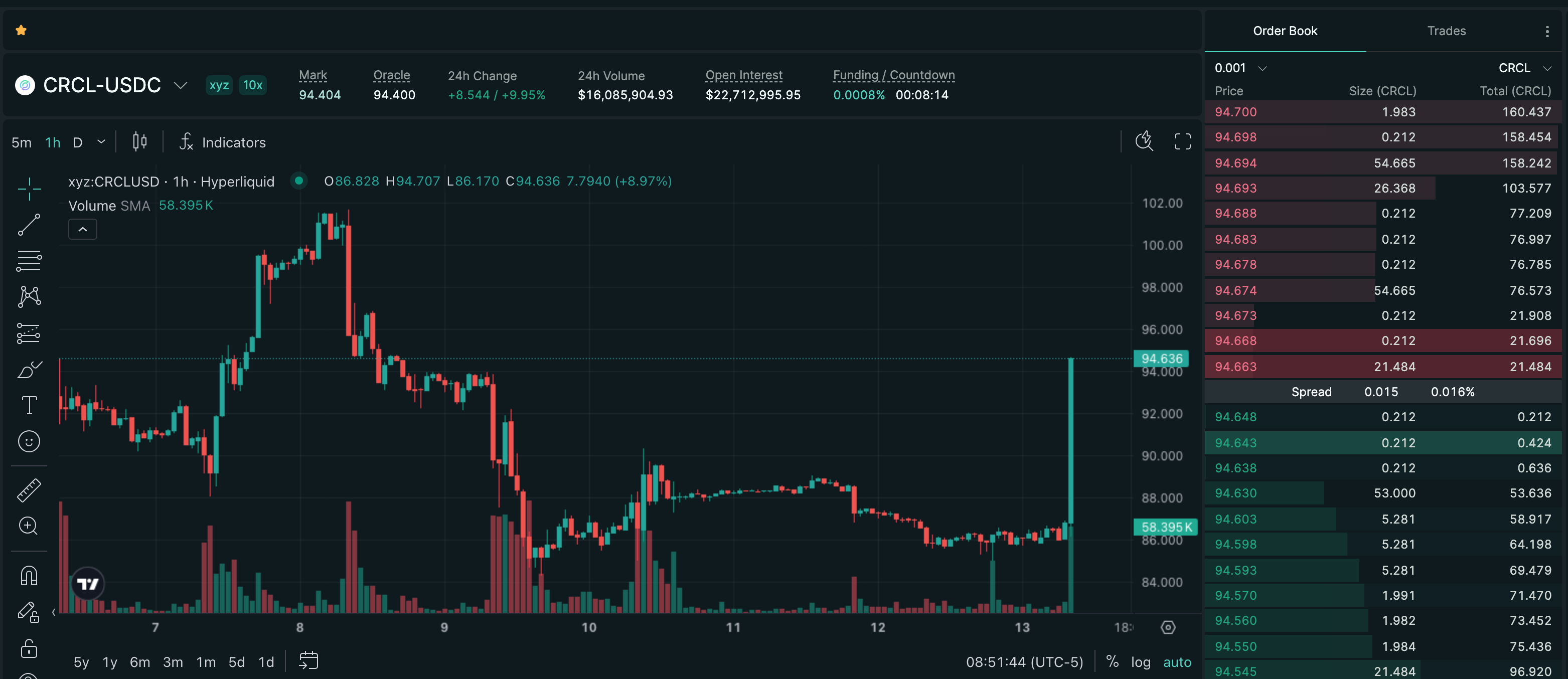
CRCL bounced 10% off its post-downgrade lows as the Senate reconvened from Easter recess on April 13 with the CLARITY Act markup expected within two weeks. A coordinated push from four senior administration officials and a White House study undermining the banking lobby's case against stablecoin yield shifted the regulatory calculus in Circle's favor during the break.
Mover Brief
The Regulatory Setup
The Senate returned from Easter recess on April 13 with the CLARITY Act markup expected in the final two weeks of April. Senator Cynthia Lummis stated flatly that the Banking Committee would get the bill out in April, and Senator Bernie Moreno warned that missing a May deadline would stall digital asset legislation until after the November midterms.
The most striking development during recess was a coordinated pressure campaign on April 9. Treasury Secretary Scott Bessent called on the Banking Committee to hold a markup. David Sacks said "the time to act is now." CFTC Chair Michael Selig and SEC Chair Paul Atkins both endorsed the push, with Atkins noting the SEC's "Project Crypto" framework is ready to implement the legislation as soon as Congress acts. Four senior officials publicly lobbying for the same bill on the same day is unusual — it reads like the White House clearing the runway.
For Circle, the CLARITY Act is existential infrastructure. The bill defines the stablecoin licensing framework, reserve requirements, and the jurisdictional split between federal and state regulators that will govern USDC for the foreseeable future. Regulatory clarity doesn't just reduce overhang — it's the precondition for Circle to expand institutional distribution channels without legal ambiguity. The FDIC's proposed GENIUS Act rules, published April 7, are already building the implementation scaffolding — one-to-one reserve backing, two-business-day redemption windows, $5 million minimum capital. The regulatory apparatus is being assembled whether or not the Senate moves on schedule.
White House Dismantles the Yield Ban Argument
The key sticking point that has delayed the CLARITY Act since January is stablecoin yield — specifically, whether platforms can pass reserve interest through to holders. The banking lobby, led by the Independent Community Bankers of America, claimed yield-bearing stablecoins would drain $1.3 trillion in deposits and $850 billion in loans from community banks.
On April 8, the White House Council of Economic Advisers published a study that took a wrecking ball to that argument. The CEA's baseline model found that banning stablecoin yield would increase total bank lending by just 0.02% — with 76% of that gain going to large banks, not community institutions. Community bank lending would increase by roughly $500 million, a 0.026% bump. The report's conclusion was blunt: "a yield prohibition would do very little to protect bank lending, while forgoing the consumer benefits of competitive returns on stablecoin holdings."
Even under worst-case assumptions — stablecoin market six times its current size, all reserves locked in cash, the Fed abandoning its current monetary framework — the model produced only a 4.4% increase in aggregate lending. The CEA essentially told the Senate that the banking lobby's numbers require conditions that will never exist.
The current draft text still bans passive yield on stablecoin balances, permitting only narrowly defined activity-based rewards. But the White House study gives pro-yield senators ammunition to push for a more permissive compromise during markup. For Circle, which has been losing the yield negotiation under the current draft, this study reopens a door that looked closed.
Circle's Busy Recess Week
While the Senate was out, Circle wasn't idle. On April 8, the company launched CPN Managed Payments, a full-stack platform that lets banks, PSPs, and fintechs settle in USDC without directly managing digital assets. Launch partners include Thunes and Worldline. The product directly addresses the institutional hesitance that Compass Point flagged — if banks can use USDC rails without holding crypto, Circle's distribution problem gets simpler.
On the supply side, Circle minted a record $3.25 billion USDC on Solana in the seven days ending April 6 — the largest single-week stablecoin minting volume of 2026. Total USDC supply on Solana now sits at $8.64 billion, with the overall USDC float near $80 billion. The minting wave suggests real demand, not just reserve shuffling.
The bounce also has a straightforward technical component. Compass Point's April 9 downgrade to Sell with a $77 target pushed the stock to around $85 on margin compression fears. But with 20 analysts carrying an average Buy rating and a consensus target of $123.71, the downgrade looked like an outlier against the broader Street view. The reversal from $85 to $94 in under a week suggests the market priced in the margin risk quickly and moved on to the regulatory catalyst.
Sources & Provenance
Citations below are preserved as structured Postgres source rows for this brief.
Citations Preserved
7
Reference links carried forward from the published mover record.
Original Signal
Open source tweetMarket Route
Direct route preserved for readers who want to inspect the tracked Hyperliquid market behind this archive entry.
Already onboarded? Open tracked market- 1FinTech Weekly — CLARITY Act Goes Into Recess Unresolvedfintechweekly.com
- 2Yahoo Finance — Trump's Inner Circle Rallies Behind CLARITY Actfinance.yahoo.com
- 3White House CEA — Effects of Stablecoin Yield Prohibition on Bank Lendingwhitehouse.gov
- 4PYMNTS — White House Says Stablecoin Rewards Won't Impact Community Bankspymnts.com
- 5BusinessWire — Circle Launches CPN Managed Paymentsbusinesswire.com
- 6CryptoTimes — Circle Mints Record $3.25 Billion USDC on Solanacryptotimes.io
- 7FDIC — Proposed Rulemaking for GENIUS Act Standardsfdic.gov
This content is for informational purposes only and does not constitute financial advice. Trading perpetual futures involves substantial risk of loss.
Trade CRCL on Hyperliquid
Use referral code HIPERWIRE for 4% off trading fees on your first $25M in volume.
Live Market Metrics
Monitor real-time open interest and funding for CRCL.