DRAM Bid Into SK Hynix's $29B Nasdaq Debut as Memory Splits From the Chip Selloff
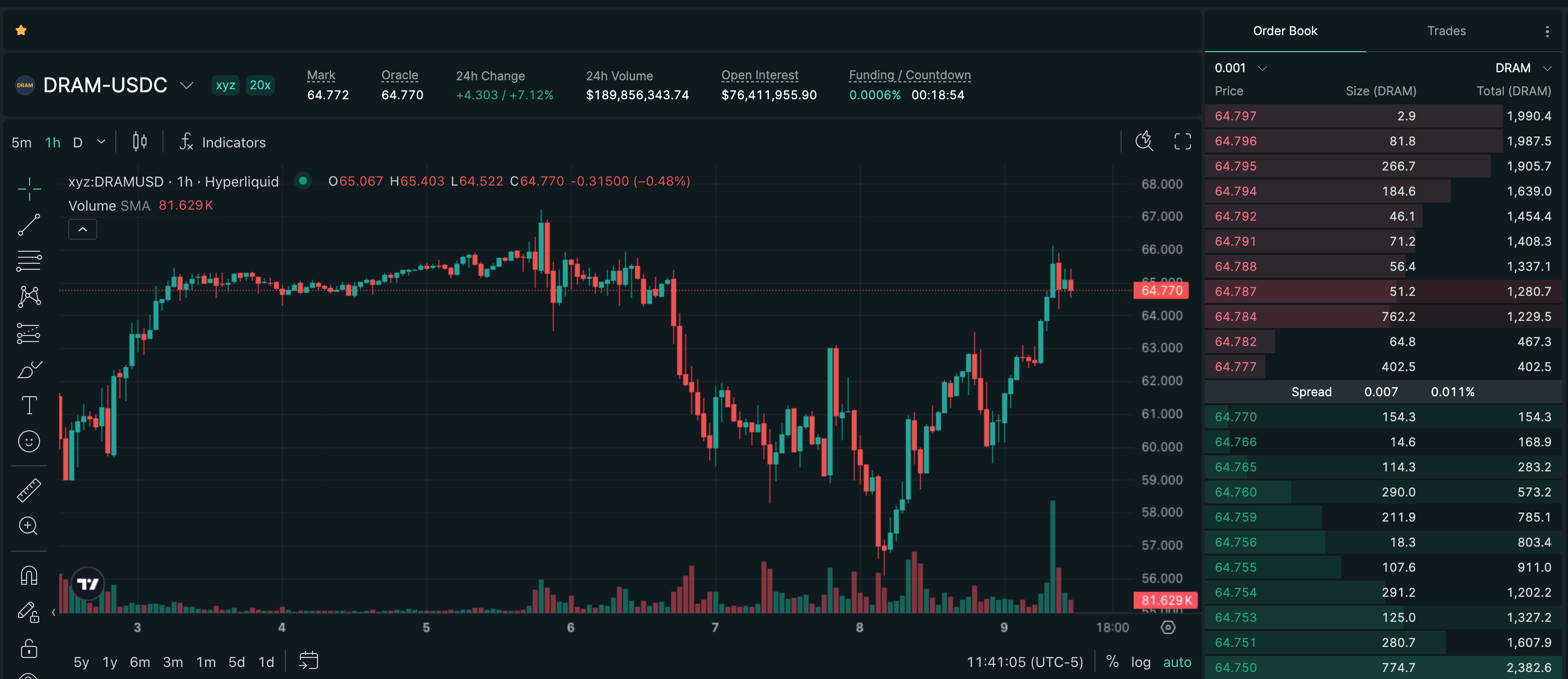
DRAM, the Roundhill Memory ETF, is up 7.12% over 24 hours to $64.78, firming back toward record highs the day before SK Hynix's roughly $29 billion Nasdaq ADR — the largest US listing in history — begins trading. SK Hynix anchors this fund alongside Micron and Samsung, and the bid runs deeper than one IPO: long-term price caps are being torn up, Q3 DRAM hikes are landing, and high-bandwidth memory is sold out. What makes the move stand out is the timing. Memory is catching a bid even as the broader chip complex shed more than a trillion dollars of value earlier this week on AI-spending fears.
Mover Brief
A Record Debut Pulls the Whole Complex
SK Hynix is set to begin trading on the Nasdaq on July 10 under the ticker SKHY, raising roughly $29 billion through American depositary receipts — 17.79 million new shares at about 45.45 trillion won. That makes it the largest ADR listing in Wall Street history, past Alibaba's $21.8 billion debut in 2014. The world's second-largest memory maker controls roughly 60% of the high-bandwidth memory market, has climbed more than 280% this year, and now carries a market cap above $1 trillion, with Bank of America, Citigroup, Goldman Sachs and JPMorgan running the book.
The read-through to DRAM is direct. The Roundhill Memory ETF is built around the three names that dominate the memory complex — SK Hynix, Micron and Samsung — so a record debut for its largest cohort pulls the whole basket. This is the fund front-running the single biggest event on the memory calendar, and the tape is treating tomorrow's listing as a demand signal, not just a liquidity event.
The Bid Is Bigger Than One IPO
Strip out the IPO and the pricing story alone justifies the move. On July 2, SK Hynix scrapped the price caps in its long-term supply agreements and pushed contract terms out to three-to-five years, letting spot increases flow straight through to customers. It's now the only major supplier without a cap; Micron, by contrast, kept both a ceiling and a floor tied to Q2 levels. When the dominant HBM supplier stops capping its own prices, it's telling you where it thinks the cycle is going.
The numbers back it up. Samsung is reportedly targeting another ~20% DRAM price hike for Q3, with TrendForce modeling a 13–18% increase, while HBM3e contract prices have already risen about 20% quarter-over-quarter against booked AI-accelerator demand, and high-bandwidth memory is effectively sold out through most of 2027. That structural scarcity is why DRAM has more than doubled since its April 2 launch as the first-ever memory ETF — this fund is a pure-play bet on memory pricing power, and pricing power is exactly what's inflecting.
Memory Splits From the Tape
What makes today's move interesting is the backdrop. Earlier this week the broader semiconductor complex got hit hard: more than $1 trillion in value erased, Intel down over 20%, and Micron off 13% in a single session — roughly $138 billion wiped out — as investors questioned whether record AI capex will ever earn its return. A hawkish Fed under new chair Kevin Warsh, Meta moving to resell excess AI compute, and reports of SK Hynix slowing HBM expansion all fed the doubt on the AI trade.
Memory is now decoupling. AI memory names have trimmed those losses as buyers stepped back in ahead of the SK Hynix debut, and the year-to-date scoreboard shows why traders keep coming back — Micron is up around 229% and Sandisk more than 581% in 2026. The DRAM perp turned over roughly $190 million in the last 24 hours, so there's real size behind the bounce, not a thin-book drift. The tell from here is SKHY's reception on July 10: a strong tape confirms the memory basket is being priced as the durable leg of the AI trade, while a soft one hands the broader selloff a fresh excuse to drag memory back down with it.
Sources & Provenance
Citations below are preserved as structured Postgres source rows for this brief.
Citations Preserved
7
Reference links carried forward from the published mover record.
Original Signal
Open source tweetMarket Route
Direct route preserved for readers who want to inspect the tracked Hyperliquid market behind this archive entry.
Already onboarded? Open tracked market- 1CNBC — SK Hynix plans ~$29B Nasdaq ADR listingcnbc.com
- 2Roundhill Investments — Memory ETF (DRAM) fund pageroundhillinvestments.com
- 3TrendForce — SK Hynix removes price caps in long-term agreementstrendforce.com
- 4Forbes — Inside the July 2026 semiconductor selloffforbes.com
- 5Yahoo Finance — AI memory stocks trim losses as investors buy the dipfinance.yahoo.com
- 6Silicon Analysts — HBM3e contract prices rise 20% QoQsiliconanalysts.com
- 7The Motley Fool — This new memory ETF has already doubledfool.com
This content is for informational purposes only and does not constitute financial advice. Trading perpetual futures involves substantial risk of loss.
Trade DRAM on Hyperliquid
Use referral code HIPERWIRE for 4% off trading fees on your first $25M in volume.
Live Market Metrics
Monitor real-time open interest and funding for DRAM.