HOOD Climbs 9.23% as the Pattern Day Trader Rule Dies
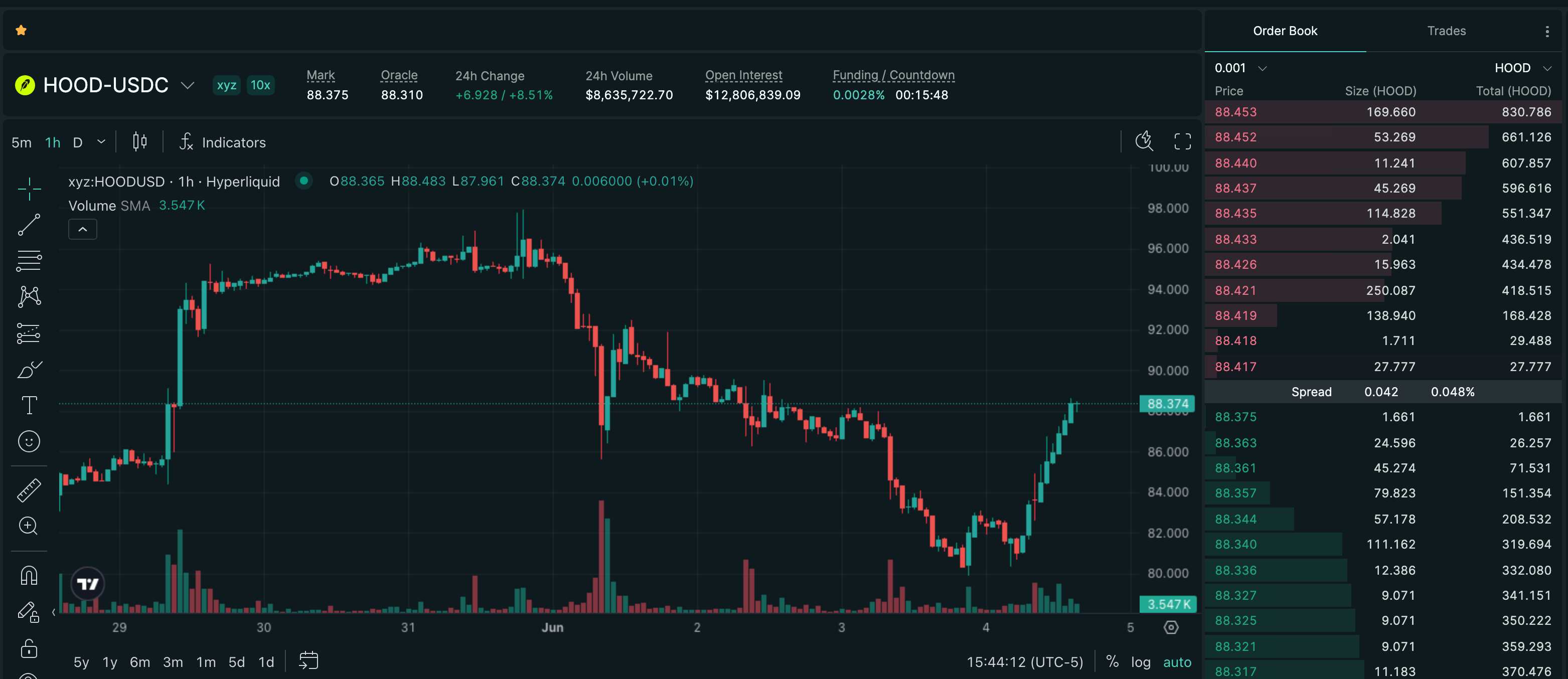
Robinhood rallied to $88.35 on the day the Pattern Day Trader rule officially went away. As of June 4, 2026, sub-$25,000 margin accounts can day trade without the old four-round-trip cap, replaced by a real-time intraday margin framework. It is a structural tailwind aimed squarely at Robinhood's most monetizable cohort — active retail traders — and the whole brokerage complex moved with it.
Mover Brief
The Catalyst
The move has a clean, single source: June 4, 2026 is the day the Pattern Day Trader rule went away. The old regime flagged any margin account under $25,000 that made four or more day trades in five business days and froze it. As of today that floor is gone, replaced by a real-time intraday margin framework that monitors equity against exposure throughout the session instead of gating on a static account balance.
Robinhood spelled out the implementation directly: no more day trade restrictions, no day trade calls, and existing PDT flags removed from accounts. The $2,000 margin minimum still applies — but the $25,000 wall, the single biggest friction on small-account day trading for two decades, is down.
Why It Hits Robinhood Hardest
This isn't a press-release pop. The PDT rule's entire purpose was to throttle frequent round-tripping by exactly the cohort Robinhood is built on: sub-$25K retail accounts that trade often. Removing the cap directly expands the addressable volume of Robinhood's highest-margin activity — transaction-based revenue and securities lending both scale with churn.
The sector tape confirms the read. This was a regulatory change for the whole complex, and the whole complex moved: Robinhood, Webull, and Interactive Brokers all rallied into the cutover, with Webull up roughly 9% alongside HOOD. When a whole peer group reprices on the same day, you're looking at a structural input, not a one-name narrative.
The Counterweight
The bullish frame is that more day trading means more volume means more revenue. The bearish frame is that the rule existed to protect undercapitalized traders from blowing up, and Robinhood now faces looser day trading rules and fresh legal uncertainty as a result — more leverage in more inexperienced hands is a suitability and litigation surface, not just a revenue line.
There's also the basis caveat worth flagging for anyone trading the perp: HOOD on Hyperliquid tracks one share of Robinhood common stock, and in thin conditions the perp can diverge from spot. The 21-hour move to $88.35 lines up with the broad-market read on the catalyst, but this market's own book is small — size accordingly.
Sources & Provenance
Citations below are preserved as structured Postgres source rows for this brief.
Citations Preserved
5
Reference links carried forward from the published mover record.
Original Signal
Open source tweetMarket Route
Direct route preserved for readers who want to inspect the tracked Hyperliquid market behind this archive entry.
Already onboarded? Open tracked market- 1Robinhood — Day trading / PDT implementationrobinhood.com
- 2Seeking Alpha — Which brokerages are scrapping PDT rules todayseekingalpha.com
- 3Benzinga — Robinhood, Webull, IBKR set to gain as PDT rule diesbenzinga.com
- 4Yahoo Finance — Robinhood faces looser day trading rules and new legal uncertaintyfinance.yahoo.com
- 5HeyGoTrade — The Pattern Day Trader rule is gone: what it means for retailheygotrade.com
This content is for informational purposes only and does not constitute financial advice. Trading perpetual futures involves substantial risk of loss.
Trade HOOD on Hyperliquid
Use referral code HIPERWIRE for 4% off trading fees on your first $25M in volume.
Live Market Metrics
Monitor real-time open interest and funding for HOOD.