Oil Crashes After Trump Floats U.S. Takeover of the Strait of Hormuz
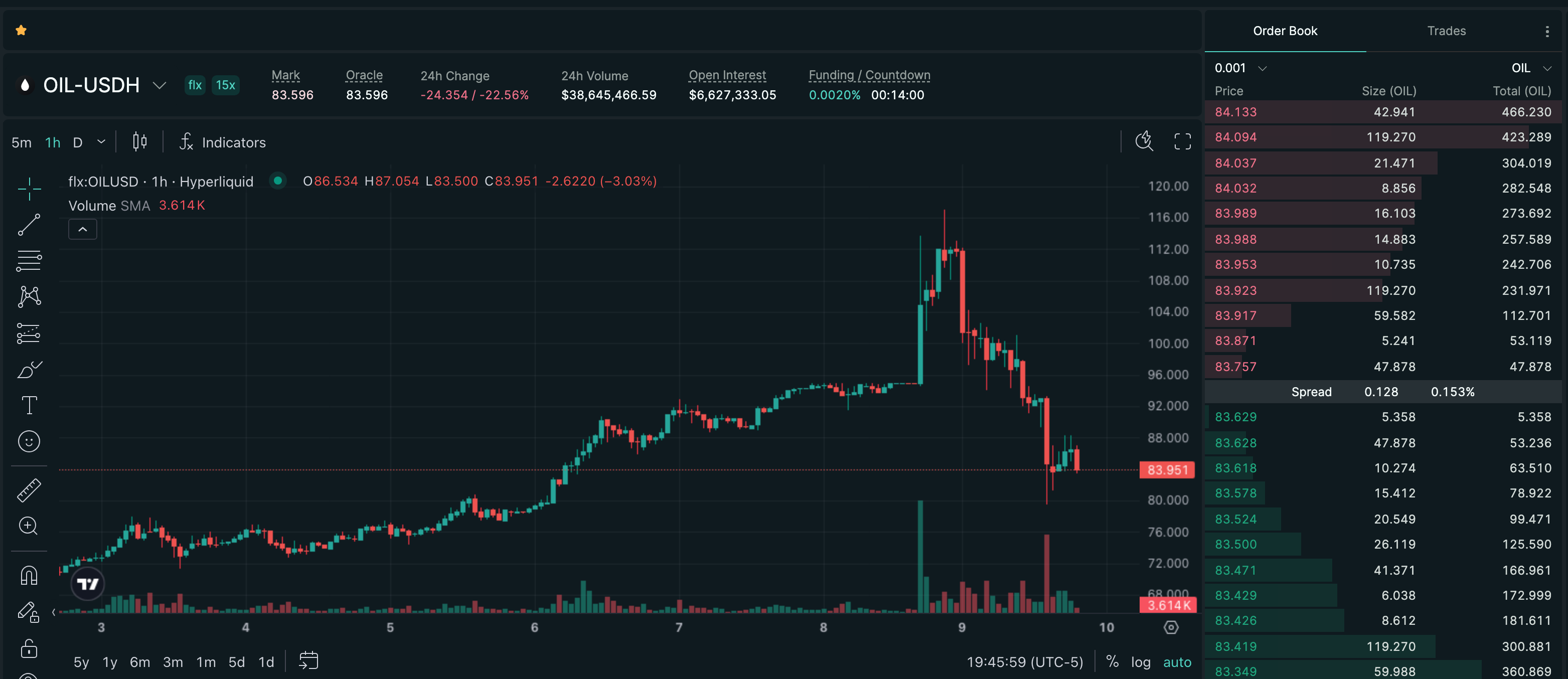
WTI crude hit $119.48 in early Monday trading as markets priced in a total supply cutoff from the Iran war. Hours later, Trump told CBS the U.S. is considering taking over the Strait of Hormuz to force shipping lanes open. Traders liquidated the war premium instantly, sending crude to as low as $81 — the largest single-day reversal in oil market history.
Mover Brief
The Spike and the Reversal
Crude oil opened March 9 at multi-year highs, briefly touching $119.48 per barrel as the Iran conflict entered its second week. Tanker traffic through the Strait of Hormuz — the narrow waterway off Iran that handles roughly one-fifth of the world's seaborne oil — had slowed to a crawl, effectively removing 8–10 million barrels per day of supply from the market. Oil hadn't traded above $100 since Russia's 2022 invasion of Ukraine.
Then Trump went on CBS and said the U.S. is "thinking about taking it over" — referring to the strait itself. The prospect of the U.S. military securing the waterway and forcibly restoring oil flows was enough to break the trade. Longs liquidated en masse, and WTI crashed from $119 to $81 in a matter of hours — a 32% intraday reversal that dwarfs anything in modern crude oil history. WTI eventually settled the CME session at $94.77, but has since continued to bleed lower, with the Hyperliquid OIL perp printing $83.93 at time of writing.
Why the Market Believed Him
Trump's Hormuz comments landed differently than typical geopolitical bluster because the U.S. military already has the assets in theater to back it up. The Fifth Fleet is stationed in Bahrain, carrier strike groups are deployed in the Gulf, and the war with Iran has already placed U.S. forces in direct proximity to the strait. Earlier in the week, Trump had offered to insure tankers transiting the waterway — a softer version of the same idea. The market read the escalation from insurance guarantees to outright takeover talk as a serious signal.
The trade was also overcrowded. Oil had risen roughly 50% in ten days since the February 28 joint strikes on Iran, and much of that move was driven by speculative positioning in futures and perps rather than physical demand. When the narrative shifted from "supply is gone indefinitely" to "the U.S. might force the strait open," the unwind was violent.
OPEC+ Adds Supply Into the Chaos
Compounding the bearish pressure, OPEC+ agreed on March 1 to add 206,000 barrels per day starting in April — the first step in unwinding the 1.65 million b/d of voluntary cuts introduced in April 2023. The volume itself is marginal against global demand of 100+ million b/d, but the signal matters: Saudi Arabia and its allies are choosing to add barrels into an already volatile market rather than defend price. That decision was made before the worst of the Hormuz disruption, which makes it read as a deliberate refusal to weaponize supply.
The combination of Trump's strait comments and OPEC+ supply returning gave the market two reasons to de-risk simultaneously. Neither alone would have caused a 32% reversal, but together they collapsed the entire war premium that had built up over the prior ten days.
What to Watch
The key question now is whether Trump's Hormuz rhetoric translates into action. If the U.S. actually secures the strait and tanker traffic resumes, crude could retrace most of the war premium and settle back toward the $65–$75 range that prevailed before the February 28 strikes. If the strait remains contested and the takeover talk turns out to be posturing, the $80–$85 level becomes a floor rather than a ceiling, and a retest of $100+ is on the table.
Traders should also watch the next OPEC+ meeting on April 5. The group retained explicit flexibility to pause or reverse the 206,000 b/d increase depending on market conditions. If crude stays below $90, the political pressure on Saudi Arabia to hold barrels back will intensify. For now, the OIL perp at $83.93 is pricing in a resolution — any sign that the Hormuz situation is deteriorating again would reprice the contract sharply higher.
Sources & Provenance
Citations below are preserved as structured Postgres source rows for this brief.
Citations Preserved
7
Reference links carried forward from the published mover record.
Original Signal
Open source tweetMarket Route
Direct route preserved for readers who want to inspect the tracked Hyperliquid market behind this archive entry.
Already onboarded? Open tracked market- 1CNBC: Oil prices decline after Trump says U.S. considering taking over Strait of Hormuzcnbc.com
- 2CNN: Oil prices surge above $100 — biggest oil disruption in historycnn.com
- 3Al Jazeera: Oil soars past $100 as US-Israel war on Iran ragesaljazeera.com
- 4CryptoTicker: Oil price crash by more than 30% — here's the reasoncryptoticker.io
- 5Bloomberg: OPEC+ to resume oil output increases as Iran conflict ragesbloomberg.com
- 6Al Jazeera: Shutdown of Hormuz Strait raises fears of soaring oil pricesaljazeera.com
- 7Wikipedia: 2026 Strait of Hormuz crisisen.wikipedia.org
This content is for informational purposes only and does not constitute financial advice. Trading perpetual futures involves substantial risk of loss.
Trade OIL on Hyperliquid
Use referral code HIPERWIRE for 4% off trading fees on your first $25M in volume.
Live Market Metrics
Monitor real-time open interest and funding for OIL.