Oil Bounces 10% as Strait of Hormuz Escalation Overrides Record IEA Reserve Release
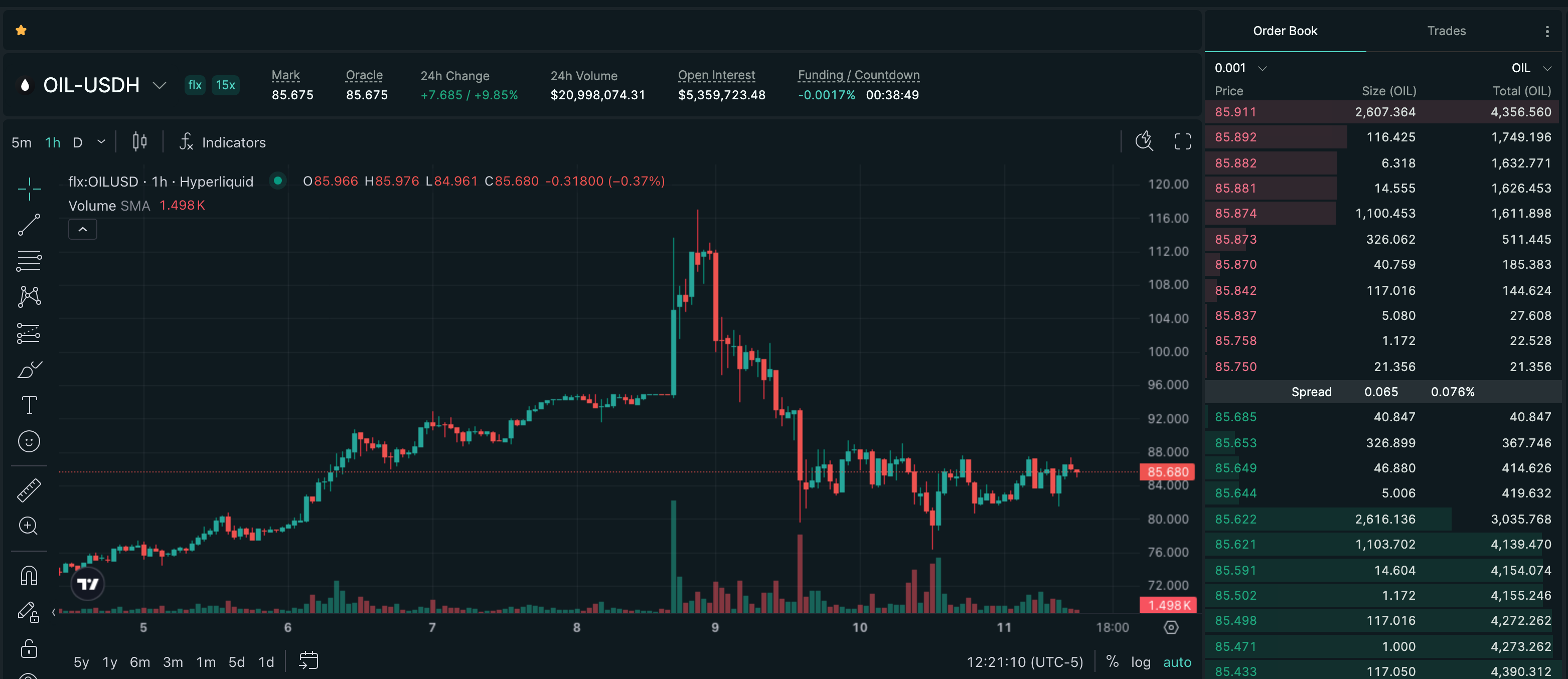
WTI crude reclaimed the mid-$80s after Iran's IRGC announced plans to mine the Strait of Hormuz and three cargo ships were struck by projectiles in and near the waterway. The U.S. military responded by destroying 16 Iranian minelaying vessels. The IEA simultaneously approved a record 400-million-barrel emergency reserve release, but fresh evidence of physical supply disruption overwhelmed the bearish signal.
Mover Brief
The Catalyst: Strait Gets Worse, Not Better
Oil had just finished its largest weekly reversal in modern futures history — crashing from $119 to the low $80s after Trump floated a U.S. takeover of the Strait of Hormuz. The market was pricing in a quick resolution. Then March 11 happened.
Iran's Islamic Revolutionary Guard Corps announced it would begin deploying naval mines in the Strait of Hormuz, the 21-mile-wide chokepoint that handles roughly one-fifth of globally consumed oil. Hours later, three cargo ships were struck by projectiles in and near the strait — including the Thailand-flagged Mayuree Naree, which Iran's Revolutionary Guards claimed credit for hitting. Star Bulk's Star Gwyneth and a third vessel were also damaged in separate incidents near the UAE coast.
The U.S. military didn't wait. CENTCOM announced it had destroyed 16 Iranian minelaying vessels near the strait. Trump demanded Iran "immediately" remove any mines, threatening consequences "at a level never seen before." Defense Secretary Pete Hegseth said the U.S. would not let the strait be "held hostage."
This was the opposite of de-escalation. The market had spent 48 hours pricing in a diplomatic off-ramp; instead it got active mine warfare and ships on fire. WTI snapped from the low $80s back toward $86, with Brent pushing near $90 at session highs before pulling back.
IEA Deploys the Biggest Reserve Release in History
Working against the supply-fear bid: the International Energy Agency unanimously approved a 400-million-barrel emergency reserve release from its 32 member countries — more than double the 182 million barrels released across two tranches during the 2022 Russia-Ukraine crisis. It is only the sixth collective action in the IEA's 52-year history.
IEA members hold over 1.2 billion barrels of public emergency stocks, with industry holding an additional 600 million barrels under government obligation. The 400-million-barrel figure signals that Western governments view the Hormuz closure as a potential multi-month event and are front-loading supply to prevent a second run at $100+.
The release capped the day's rebound. Without it, the minelayer and cargo-ship headlines likely would have sent crude back above $90. Instead, the two forces — physical escalation pulling prices up, reserve commitments pushing them down — left WTI range-bound in the mid-$80s. Wood Mackenzie estimates roughly 15 million barrels have already been removed from the global market since the strait effectively shut down.
The Noise: A Deleted Tweet and an Inventory Build
Adding to the chaos: Energy Secretary Chris Wright posted and then deleted a claim that the U.S. Navy had escorted a tanker through the Strait of Hormuz. The White House press secretary quickly denied it — "the US Navy has not escorted a tanker or a vessel at this time." The false signal had briefly knocked prices lower before the correction.
Separately, the EIA reported a 3.824-million-barrel crude inventory build for the week ending March 6, above the 2.8 million consensus estimate. In normal weeks this would be bearish. With the strait closed and ships on fire, it barely registered.
What Holds From Here
WTI at $85.51 is still roughly 35% above the ~$63 level where it traded before the U.S.-Israel strikes on Iran began February 28. The market is caught between two massive forces: the physical reality of a closed strait with active mine warfare, and the largest coordinated reserve release ever attempted.
The IMF estimates every 10% oil price increase adds 0.4% to inflation and shaves 0.15% off economic growth. U.S. petroleum prices are already up 17% since the conflict began. The political pressure to resolve this is enormous — but the escalatory signals from both sides are getting louder, not quieter.
The key question hasn't changed: does the strait reopen, or doesn't it? If Iran actually mines the waterway and tanker traffic stays at zero, 400 million barrels of reserves buy time but don't solve the problem. If the U.S. military secures a corridor and traffic resumes, crude is heading back toward the $70s regardless of how many minelayers get sunk in the process.
Sources & Provenance
Citations below are preserved as structured Postgres source rows for this brief.
Citations Preserved
7
Reference links carried forward from the published mover record.
Original Signal
Open source tweetMarket Route
Direct route preserved for readers who want to inspect the tracked Hyperliquid market behind this archive entry.
Already onboarded? Open tracked market- 1CNBC — Oil prices rise after IEA announces historic reserve releasecnbc.com
- 2CNBC — Three cargo ships struck off Iran's coast, including one in Strait of Hormuzcnbc.com
- 3CNBC — IEA agrees to release record 400 million barrelscnbc.com
- 4NPR — U.S. attacks Iranian mine-laying ships near Strait of Hormuznpr.org
- 5Al Jazeera — Oil prices swing wildly amid mixed messages over Iran waraljazeera.com
- 6Euronews — Oil steadies as IEA and G7 move to release record reserveseuronews.com
- 7Investing.com — Crude oil inventories rise, surpassing forecastsin.investing.com
This content is for informational purposes only and does not constitute financial advice. Trading perpetual futures involves substantial risk of loss.
Trade OIL on Hyperliquid
Use referral code HIPERWIRE for 4% off trading fees on your first $25M in volume.
Live Market Metrics
Monitor real-time open interest and funding for OIL.