Oil Rejected at $100 as Trump's Hormuz Naval Coalition Draws Zero Commitments
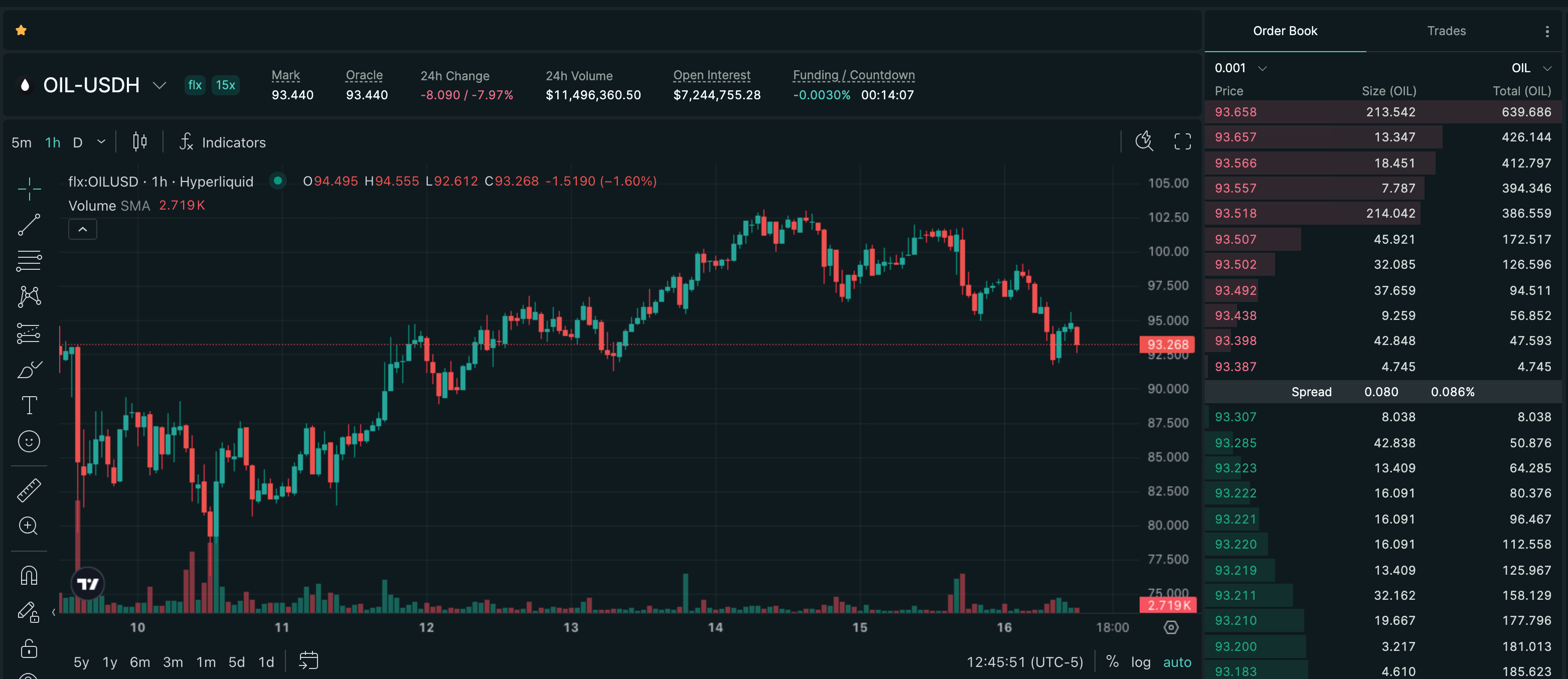
WTI crude reversed from $101 back to $93 in a single session after President Trump's call for a seven-nation naval coalition to reopen the Strait of Hormuz drew zero public commitments. The selloff accelerated after White House trade adviser Peter Navarro released a 13-page report claiming Iran's geopolitical risk has inflated oil prices by $5 to $15 per barrel for decades, projecting crude at 'well below $60' once the threat is removed. The reversal came despite a fresh drone strike on the UAE's Fujairah oil port, the clearest signal yet that profit-taking has overtaken supply panic.
Mover Brief
The Coalition That Wasn't
WTI touched $101 in early Monday trading, extending a 32% rebound from the March 11 lows near $77. The rally ran on supply fear: the Strait of Hormuz was still effectively closed, tanker traffic was down to 5 ships per day versus a historical average of 138, and Iran's IRGC had mined the waterway.
Then Trump made his pitch. He called on seven countries — China, Japan, France, the UK, South Korea, and others — to deploy naval forces to secure the strait. None publicly committed. Japan explicitly said it had no plans to dispatch vessels. Australia declined. The UK said it was "intensively looking" at options — diplomatic code for no.
The market had spent two weeks pricing in an aggressive U.S.-led military reopening of the strait. Trump's earlier rhetoric — floating a unilateral takeover, threatening to seize Kharg Island — supported that thesis. The coalition call revealed the gap between rhetoric and execution: Washington wanted burden-sharing, and nobody was buying. WTI dropped from $101 to $93 in hours as traders unwound the quick-fix trade.
Navarro's $60 Oil Report
Adding to the selling pressure, White House trade adviser Peter Navarro released a 13-page report arguing that Iran has imposed a "$5 to $15 per barrel" terror premium on crude oil for decades. The report projected prices falling "well below $60 per barrel under current supply conditions" if the Iranian threat were neutralized, claiming the cumulative cost to the global economy exceeded $10 trillion over 25 years.
The market read it as the White House explicitly telling traders that current prices are inflated and that the administration's endgame is dramatically cheaper oil. Whether the analysis holds up is almost beside the point — University of Houston energy economist Ed Hirs said he "knows of no verifiable evidence" of such a premium, and the report ignores the costs of military action. But the signal matters more than the methodology. When the White House publishes a document framing $60 oil as the post-conflict baseline, it puts a ceiling on how much speculative long positioning the market can sustain.
Demand Destruction vs. Fujairah
The fundamental case for lower prices got backup from the IEA's March oil market report, which cut 2026 global demand growth to 640,000 barrels per day — down 210,000 bpd from the prior estimate. More aggressively, the agency warned that high prices would destroy roughly 1 million bpd of demand during March and April alone. That is the market mechanism doing what diplomacy hasn't: forcing consumption lower because $100 oil is too expensive for the global economy to absorb.
On the other side, Iran's drone strike on the UAE's Fujairah port — the second attack on the critical bunkering hub in days — temporarily suspended oil loading operations. Fujairah handles roughly 1 million barrels per day of Abu Dhabi's Murban crude via a pipeline that bypasses the Strait of Hormuz entirely. Knocking out the one working alternative to Hormuz transit should have been wildly bullish. Instead, prices fell through it. That is the clearest signal that the long side is exhausted — when a supply-negative headline can't hold a bid, profit-taking has taken over from panic.
WTI at $93 is still roughly 40% above the ~$67 level where it traded before the U.S.-Israel strikes on Iran began February 28. The IEA estimates the Hormuz disruption has already removed nearly 20 million bpd of crude and product flows from global markets. The question is whether the coalition stall means the strait stays closed for weeks or months — and whether demand destruction and reserve releases can keep crude in the $90s rather than retesting $100+ on the next escalation headline.
Sources & Provenance
Citations below are preserved as structured Postgres source rows for this brief.
Citations Preserved
7
Reference links carried forward from the published mover record.
Original Signal
Open source tweetMarket Route
Direct route preserved for readers who want to inspect the tracked Hyperliquid market behind this archive entry.
Already onboarded? Open tracked market- 1Fortune — Trump asks 7 countries for Hormuz help, none commitfortune.com
- 2Al Jazeera — Trump seeks naval coalition to open Strait of Hormuzaljazeera.com
- 3U.S. News (Reuters) — Navarro says Iran terror premium inflated oil prices for decadesusnews.com
- 4IEA — Oil Market Report, March 2026iea.org
- 5Engine — IEA cuts global oil demand growth forecast for 2026engine.online
- 6CNBC — UAE's Fujairah oil hub targeted by drone attackcnbc.com
- 7TradingEconomics — Crude oil price datatradingeconomics.com
This content is for informational purposes only and does not constitute financial advice. Trading perpetual futures involves substantial risk of loss.
Trade OIL on Hyperliquid
Use referral code HIPERWIRE for 4% off trading fees on your first $25M in volume.
Live Market Metrics
Monitor real-time open interest and funding for OIL.