Oil Breaks $90 as Strait of Hormuz Shuts Down
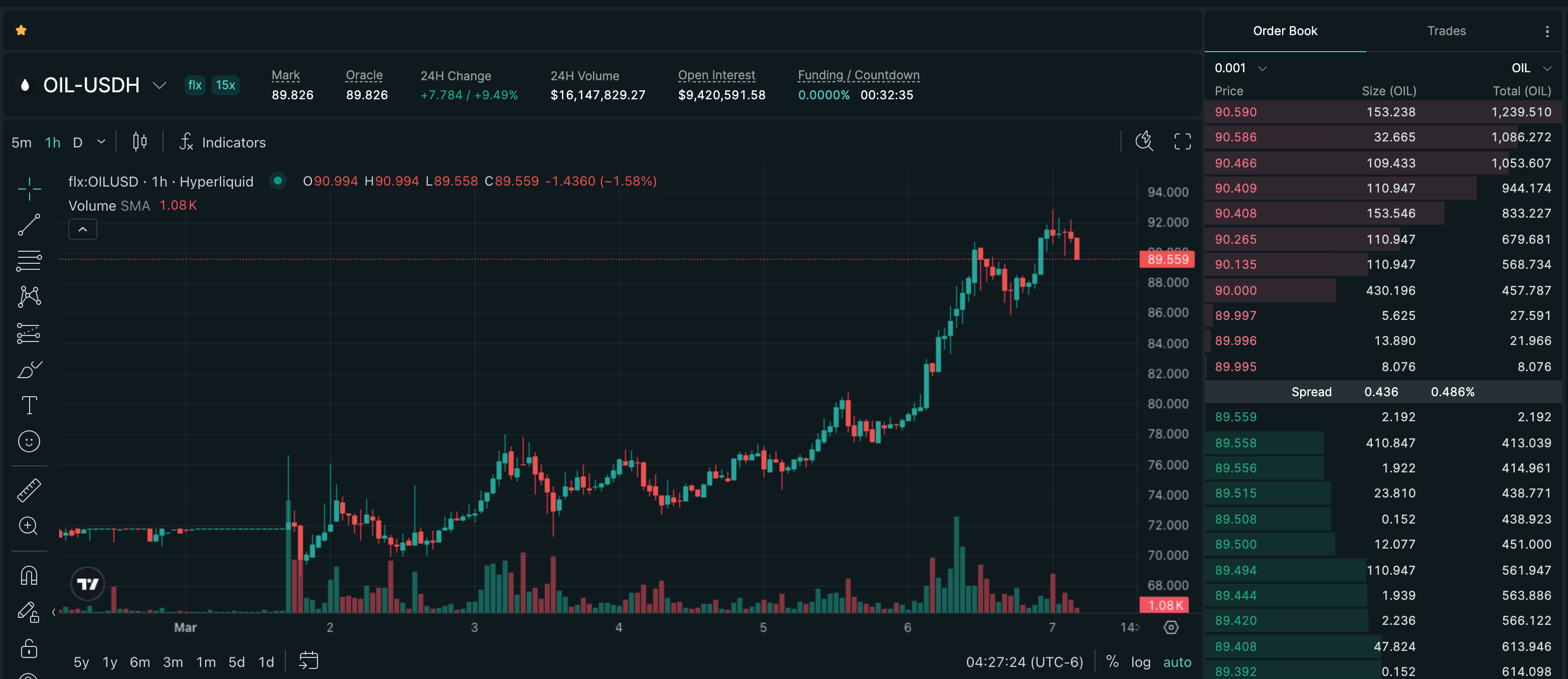
Crude oil just posted its sharpest weekly gain in over two years after Operation Epic Fury — the coordinated US-Israeli strikes on Iran launched February 28 — effectively closed the Strait of Hormuz to commercial traffic. WTI breached $90 for the first time since 2023, and Brent briefly topped $94. The chokepoint handles roughly one-fifth of global oil supply, and tanker transits have collapsed from 24 per day to near zero in under a week.
Mover Brief
The Catalyst: Hormuz Goes Dark
On February 28, the United States and Israel launched Operation Epic Fury, a coordinated campaign targeting Iranian leadership, military infrastructure, and nuclear sites. Iran's Islamic Revolutionary Guard Corps responded by officially closing the Strait of Hormuz on March 2 and threatening any vessel that attempted passage.
The effect was immediate. Crude tanker transits through the strait dropped from an average of 24 per day to just four on March 1 — three of which were Iran-flagged. By midweek, traffic had fallen roughly 90% and over 200 vessels sat anchored on both sides of the waterway, unable to move. War risk insurance rates jumped from 0.25% to 1.25% of vessel value, and several major insurers pulled coverage entirely, effectively halting commercial transit even for operators willing to run the strait.
The Price Action
Brent crude settled at $92.69 on Friday, up 8.5% on the day, briefly touching above $94 — its highest level since September 2023. WTI broke above $90 for the first time in over two years, jumping 12.2% to $90.90. Both benchmarks had been trading near $70 just a week earlier.
The move coincided with a weak U.S. jobs report showing employers cut more jobs than they created last month, sparking stagflation fears. Brian Jacobsen, chief economic strategist at Annex Wealth Management, put it plainly: "A negative payrolls number combined with a big jump in oil prices will have traders worrying about stagflation risks." The S&P 500 dropped 1.3%, capping Wall Street's worst week since October. U.S. gas prices climbed 22 cents to $3.19 per gallon by midweek and are still rising.
What Comes Next
The critical variable is duration. Goldman Sachs raised its Q2 Brent forecast to $76 (up $10), modeling five more days of minimal Hormuz exports followed by a gradual recovery. But the bank warned that if the disruption extends to five weeks, oil could reach $100.
OPEC+ is holding production steady through Q1, with roughly 3.24 million barrels per day of cuts still in place — about 3% of global demand. That means there is spare capacity available, but the cartel has shown no urgency to deploy it. President Trump has offered U.S. Navy escorts for commercial tankers and directed the International Development Finance Corporation to backstop shipping insurance, but neither measure has reopened the strait yet.
With 20% of global oil supply bottlenecked and no ceasefire in sight, the risk premium is real. Analysts estimate a $4–$10 per barrel geopolitical premium is already baked in — and that number only goes up the longer Hormuz stays closed.
Sources & Provenance
Citations below are preserved as structured Postgres source rows for this brief.
Citations Preserved
6
Reference links carried forward from the published mover record.
Original Signal
Open source tweetMarket Route
Direct route preserved for readers who want to inspect the tracked Hyperliquid market behind this archive entry.
Already onboarded? Open tracked market- 1NPR — Oil surges to highest price since 2023 after U.S. jobs reportnpr.org
- 2Euronews — Hormuz shutdown keeps oil prices on an upward trajectoryeuronews.com
- 3NBC News — Shipping slows to a crawl through Strait of Hormuznbcnews.com
- 4NPR — How traffic dried up in the Strait of Hormuz since the Iran war begannpr.org
- 5CNBC — OPEC+ to raise oil output slightly even as Iran war disrupts shipmentscnbc.com
- 6OilPrice.com — Oil prices surge as US-Iran standoff triggers higher 2026 forecastsoilprice.com
This content is for informational purposes only and does not constitute financial advice. Trading perpetual futures involves substantial risk of loss.
Trade OIL on Hyperliquid
Use referral code HIPERWIRE for 4% off trading fees on your first $25M in volume.
Live Market Metrics
Monitor real-time open interest and funding for OIL.