U.S. Energy Stocks Give Back War Premium After Trump Signals Iran Conflict Nearing End
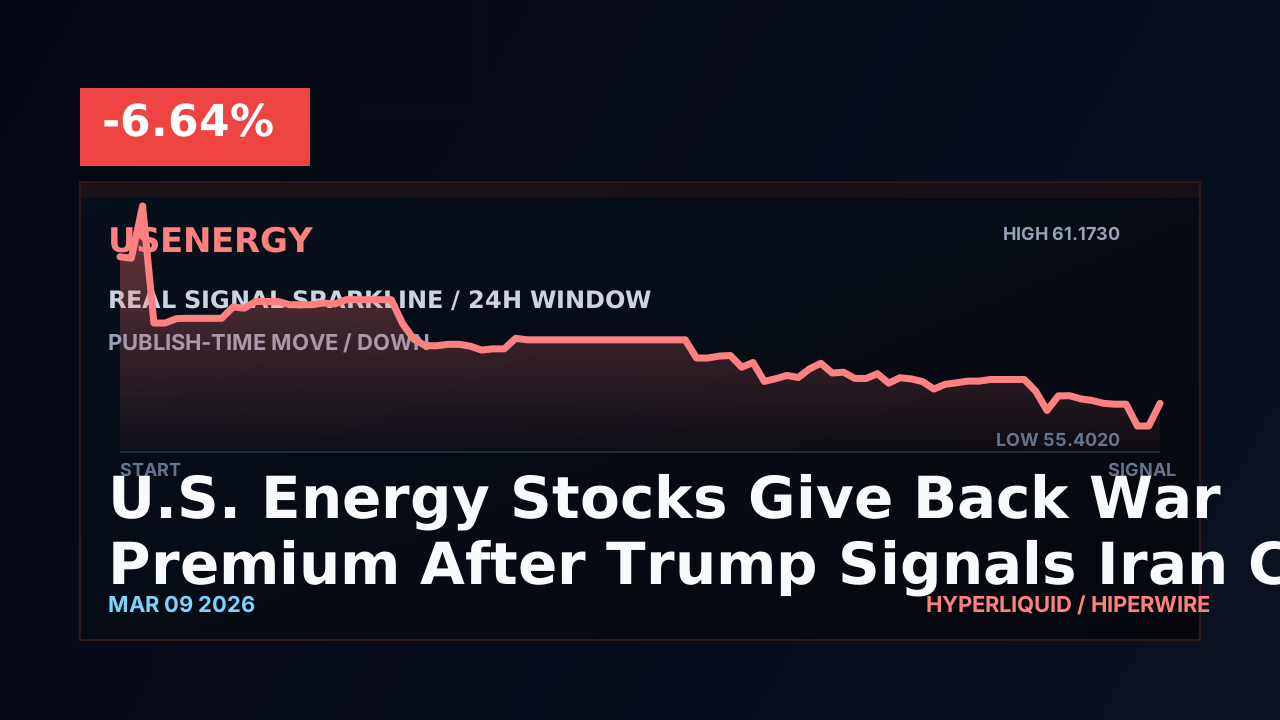
USENERGY dropped 6.64% on March 9 as the geopolitical risk premium that had been propping up energy names for nearly two weeks began to unwind. President Trump told CBS News the war on Iran was "very complete, pretty much," triggering a 6% intraday collapse in WTI crude from above $100 to a session low near $84. Energy stocks, which had been among the few sectors in the green since the U.S.-Israel strikes began on February 28, reversed hard as traders repriced the conflict's duration.
Mover Brief
The Catalyst: Trump Says War Is 'Very Complete'
The selloff traces directly to a single remark. Shortly after 3:15 p.m. ET on March 9, President Trump told CBS News reporter Weijia Jiang that "the war is very complete, pretty much" — adding that Iran has "no navy, no communications" and "no Air Force." He said the operation was running "very far" ahead of his initial 4-5 week timeline.
Oil responded instantly. West Texas Intermediate crude plunged as much as 6%, dropping from above $100 per barrel to a session low of $83.89 before recovering to roughly $85.27. Brent fell 4.6% to $88.43. The broader equity market staged a massive reversal — the Dow jumped 239 points to close up 0.50%, the S&P 500 gained 0.83%, and the Nasdaq rallied 1.38% — but energy names moved the other way.
The logic is straightforward: energy stocks had been bid up on a war premium that was now being pulled. USENERGY, which tracks U.S.-listed energy companies spanning oil and gas exploration, production, refining, and services, gave back 6.64% as traders unwound the conflict trade.
Two Weeks of War Premium
To understand the drop, you need the rally that preceded it. Since the U.S. and Israel launched joint strikes on Iran on February 28, crude prices had surged roughly 50%. Iran retaliated by effectively shutting down the Strait of Hormuz — the chokepoint carrying roughly 20 million barrels per day, or about 20% of global seaborne oil trade. The IRGC officially confirmed the strait was closed on March 2, and tanker traffic dropped to near zero as insurers pulled war risk coverage.
Oil topped $119 per barrel at its peak. The XLE energy ETF ran from about $54.50 on February 20 to a high near $57.88, and energy was the only S&P 500 sector in the green for the period. That entire move was a geopolitical risk bid — and Trump's comments on March 9 were the first credible signal that the risk event might be shorter-lived than feared.
The unwind was fast because the premium was large. A 50% spike in crude built on a supply disruption that could reverse in days if the strait reopens is inherently fragile. One presidential quote was enough to crack it.
Not a Demand Story
It is worth noting what this drop is not. U.S. energy fundamentals have not deteriorated. Domestic production is intact, refinery utilization is normal, and the demand picture for U.S. energy companies has not changed. This is entirely a macro repricing of geopolitical risk.
OPEC+ agreed on March 1 to resume modest output increases — a 206,000 barrel-per-day hike for April — but that decision was made while oil was still climbing and is marginal relative to the Hormuz disruption. The G-7 has also been mulling emergency oil reserve releases, which adds another potential source of downside pressure on crude if the conflict actually winds down.
The open question is whether Trump's comments reflect an imminent ceasefire or are premature. Iran's new leadership has signaled willingness to talk, but the strait is still effectively closed and shipping insurers have not resumed coverage. If the Hormuz reopening takes weeks rather than days, energy names could find a floor quickly.
What to Watch
The key variable is the Strait of Hormuz. Oil moved 50% on its closure; any concrete evidence of reopening — resumed insurance coverage, tanker bookings, or a formal IRGC stand-down — would accelerate the unwind in energy names. Conversely, if Trump's "very complete" framing proves premature and the strait stays shut, the war premium snaps back.
For USENERGY specifically, the 6.64% drop puts it right back at levels from late February, before the strikes began. That is a full round-trip of the war trade. Further downside from here would mean the market is pricing in not just the end of the conflict premium, but additional bearish factors — potential OPEC+ supply increases, reserve releases, or broader recession fears from the oil shock's drag on consumer spending.
The next 48-72 hours of diplomatic signals will determine whether this is a one-day repricing or the start of a sustained unwind.
Sources & Provenance
Citations below are preserved as structured Postgres source rows for this brief.
Citations Preserved
7
Reference links carried forward from the published mover record.
Original Signal
Open source tweetMarket Route
Direct route preserved for readers who want to inspect the tracked Hyperliquid market behind this archive entry.
Already onboarded? Open tracked market- 1Fortune: Stocks stage massive reversal as oil plunges on Trump Iran commentsfortune.com
- 2CNBC: Oil prices decline after nearly hitting $120 as Trump signals Hormuz seizurecnbc.com
- 3Al Jazeera: Oil past $100 a barrel as US-Israel war on Iran ragesaljazeera.com
- 4Wikipedia: 2026 Strait of Hormuz crisisen.wikipedia.org
- 5NBC News: Shipping slows to a crawl through Strait of Hormuznbcnews.com
- 6CNBC: OPEC+ to raise oil output slightly even as Iran war disrupts shipmentscnbc.com
- 7CNN: Oil prices soar past $100 as war escalates in Irancnn.com
This content is for informational purposes only and does not constitute financial advice. Trading perpetual futures involves substantial risk of loss.
Trade USENERGY on Hyperliquid
Use referral code HIPERWIRE for 4% off trading fees on your first $25M in volume.
Live Market Metrics
Monitor real-time open interest and funding for USENERGY.