Alibaba Drops 8% as Traders De-Risk Ahead of Expected Profit Collapse
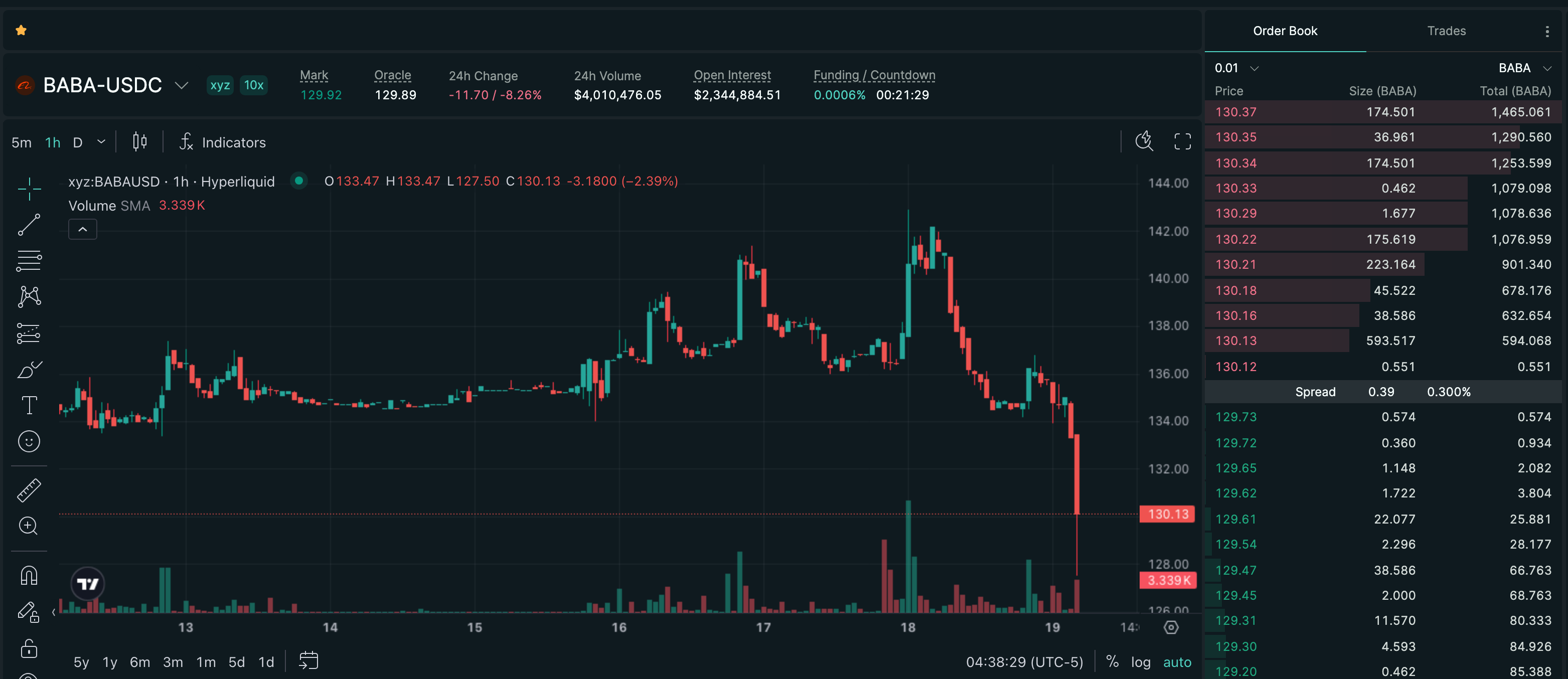
Alibaba shed 8.46% in 24 hours, extending a seven-session losing streak into its March 19 earnings print. Analysts expect EPS to fall roughly 48% year-over-year to around $1.59, even as revenue grows 8%, with ballooning AI infrastructure spending compressing margins. The selloff reflects pre-earnings positioning into what could be the company's weakest profit quarter in years.
Mover Brief
The Catalyst
Alibaba's 8.46% slide over 24 hours is the crescendo of a seven-session losing streak that wiped more than 12% off the stock heading into its most consequential earnings print of the year. The company reports December-quarter results before the U.S. market opens on March 19, and the consensus is ugly: analysts project EPS of roughly $1.59, down from $3.10 in the year-ago quarter — a 48% decline — while revenue is expected to come in around $41.6–$42.2 billion, up about 8% year-over-year.
The math is straightforward. Revenue grows, but margins get eaten alive by Alibaba's aggressive AI infrastructure buildout. The company committed to 380 billion RMB (~$53 billion) in AI capex over three years, and traders are front-running the possibility that this quarter's numbers make the margin compression impossible to ignore. Options markets were pricing a 5.75% post-earnings move — the stock has already exceeded that in the lead-up.
The AI Pivot and Its Price Tag
Two days before earnings, Alibaba announced the formation of Alibaba Token Hub, a new business group consolidating its Tongyi Lab, Qwen model team, MaaS business line, DingTalk, and Quark smart devices under CEO Eddie Wu's direct oversight. The unit is organized around the concept of creating, distributing, and applying AI tokens — computational units powering large language models — as a commercial product.
Alongside the restructuring, Alibaba launched Wukong, an enterprise AI workplace platform designed to embed model capabilities into business workflows, with planned Slack and Teams integration. And Alibaba Cloud raised computing and storage prices up to 34% in March, signaling both strong demand for AI infrastructure and the rising cost of supplying it.
The restructuring itself isn't bearish in isolation — consolidating fragmented AI efforts under one leader is a rational move. But the timing, two days before a quarter where profits are expected to crater, reads as management front-running bad numbers with a forward-looking narrative. Markets didn't buy it.
Macro and Regulatory Drag
Alibaba isn't falling in a vacuum. China's GDP growth target was cut to 4.5–5% on March 5, the lowest since the 1990s, signaling Beijing's own caution about consumer demand — the engine that drives Alibaba's core e-commerce business. In February, the Pentagon briefly added Alibaba to a list of companies allegedly aiding China's military before withdrawing the filing, but the episode underscored the persistent geopolitical risk premium on Chinese ADRs.
Regulatory pressure continued closer to home: Chinese authorities summoned Alibaba subsidiaries Fliggy and AMap in mid-February over consumer lending practices, a reminder that Beijing's tech oversight apparatus hasn't gone dormant. For a stock that ran 29% off its 52-week high of $192.67, the accumulation of macro, regulatory, and earnings risk was simply too much for holders to sit through.
What to Watch
The earnings call today will be about two numbers: cloud revenue growth and forward capex guidance. If Alibaba Cloud shows accelerating revenue — particularly from enterprise AI workloads — the $53 billion spend starts to look like investment rather than incineration. Analysts still rate BABA a strong buy with a consensus target near $198, implying roughly 50% upside from current levels, but that target only holds if management can credibly connect AI spend to a monetization timeline.
The other signal is whether the Token Hub restructuring comes with concrete unit economics: cost per token, margin expectations on Wukong enterprise contracts, or Cloud's pricing power post-hike. Without those numbers, the 380 billion RMB commitment is just a big number with no denominator. At $129.90 and a PE of 18.6x trailing earnings, the market is pricing Alibaba like a value trap — and today's print decides whether that's an opportunity or a warning.
Sources & Provenance
Citations below are preserved as structured Postgres source rows for this brief.
Citations Preserved
7
Reference links carried forward from the published mover record.
Original Signal
Open source tweetMarket Route
Direct route preserved for readers who want to inspect the tracked Hyperliquid market behind this archive entry.
Already onboarded? Open tracked market- 1Alibaba Q3 Earnings Date Announcement (BusinessWire)businesswire.com
- 2Alibaba Token Hub Formation (TechNode)technode.com
- 3Alibaba Wukong Launch and AI Restructuring (CNBC)cnbc.com
- 4Alibaba Seven-Session Losing Streak (Seeking Alpha)seekingalpha.com
- 5China GDP Growth Target Cut to 4.5–5% (CNBC)cnbc.com
- 6Pentagon Military List — Alibaba Added Then Withdrawn (Reuters)reuters.com
- 7Alibaba Subsidiaries Summoned Over Lending Practices (Caixin Global)caixinglobal.com
This content is for informational purposes only and does not constitute financial advice. Trading perpetual futures involves substantial risk of loss.
Trade BABA on Hyperliquid
Use referral code HIPERWIRE for 4% off trading fees on your first $25M in volume.
Live Market Metrics
Monitor real-time open interest and funding for BABA.