The Iran Ceasefire Gave Tehran a Toll Booth Over Global Oil
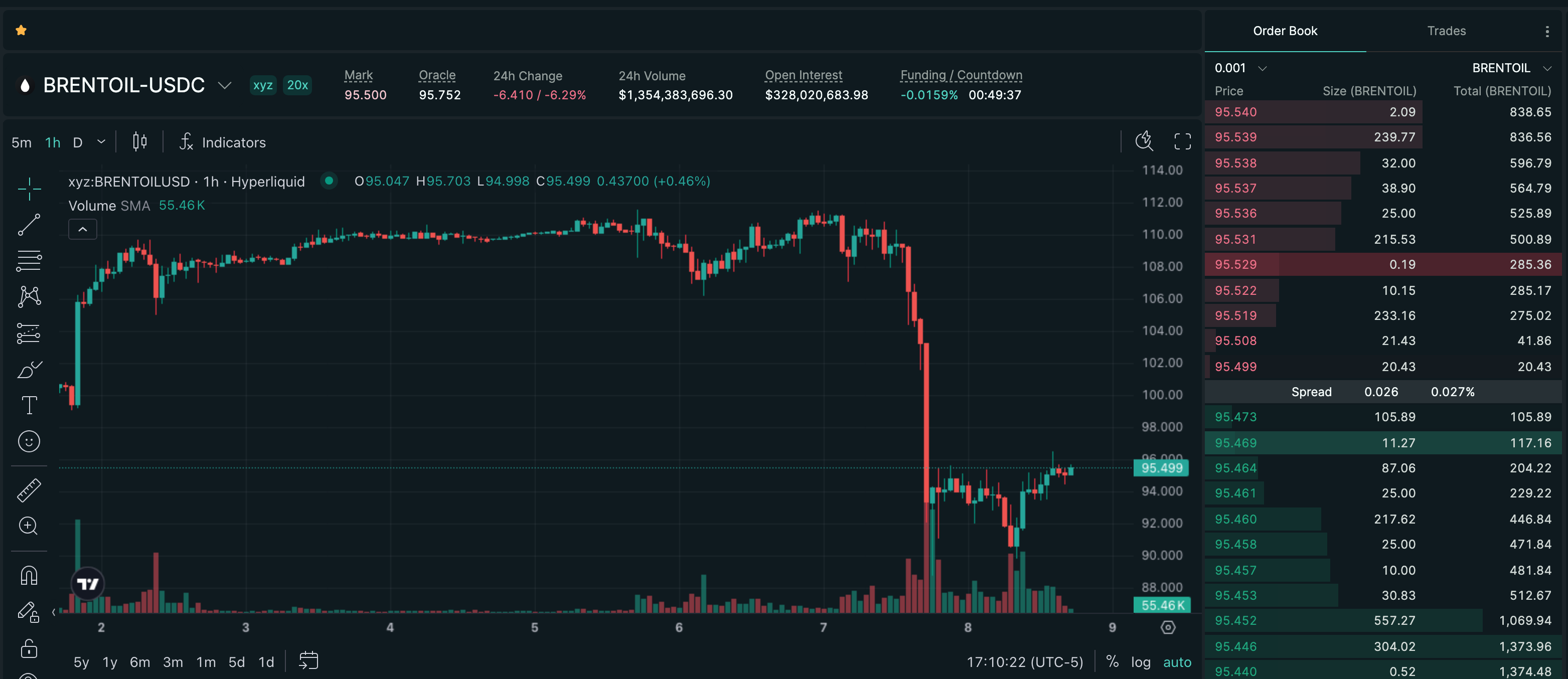
The two-week ceasefire that crashed Brent crude 15% didn't just pause the bombing. It codified Iran's armed-forces control over the Strait of Hormuz at roughly $1 million per ship, with US vessels banned outright. Three hundred forty tankers remain trapped in the Persian Gulf, daily transits are down 90-95% from pre-war levels, and analysts say shuttered oil wells need two to three months to restart. Brent at $95 prices in the diplomacy but not the physical barrels.
Mover Brief
The Toll Booth
The ceasefire terms themselves are the story. Under the deal announced late Tuesday — less than two hours before Trump's deadline for Iran to reopen the strait — passage through the Strait of Hormuz is coordinated "in coordination with Iran's armed forces." That language effectively grants Tehran dominance over the waterway that carries 20% of the world's traded oil and gas.
The Wall Street Journal estimated the toll at roughly $1 million per ship for friendly nations. The Philippines reportedly paid up to $2 million per vessel for oil passage. Pakistan received clearance for 20 ships. US-flagged vessels are banned outright. With roughly 130 ships transiting daily in peacetime, Iran has turned a chokepoint into a revenue stream.
The deal also includes a 10-point Iranian peace proposal demanding comprehensive sanctions relief, US military withdrawal from regional bases, and war reparations — terms Washington is unlikely to accept in full. Trump called it a "workable basis to negotiate," but the gap between a two-week pause and a permanent settlement is wide.
Physical Supply Hasn't Moved
The war premium dropped on the headline. The barrels didn't follow.
Daily transits through the Strait of Hormuz remain down 90-95% from pre-war levels, with roughly five vessels per day making the passage versus 130 in peacetime. Approximately 340 tankers are trapped in the Persian Gulf — 130 carrying crude or fuel oil and 210 loaded with refined products — and none of them are moving.
The brief window when Iran reopened the strait lasted hours. After Israel struck over 100 Hezbollah targets across Beirut, southern Lebanon, and the Bekaa Valley without advance warning — killing over 250 people in Lebanon's deadliest day of the conflict — Iran halted tanker traffic again. Netanyahu and Trump both called Lebanon "a separate skirmish" not covered by the ceasefire. Tehran disagrees, and threatened to withdraw entirely if Israeli strikes continue.
Marine insurance premiums remain at 3.5-10% of vessel value, up from a fraction of a percent pre-war. But cost isn't the real barrier. As one shipping executive put it: "You can be insured, but it doesn't mean you're not still massively concerned about losing your ship, losing your crew, or causing an oil spill."
Months From Normal
Even in the best-case scenario — the ceasefire holds, Iran keeps the strait open, fighting stops — physical supply restoration is a multi-month process. Iraq, Saudi Arabia, Kuwait, UAE, Qatar, and Bahrain collectively shut in 7.5 million barrels per day in March, with production cuts expected to reach 9.1 million b/d in April. Restarting those wells takes two to three months. Producers won't commit the capital unless they believe the ceasefire is permanent, not a two-week pause.
Analysts estimate oil exports could return to pre-war levels by July at the earliest, with initial flows coming as "a slow trickle" from the most risk-tolerant operators. Military escorts, which Secretary of State Rubio described as a "post-conflict necessity," are not a near-term solution.
Brent at $95 reflects this math. The ceasefire pulled crude down from $110+ because the market discounted the probability of peace. But at $25 above the pre-war $70 floor, the price is telling you the market doesn't believe the barrels are coming back soon. The next 13 days of the ceasefire window will determine whether this is a floor or a waystation — but even if the deal holds, the oil won't flow until summer.
Sources & Provenance
Citations below are preserved as structured Postgres source rows for this brief.
Citations Preserved
6
Reference links carried forward from the published mover record.
Original Signal
Open source tweetMarket Route
Direct route preserved for readers who want to inspect the tracked Hyperliquid market behind this archive entry.
Already onboarded? Open tracked market- 1Fortune — Trump ceasefire gives Iran control of Strait of Hormuzfortune.com
- 2CBS News — What needs to happen before oil flows through the Strait of Hormuz againcbsnews.com
- 3PBS NewsHour — Israel says Iran ceasefire doesn't apply to Lebanonpbs.org
- 4Al Jazeera — Oil prices slide, stocks surge as Trump announces two-week Iran ceasefirealjazeera.com
- 5CNBC — Oil prices plunge after Iran agrees to safe passage through Strait of Hormuzcnbc.com
- 6OPB — Ceasefire threatened as Israel expands Lebanon strikes and Iran closes strait againopb.org
This content is for informational purposes only and does not constitute financial advice. Trading perpetual futures involves substantial risk of loss.
Trade BRENTOIL on Hyperliquid
Use referral code HIPERWIRE for 4% off trading fees on your first $25M in volume.
Live Market Metrics
Monitor real-time open interest and funding for BRENTOIL.