Crude Rebuilds the War Premium as Iran's Truce Cracks and Trump Threatens Strikes
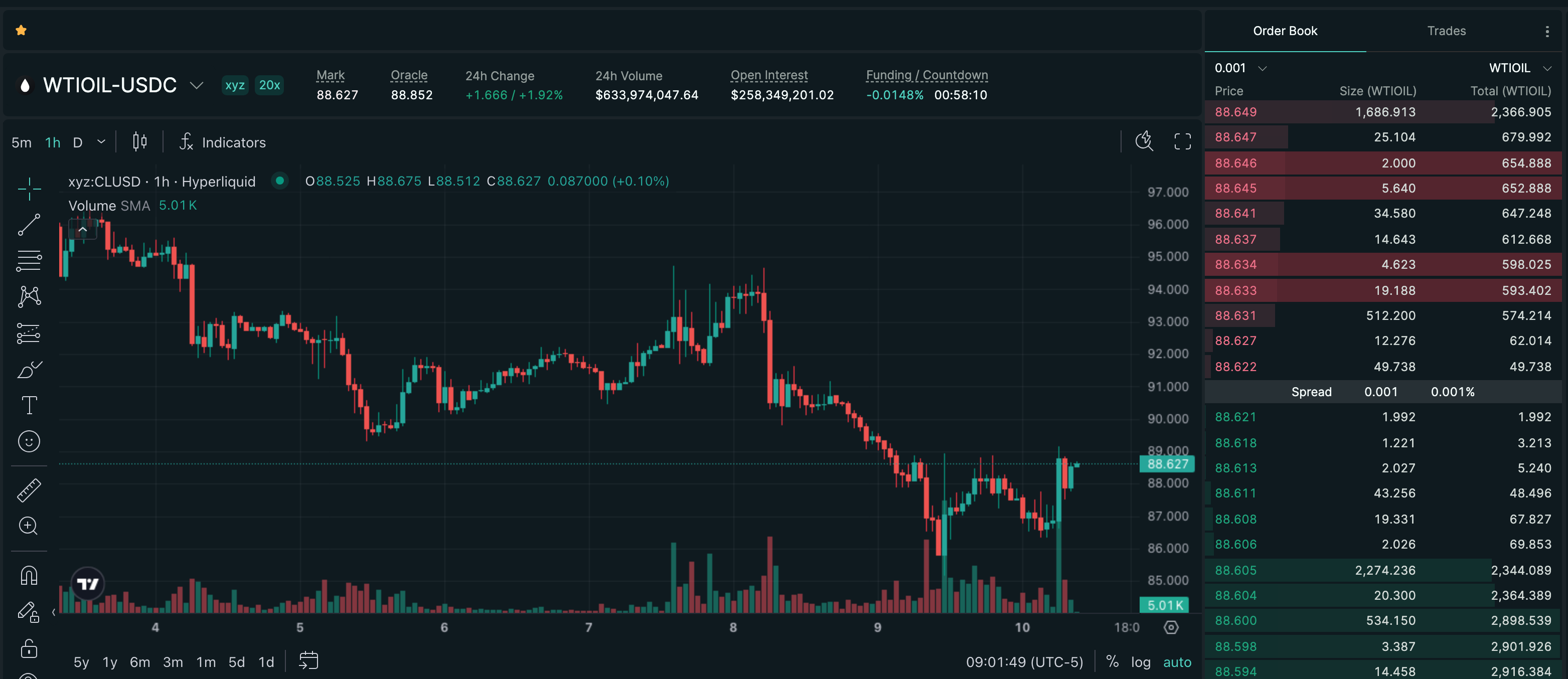
Crude spent June 9 unwinding its war premium on news that Iran had halted strikes — then spent June 10 putting it right back on. The reversal came after President Trump said Iran had delayed negotiations and would have to pay the price, and Iran responded by striking Gulf states, reviving the supply-disruption bid almost as fast as the ceasefire headline killed it. Underneath the whipsaw sits a floor that hasn't moved: the Strait of Hormuz, shut since late February, with OPEC+ quota hikes that mean little when Gulf producers can't physically ship. A 9.1-million-barrel draw in US inventories gave dip-buyers one more reason.
Mover Brief
The Re-Escalation
The June 9 stand-down didn't hold. After Iran said it had halted its strikes on Israel — the headline that drained the war premium and knocked WTI roughly 4% toward the mid-$80s — the de-escalation trade unwound inside a day. President Trump said Iran had delayed negotiations and "will have to pay the price," language the market read as a signal of imminent strikes on Iranian infrastructure. Iran answered by hitting Gulf states including Bahrain, Jordan and Kuwait after a US helicopter was downed. That's the whole move: the premium that bled out on the ceasefire headline got rebuilt the moment the ceasefire looked fake. CL added 3.82% back to $88.60.
The Floor Nobody Can Lift
Even stripped of the headlines, crude has a hard floor here, and it's geographic. The Strait of Hormuz has been effectively shut since late February, the longest chokepoint disruption on record. That's why OPEC+ approving its fourth straight monthly quota hike — another 188,000 bpd for July barely registered: as analyst Jorge Leon put it, a production increase "means very little while the Strait of Hormuz remains closed." Gulf members can lift quotas on paper, but they can't physically ship them — OPEC output had already collapsed from 42.77 million bpd in February toward roughly 33 million in April. Layer on a 9.1-million-barrel draw in US crude stocks to four-month lows and the dip-buyers had cover.
What Resets This
The whole structure hinges on Hormuz reopening, and nobody is pricing that soon. The EIA's June outlook assumes the strait stays closed near-term, holds Brent around $105 through June and July, and doesn't see traffic back to pre-conflict levels until early 2027 — only then does it model prices easing toward $79. Until that changes, every ceasefire headline is a fade candidate in both directions: the June 8 spike to $95 WTI and $98 Brent round-tripped in a day, and this rebound can too. The real signal isn't the next Trump post — it's any credible sign that insurers and tankers are moving back through the strait.
Sources & Provenance
Citations below are preserved as structured Postgres source rows for this brief.
Citations Preserved
6
Reference links carried forward from the published mover record.
Original Signal
Open source tweetMarket Route
Direct route preserved for readers who want to inspect the tracked Hyperliquid market behind this archive entry.
Already onboarded? Open tracked market- 1TradingEconomics — WTI crude live price and June 10 catalyststradingeconomics.com
- 2CNBC — OPEC+ approves fourth output quota hike since Hormuz closurecnbc.com
- 3EIA — June 2026 Short-Term Energy Outlook, global oil marketseia.gov
- 4Reuters — Oil after Iran and Israel halt attacks (June 9, 2026)reuters.com
- 5World Bank — Strait of Hormuz disruption and oil pricesblogs.worldbank.org
- 6TradingKey — WTI surge and fade on Iran-Israel tensionstradingkey.com
This content is for informational purposes only and does not constitute financial advice. Trading perpetual futures involves substantial risk of loss.
Trade CL on Hyperliquid
Use referral code HIPERWIRE for 4% off trading fees on your first $25M in volume.
Live Market Metrics
Monitor real-time open interest and funding for CL.