Iraq Declares Force Majeure as Hormuz Blockade Grinds Exports to a Halt
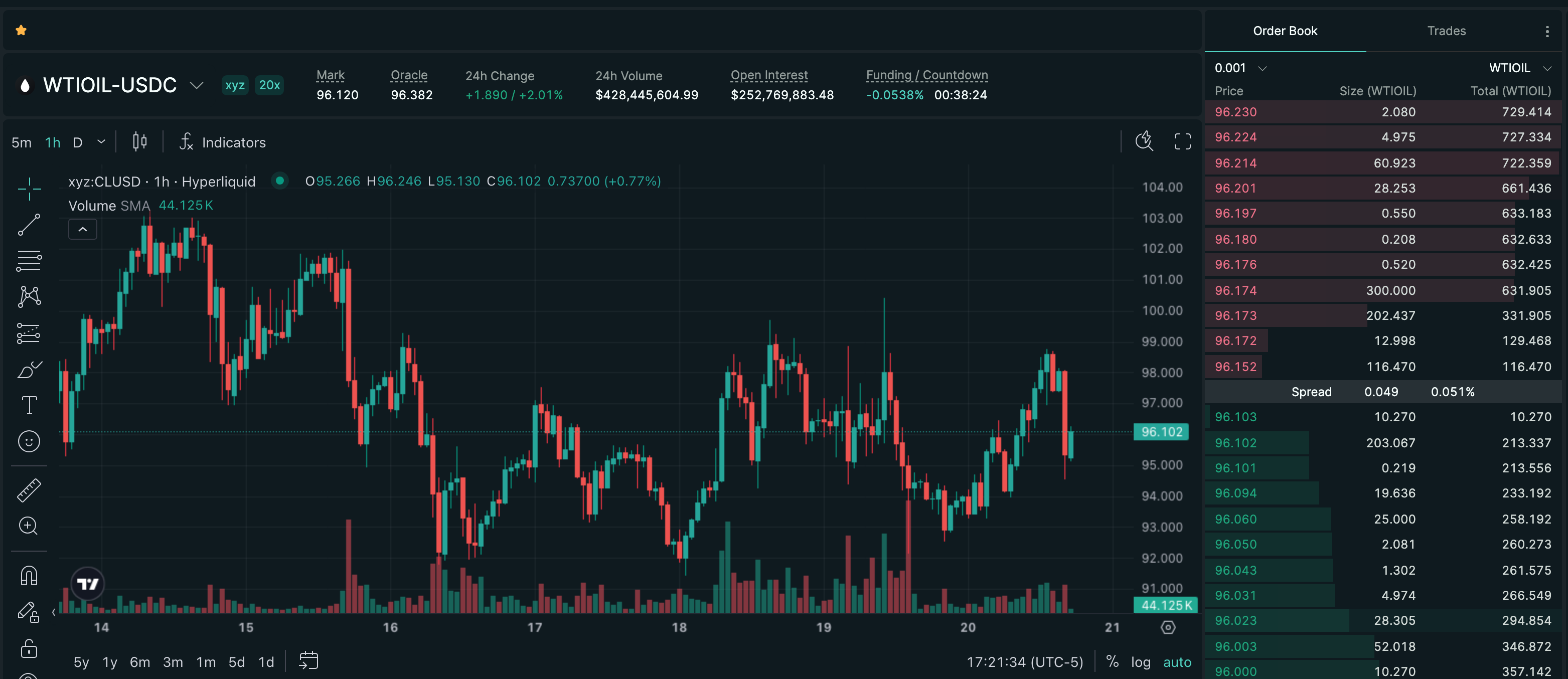
WTI crude pushed back toward $96 after Iraq formally declared force majeure on all foreign-operated oilfields, cutting Basra output from 3.3 million barrels per day to just 900,000 bpd. The declaration — the first by a major OPEC producer since the Strait of Hormuz crisis began on February 28 — formalizes what the market already suspected: three weeks of near-total Hormuz closure have made Iraqi crude exports physically impossible, not just delayed.
Mover Brief
The Catalyst: Iraq Makes It Official
Iraq's oil ministry issued a force majeure letter dated March 17 covering every oilfield in the country operated by international companies. The reason is straightforward: international partners cannot nominate tankers to lift crude from Iraq's southern ports because the Strait of Hormuz is effectively closed. SOMO, Iraq's state oil marketing arm, says it is ready to load — but there are no ships coming.
The production impact is severe. Basra Oil Company output has been slashed from 3.3 million bpd to 900,000 bpd, with remaining barrels directed entirely to domestic refineries. That is a 2.4 million bpd cut from a single producing region — roughly equivalent to the entire daily output of Brazil. Iraq relies on crude revenue for more than 90% of government income, so this is not just an oil market story — it is a fiscal emergency.
This is the first formal force majeure by a major OPEC producer since the Hormuz crisis began. It removes any ambiguity about whether the blockade is a temporary shipping inconvenience or a structural production shutdown. When you physically cannot export, you stop producing. The barrels are not delayed — they are gone.
Kuwait Gets Hit Again
While Iraq was formalizing its export collapse, Iran struck Kuwait's Mina Al-Ahmadi refinery for the second consecutive day on Friday morning. The facility processes roughly 730,000 bpd. Fires broke out across multiple units, and Kuwait's national oil company confirmed several units were shut down. Saudi Arabia intercepted more than a dozen drones within two hours as the strikes continued across the region.
The cumulative picture across the Gulf is now: Qatar's Ras Laffan LNG terminal damaged for years, Kuwait's largest refinery burning for a second straight day, Iraq's southern exports at zero, and the Strait of Hormuz open to essentially nothing except a trickle of Iranian tankers headed to China. Three weeks into this crisis, the physical supply destruction is accelerating, not stabilizing.
Why [WTI](/movers/wti) Is at $96, Not $120
Despite the worst supply disruption in modern oil market history, WTI is trading in the mid-$90s rather than retesting its $119 intraday high from March 9. Three factors explain the cap.
First, the US produces more oil than it imports. The Hormuz shutdown hits WTI less directly than Brent, which is why the WTI-Brent spread has blown out past $12 — the widest in 11 years. American crude is flowing into the export market as Asian and European refiners scramble for non-Gulf barrels, but domestic supply fundamentals remain intact. The EIA reported US crude inventories rose 6.2 million barrels to 449.3 million for the week ending March 13.
Second, Treasury Secretary Bessent floated releasing approximately 140 million barrels of sanctioned Iranian crude currently sitting on tankers. That is about 1.5 days of global consumption — a band-aid, not a fix — but it caps speculative front-month buying.
Third, the market is still pricing a nonzero probability that diplomacy reopens the strait. Goldman Sachs modeled a scenario where gradual Hormuz recovery from April could pull Brent back to the $70s by Q4. But after three weeks and zero committed partners for Trump's proposed naval escort coalition, the base case for a quick reopening keeps getting thinner.
What the Force Majeure Changes
Force majeure is a legal declaration, not a market signal — but it has market consequences. It releases international oil companies from contractual obligations to produce and lift Iraqi crude. That means BP, ExxonMobil, TotalEnergies, and others operating in southern Iraq can now scale down operations, send staff home, and stop spending. Restarting production after a multi-week shutdown is not flipping a switch — wells need workovers, pipelines need integrity checks, and storage that filled up during the blockade needs to be cleared.
The 2.4 million bpd offline at Basra alone would be the largest single-country production cut in OPEC history outside of wartime destruction of infrastructure. And Iraq is not the only Gulf producer throttling back — the cumulative shut-in across the region is estimated at 7-10 million bpd. Even if Hormuz reopened tomorrow, the restart timeline for this much idled capacity is measured in months, not days.
For WTI specifically, the force majeure strengthens the bid under $95. Every barrel Iraq cannot export is a barrel that non-Gulf producers — primarily the US — must replace. The WTI-Brent spread tells the story: American crude is repricing as the world's marginal barrel of last resort.
Sources & Provenance
Citations below are preserved as structured Postgres source rows for this brief.
Citations Preserved
7
Reference links carried forward from the published mover record.
Original Signal
Open source tweetMarket Route
Direct route preserved for readers who want to inspect the tracked Hyperliquid market behind this archive entry.
Already onboarded? Open tracked market- 1Reuters via WKZO — Iraq declares force majeure on foreign-operated oilfieldswkzo.com
- 2US News — Iraq force majeure over Hormuz disruptionusnews.com
- 3Al Jazeera — Iran hits Kuwaiti oil refinery as Israel renews attacks on Tehranaljazeera.com
- 4Reuters — US crude stocks rise 6.2M barrels, EIA datareuters.com
- 5CNBC — Oil prices top $112, US weighs releasing sanctioned Iranian crudecnbc.com
- 6Reuters — WTI-Brent spread hits widest in 11 yearsreuters.com
- 7The National — Iraq faces polycrisis as Iran war grinds oil exports to a haltthenationalnews.com
This content is for informational purposes only and does not constitute financial advice. Trading perpetual futures involves substantial risk of loss.
Trade CL on Hyperliquid
Use referral code HIPERWIRE for 4% off trading fees on your first $25M in volume.
Live Market Metrics
Monitor real-time open interest and funding for CL.