WTI Crude Jumps as Iran Strikes Energy Facilities Across Four Gulf States
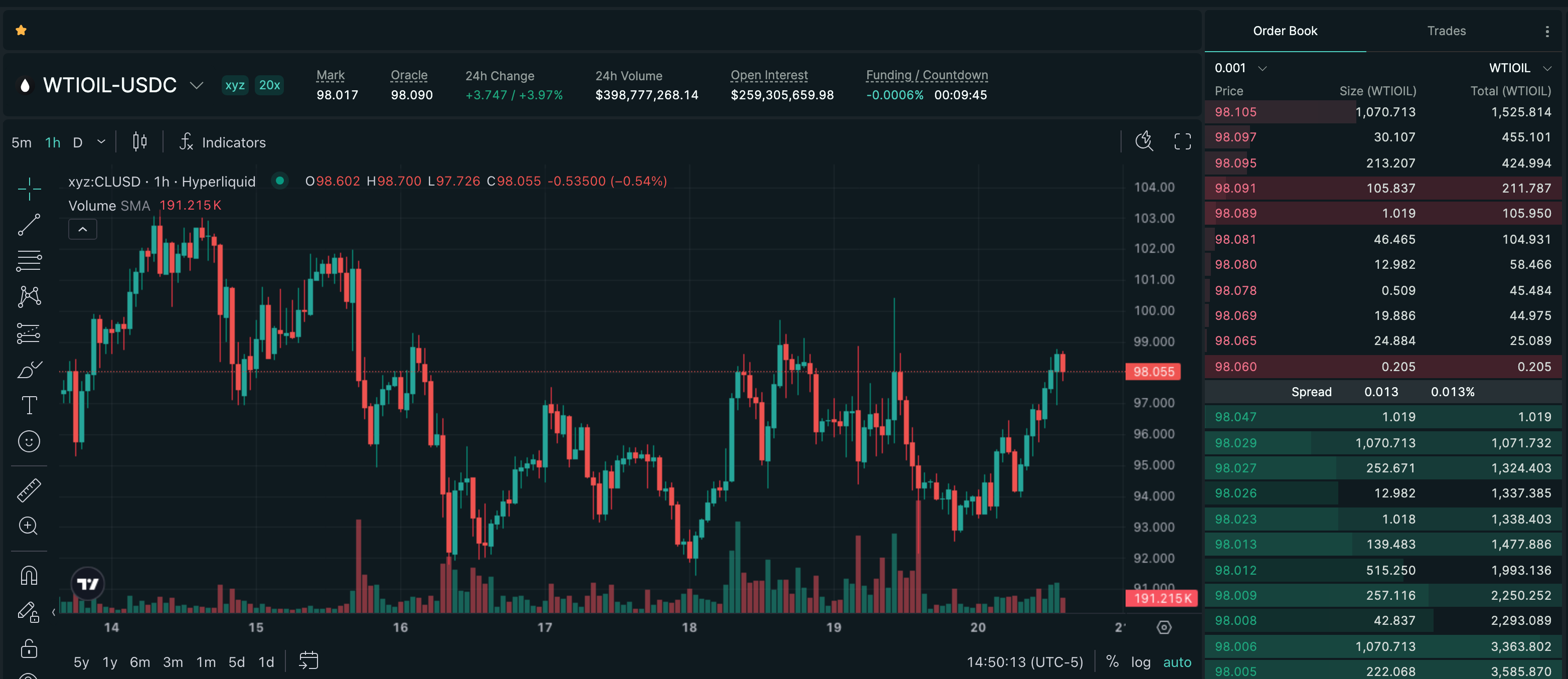
WTI crude ripped above $98 after Iran launched retaliatory strikes on energy infrastructure in Qatar, Kuwait, Saudi Arabia, and the UAE on March 19. The attacks were a direct response to Israel's strike on Iran's South Pars gas field the previous day. Qatar's Ras Laffan LNG terminal sustained extensive damage, knocking out 17% of the country's LNG export capacity with repairs estimated at three to five years.
Mover Brief
The Catalyst: Iran Hits Four Countries in One Night
Iran launched coordinated strikes on energy infrastructure across the Persian Gulf early on March 19, hitting facilities in four countries within hours. The targets were specific and economically devastating:
- Qatar: Iranian missiles struck Ras Laffan Industrial City, the world's largest LNG complex. QatarEnergy CEO Saad al-Kaabi confirmed the attack knocked out 17% of Qatar's LNG export capacity. The Pearl GTL facility sustained damage that CBS reports will take 3-5 years to repair, with an estimated $20 billion in annual revenue at risk.
- Kuwait: 18 drones hit Mina Al-Ahmadi and Mina Abdullah refineries over a 24-hour period, setting both on fire.
- Saudi Arabia: The SAMREF refinery in Yanbu, a Red Sea port city, was struck by missiles.
- UAE: The Habshan gas facility and Bab field were forced to shut down.
Iran's foreign minister declared "ZERO restraint" in future responses if Iranian infrastructure is targeted again. Brent crude briefly touched $119 per barrel before settling back as Netanyahu claimed Israel was helping to reopen the Strait of Hormuz.
South Pars and the Escalation Logic
The Iranian strikes were retaliation for Israel's March 18 attack on South Pars, the Iranian portion of the world's largest natural gas reservoir. South Pars produces 730 million cubic meters of gas per day — roughly 70% of Iran's domestic gas consumption — feeding power plants, heating systems, and the petrochemical complexes that keep Iran's sanctioned economy functioning.
Netanyahu confirmed Israel acted alone. Trump responded by saying the US "knew nothing" about the strike and warned Israel to make no further attacks on South Pars, threatening to "massively blow up the entirety of the South Pars Gas Field" himself if Iran retaliated against Qatar. Iran retaliated anyway.
The escalation logic is now self-reinforcing. Israel hits Iranian energy to degrade IRGC revenue. Iran retaliates against Gulf producers to demonstrate that no one's infrastructure is safe. Each round makes the supply disruption worse and harder to reverse. The damage at Ras Laffan alone will outlast any ceasefire by years.
What's Keeping a Lid on Prices
Despite the broadest attack on Gulf energy infrastructure in modern history, WTI is trading at $98 — not $120. Three forces are capping the upside.
First, Netanyahu told English-speaking audiences that Israel is "helping to open the Strait of Hormuz." The market is pricing some probability of restored tanker flows, even though only 21 tankers have transited the strait since the war began February 28, compared to 100+ per day before. The gap between rhetoric and physical flows remains enormous.
Second, Treasury Secretary Bessent told Fox Business that Washington may unsanction approximately 140 million barrels of Iranian crude currently sitting on tankers. That is roughly 1.5 days of global consumption — not a structural fix, but enough to take the speculative froth off the front-month contract.
Third, US domestic supply is actually building. The EIA reported crude inventories rose 6.2 million barrels to 449.3 million barrels for the week ending March 13. The US produces more oil than it imports, so the Hormuz shutdown hits American supply less directly — but the WTI-Brent spread has blown out to $12+, pulling more US crude into the export market as Asian and European refiners scramble for non-Gulf barrels.
What to Watch
The variable that matters most is whether Hormuz actually reopens or whether the diplomatic signals remain empty. Only ~90 ships total have crossed since February 28, and over 500 tankers sit idle in the Persian Gulf. A credible naval escort operation would be the single biggest bearish catalyst for crude — but Trump's proposed "Hormuz Coalition" has zero committed members after Japan, Australia, and China all declined.
On the bullish side, the physical damage to Gulf infrastructure is now cumulative and not quickly reversible. Qatar's LNG repairs are measured in years, not weeks. Every new round of tit-for-tat strikes between Israel and Iran adds to the bill. If Bessent's 140 million barrel sanctions release gets absorbed without meaningfully moving price, the market will read that as confirmation that the disruption exceeds any policy response short of a ceasefire.
The WTI-Brent spread is also worth tracking as a proxy for how much physical stress is in the system. If it continues widening past $12, it signals that non-US crude markets are getting tighter regardless of what WTI does.
Sources & Provenance
Citations below are preserved as structured Postgres source rows for this brief.
Citations Preserved
7
Reference links carried forward from the published mover record.
Original Signal
Open source tweetMarket Route
Direct route preserved for readers who want to inspect the tracked Hyperliquid market behind this archive entry.
Already onboarded? Open tracked market- 1CNBC — Oil prices fall after Brent briefly touches $119 as Netanyahu says Israel helping to open Strait of Hormuzcnbc.com
- 2PBS NewsHour — Iran intensifies attacks on Gulf energy sites after Israel struck its key gas fieldpbs.org
- 3CBS News — Iran war escalates after Israeli strike on South Pars gas fieldcbsnews.com
- 4Al Jazeera — Iran threatens to strike Gulf energy facilities after South Pars attackaljazeera.com
- 5Reuters — US crude stocks rise as WTI-Brent spread hits widest in 11 yearsreuters.com
- 6CBS News — Strait of Hormuz remains shut as Trump pushes allies to help open waterwaycbsnews.com
- 7CNBC — Oil prices little changed as US considers lifting sanctions on Iranian crudecnbc.com
This content is for informational purposes only and does not constitute financial advice. Trading perpetual futures involves substantial risk of loss.
Trade CL on Hyperliquid
Use referral code HIPERWIRE for 4% off trading fees on your first $25M in volume.
Live Market Metrics
Monitor real-time open interest and funding for CL.