WTI Gives Back the Hormuz Strike Bounce, Back at Its Pre-War Low
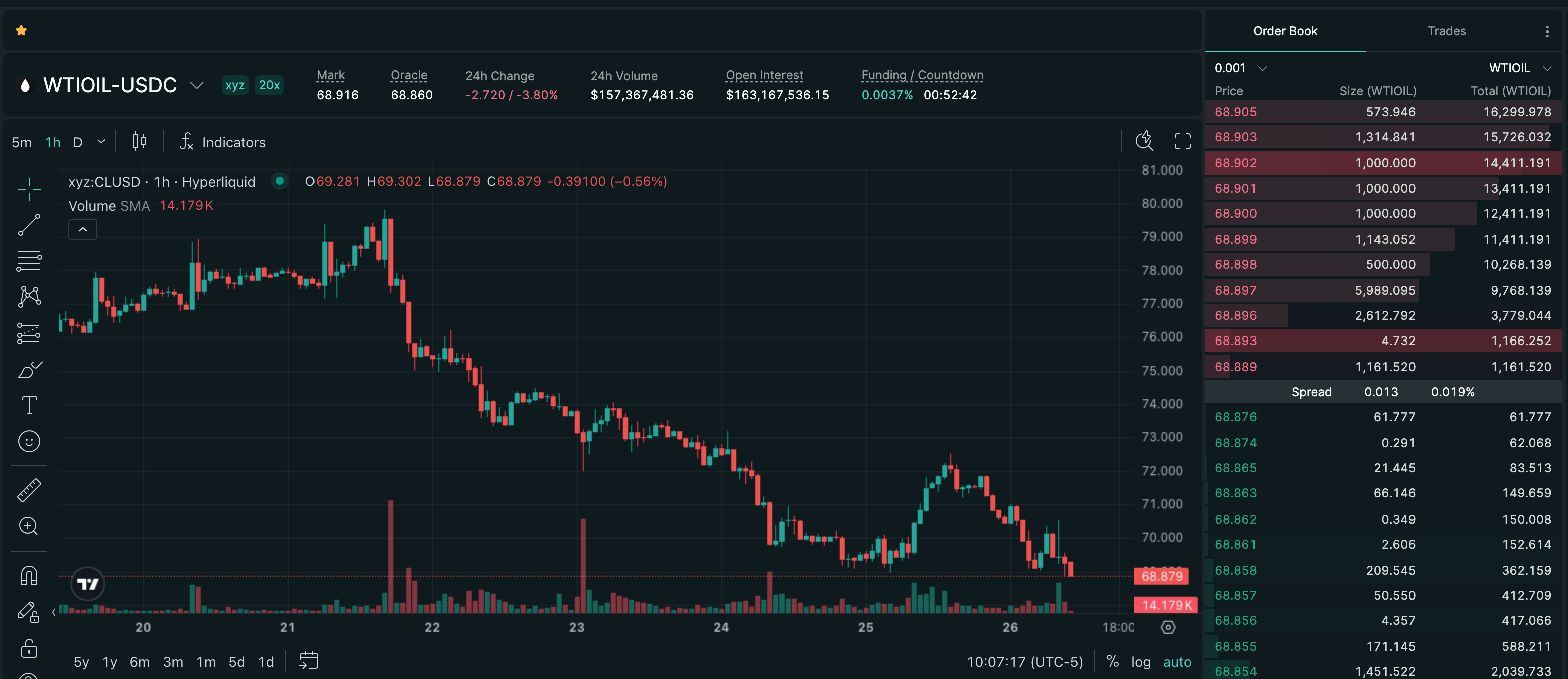
CL is at $69.01, down 4.63% over 20 hours, fully retracing the roughly 4% pop a tanker strike off Oman produced a day earlier. With the risk premium gone, the market is back to pricing what it was pricing before: a glut of barrels flowing freely through a reopened Strait of Hormuz. Energy Secretary Chris Wright says traffic is back to normal and prices will keep falling. The pre-war low is now the only level that matters.
Mover Brief
The Bounce That Didn't Hold
Yesterday's roughly 4% lift off ~$69 was never structural. It came from a Singapore-flagged ship taking an unidentified projectile off Oman, hours after Iran's IRGC warned vessels away from the US-backed Hormuz corridor — a risk-premium flicker on a thin book. That flicker is gone. Crude reversed the prior session's gains even with the vessel still in the headlines, and CL now sits at $69.01, down 4.63% over the last 20 hours. The market looked at the strike, decided it didn't change the supply picture, and sold the bounce. This is the cleaner read of the same setup we flagged a day ago: a one-off headline against a structurally bearish tape doesn't get to hold a bid.
Hormuz Is Open, and the Barrels Are Moving
The force underneath the price is supply, not geopolitics. The US-Iran framework that ended the war — a conflict that began February 28 and effectively blockaded the strait for nearly four months — reopened the corridor and lifted the US naval blockade. Since the deal, more than 20 tankers carrying about 35 million barrels have cleared Hormuz, and oil erased its wartime gains to the lowest level since February 27. Energy Secretary Chris Wright is pouring fuel on the move, declaring that flows are already "back to normal" and prices "will continue to head down", citing 55 merchant ships moving over 17 million barrels in a single day. Add the Iranian barrels Washington agreed to let sell immediately and restarting Gulf exports, and four months of bottled-up supply is hitting the tape at once.
The Pre-War Floor Is the Line Now
With the strike premium drained, WTI is parked at ~$69, its lowest since February 27 and right back where it traded before the war started — a third straight weekly decline. The question from here is binary: does the pre-war floor hold, or does the unwinding glut push straight through it? OPEC+ has the leverage to defend the level, but its next policy move hinges entirely on the pace of normalization, and right now normalization is winning. Another genuine threat to the corridor could spark a fresh flicker like yesterday's, but those are fades until proven otherwise. The base case the book is pricing is more barrels, not fewer.
Sources & Provenance
Citations below are preserved as structured Postgres source rows for this brief.
Citations Preserved
7
Reference links carried forward from the published mover record.
Original Signal
Open source tweetMarket Route
Direct route preserved for readers who want to inspect the tracked Hyperliquid market behind this archive entry.
Already onboarded? Open tracked market- 1CNBC: Oil erases wartime gains as Hormuz tanker traffic resumescnbc.com
- 2ABC News: Energy Secretary Wright forecasts more price declines, strait traffic 'normal'abcnews.com
- 3Al Jazeera: Oil falls as US, Iran sign framework to end waraljazeera.com
- 4CNBC: Brent below $80 as US to allow Iran to sell oil immediatelycnbc.com
- 5CNBC: Oil edges lower as market monitors Hormuz tanker trafficcnbc.com
- 6Reuters via Investing.com: Oil prices fall as tankers exit Strait of Hormuzinvesting.com
- 7Wikipedia: 2026 Strait of Hormuz crisisen.wikipedia.org
This content is for informational purposes only and does not constitute financial advice. Trading perpetual futures involves substantial risk of loss.
Trade CL on Hyperliquid
Use referral code HIPERWIRE for 4% off trading fees on your first $25M in volume.
Live Market Metrics
Monitor real-time open interest and funding for CL.