WTI Rips 8% After Trump Orders Naval Blockade of the Strait of Hormuz
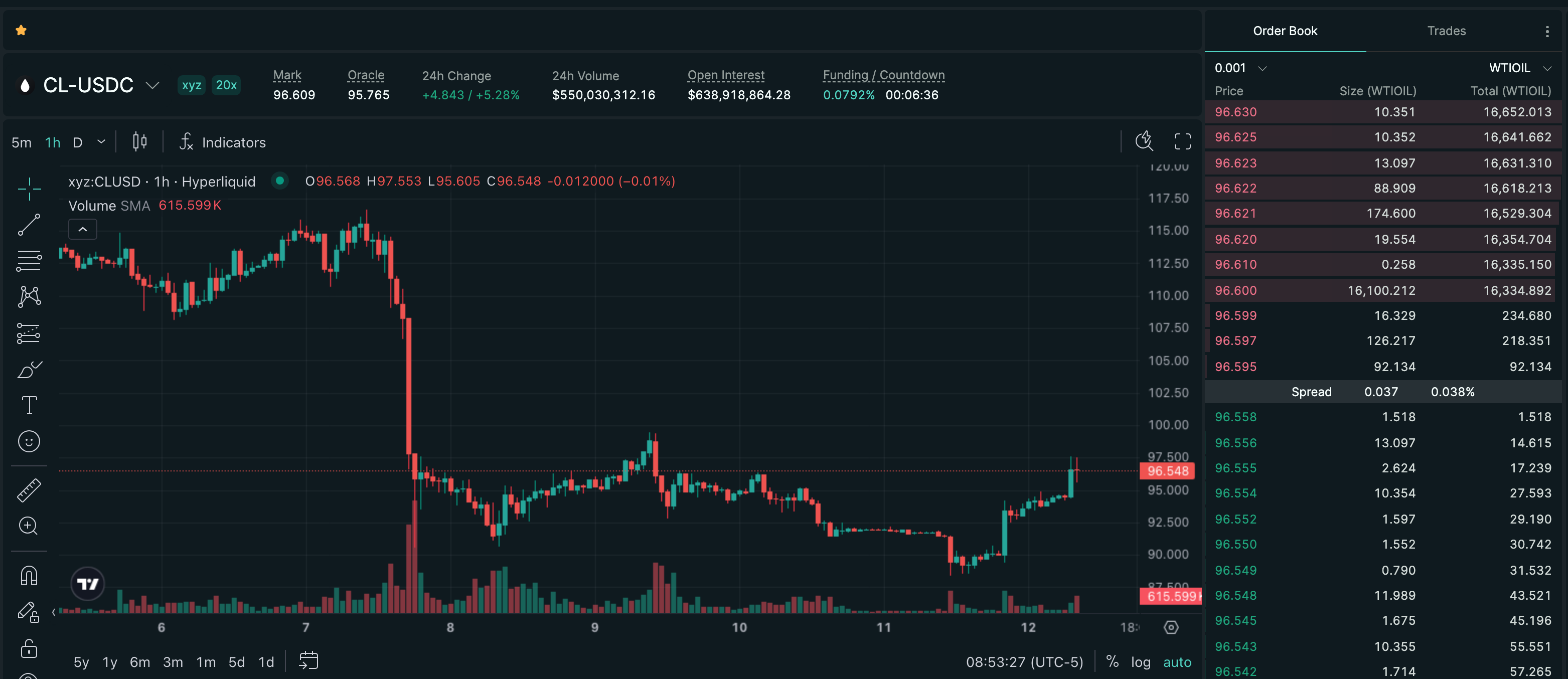
WTI crude ripped 8% off its weekly low after Trump ordered a US naval blockade of the Strait of Hormuz, escalating the standoff hours after 21-hour peace talks in Islamabad collapsed without a deal. Markets spent the week pricing in a peace dividend that never arrived, with futures dropping from $117 to under $89 before reversing hard on the realization that the world's most important oil chokepoint is staying closed.
Mover Brief
Islamabad Collapses, Trump Escalates
Twenty-one hours of face-to-face talks between Vice President JD Vance and Iranian Parliamentary Speaker Mohammad Bagher Ghalibaf ended without a deal early Sunday morning in Islamabad. Iran refused to abandon its nuclear program — Trump's stated prerequisite — and demanded the right to charge Hormuz transit tolls plus the release of $6 billion in frozen assets. Vance called it their "final and best offer" before flying home empty-handed.
Trump's response was immediate. He announced a US naval blockade of the Strait of Hormuz "effective immediately," warning that no ship paying Iranian tolls would receive safe passage. Then came the escalation: "At an appropriate moment, we are fully 'LOCKED AND LOADED,' and our Military will finish up the little that is left of Iran." Iranian lawmaker Mahmoud Nabavian answered in kind — the strait "will not be opened."
The Peace Trade Unwind
WTI spent the past week in freefall. Futures dropped from $117 to under $89 — a 24% drawdown and the steepest weekly decline in six years — as traders priced in a deal that never arrived. The entire move was a one-sided bet on Islamabad producing something. It didn't.
Now that trade is unwinding. CL ripped 8.34% off its lows in 19 hours, reclaiming $96 as the market processes the reality that Hormuz isn't reopening. The disconnect between futures and physical markets tells the whole story: the Brent-WTI spread peaked at $25/barrel on March 31 and averaged $11/barrel through March — the widest in over five years. US benchmarks were trading like the strait might reopen. Physical markets never agreed.
230 Tankers and a Third Carrier Group
The Strait of Hormuz has been effectively closed since February 28, when US-Israeli strikes on Iran triggered IRGC retaliation including mine deployments, 21 confirmed attacks on merchant ships, and GPS jamming across the waterway. Around 20 million barrels per day of oil normally transits through this chokepoint — roughly 20% of all global seaborne trade. Gulf exports have dropped from 25 million to approximately 10 million barrels per day, and 230 loaded tankers sit waiting in the Persian Gulf with nowhere to go.
The Pentagon is not waiting for diplomacy. US Navy destroyers tested a transit through Hormuz on Saturday, with Admiral Brad Cooper stating they had "begun the process of establishing a new passage." Underwater mine-clearing drones are deploying, and a third aircraft carrier group is en route along with thousands of Marines and long-range cruise missiles. Iran declared the transit a ceasefire violation and launched a drone that forced the destroyers to turn back.
Saudi Arabia has also taken direct hits — attacks on its oil facilities reduced production capacity by 600,000 barrels per day and cut East-West Pipeline throughput by another 700,000 bpd.
What Breaks This
Two things move this market fast in either direction.
On the downside: any credible diplomatic reopening of Hormuz triggers the same kind of long liquidation that took WTI from $117 to $89 in a week. Vance called Islamabad the US's "final and best offer," but markets have learned that ceasefire headlines and actual oil flow are different things — the April 8 ceasefire produced zero reopening.
On the upside: Trump's rhetoric points toward a second round of strikes. Rapidan Energy founder Bob McNally framed the military buildup as preparation for "round 2," noting that degrading Iran's ability to interdict shipping means simultaneously targeting anti-ship missiles, fast-attack boats, drones, submarines, and artillery. Any escalation threatening additional Gulf production — or triggering Iranian retaliation against Saudi or Emirati infrastructure — sends WTI well above its $117 weekly high.
OPEC+ is adding 206,000 barrels per day in April as part of its planned cut unwinding, but that is a rounding error against 10+ million barrels per day of disrupted Gulf exports.
Sources & Provenance
Citations below are preserved as structured Postgres source rows for this brief.
Citations Preserved
7
Reference links carried forward from the published mover record.
Original Signal
Open source tweetMarket Route
Direct route preserved for readers who want to inspect the tracked Hyperliquid market behind this archive entry.
Already onboarded? Open tracked market- 1NBC News: Trump announces Hormuz blockade after Islamabad talks collapsenbcnews.com
- 2NPR: U.S.-Iran peace talks in Islamabad collapsenpr.org
- 3Fortune: Navy tests Hormuz transit, mine-clearing ops beginfortune.com
- 4EIA: Crude oil and petroleum prices surged sharply in Q1 2026eia.gov
- 5CNBC: Vance returns from Islamabad without Iran dealcnbc.com
- 6Bloomberg: Strait of Hormuz remains blocked, hundreds of ships await passagebloomberg.com
- 7CNBC: Trump demands Hormuz open without tolls during ceasefirecnbc.com
This content is for informational purposes only and does not constitute financial advice. Trading perpetual futures involves substantial risk of loss.
Trade CL on Hyperliquid
Use referral code HIPERWIRE for 4% off trading fees on your first $25M in volume.
Live Market Metrics
Monitor real-time open interest and funding for CL.