Strait of Hormuz Crisis Puts Semiconductor Fabs on an Energy Clock
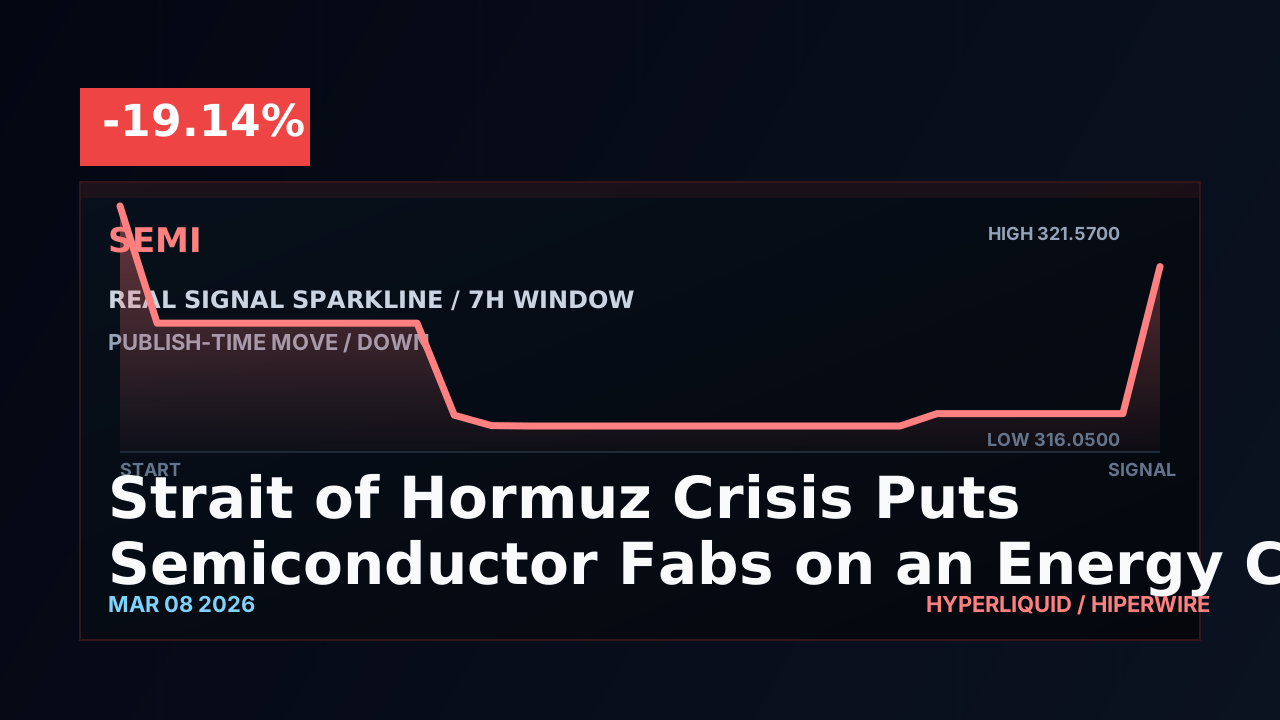
SEMI, a basket tracking roughly 30 U.S.-listed semiconductor companies, dropped 19% in seven hours as the Strait of Hormuz crisis entered its second week with no sign of resolution. Iran's closure of the strait and the drone strike on Qatar's Ras Laffan LNG complex have cut off a critical energy artery for the chip fabs in Taiwan and South Korea that produce the vast majority of the world's advanced semiconductors.
Mover Brief
The Energy Chokepoint
The Strait of Hormuz carries roughly one-fifth of the world's daily oil supply and a comparable share of global LNG. When the IRGC declared the strait closed on March 2 — days after joint U.S.-Israeli strikes on Iran — shipping through the waterway dropped roughly 70% almost immediately. Then on March 3, an Iranian drone attack hit Qatar's Ras Laffan complex, the world's largest LNG export facility, responsible for 20% of global LNG output. Qatar suspended production. European gas prices surged as much as 54% to their highest level in nearly four years.
This is not an oil-only problem. As one CEO warned on March 8, the Hormuz shutdown threatens sulfur, specialty chemicals, and the entire upstream supply chain that semiconductor fabrication depends on.
Why Chip Fabs Are Directly Exposed
Taiwan and South Korea sit at the center of global semiconductor production — roughly 70% of advanced chips for smartphones, PCs, and data centers come from Taiwan alone, and over half of the world's DRAM and NAND is made in South Korea. Both countries depend heavily on Persian Gulf LNG to power their grids, and neither has deep reserves. Taiwan holds under one month of LNG supply; South Korea has less than two months.
Qatar accounts for roughly 30% of Taiwan's LNG imports, and approximately 90% of Qatar and UAE gas production ships to Asia — nearly all of it through Hormuz. TSMC, which produces about 90% of the world's cutting-edge chips, runs fabs that consume enormous amounts of electricity around the clock. If LNG deliveries stay disrupted, Taiwan's grid is on a countdown.
The South Korean ruling party has already warned that domestic semiconductor production could be disrupted if key materials cannot be sourced from the Middle East. Samsung and SK Hynix together make up 40% of the KOSPI, and the index fell 12% in a single day — its largest drop on record — when Qatar shut down Ras Laffan.
Sector-Wide Damage
The selloff is broad and indiscriminate. The VanEck Semiconductor ETF (SMH) dropped roughly 3.7% on March 6 alone, closing at $380.56 against a prior close of $395.35. Individual names are faring worse: MACOM fell 9.4% on supply-chain and AI export fears, and memory stocks have been hit especially hard as the smartphone market faces its largest annual decline on record, with volumes forecast to fall 13%.
The convergence of a geopolitical energy shock with a structural demand collapse in consumer electronics has produced the kind of correlated, sector-wide selling that drags everything lower — chip designers, equipment vendors, and memory producers moving in lockstep. SEMI's 19% drawdown in seven hours reflects both the real risk to the semiconductor value chain and the thin liquidity of a niche perp market amplifying the underlying move.
What to Watch
The key variable is duration. Goldman Sachs estimates that a one-month blockade of Hormuz could more than double European gas prices from current levels, and the knock-on effects for Asian spot LNG — already trading at steep premiums — would be severe. Taiwan's reserves give it weeks, not months.
If Ras Laffan stays offline and strait transit remains below 30% of normal, the market will start pricing in actual production cuts at TSMC and the Korean memory fabs rather than just the risk of them. That is a materially different scenario — one that would affect not just semiconductor stocks but every sector downstream that depends on chips, from automotive to AI infrastructure. For now, the market is treating this as a risk repricing. Whether it becomes a supply crisis depends on whether Iran backs down or doubles down.
Sources & Provenance
Citations below are preserved as structured Postgres source rows for this brief.
Citations Preserved
6
Reference links carried forward from the published mover record.
Original Signal
Open source tweetMarket Route
Direct route preserved for readers who want to inspect the tracked Hyperliquid market behind this archive entry.
Already onboarded? Open tracked market- 1Taipei Times — Hormuz is a Hidden Shoal for the AI Economytaipeitimes.com
- 2Taiwan News — Qatar LNG Supply Threatened After Drone Attacktaiwannews.com.tw
- 3Al Jazeera — IRGC Says Iran in Complete Control of Strait of Hormuzaljazeera.com
- 4Trefis — MACOM Stock Down 9.4% in Semiconductor Sellofftrefis.com
- 5BusinessToday — Hormuz Shutdown Could Choke Sulfur, Chip and Fertilizer Supplybusinesstoday.in
- 6Gasworld — Semiconductor Supply Chain Challenges From Gulf Crisisgasworld.com
This content is for informational purposes only and does not constitute financial advice. Trading perpetual futures involves substantial risk of loss.
Trade SEMI on Hyperliquid
Use referral code HIPERWIRE for 4% off trading fees on your first $25M in volume.
Live Market Metrics
Monitor real-time open interest and funding for SEMI.