Iran Turns Back Chinese COSCO Ships at Hormuz as WTI Touches $100
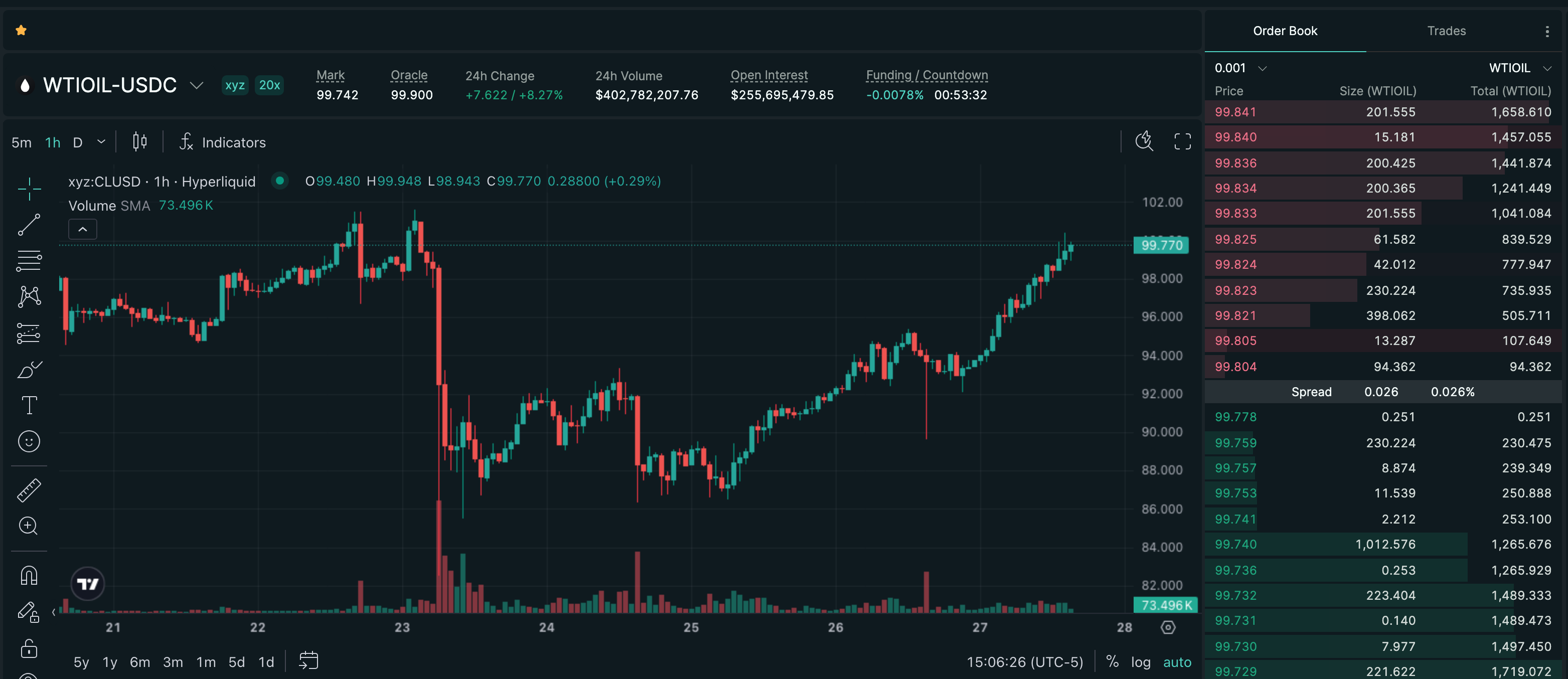
Iran blocked two Chinese COSCO container ships from transiting the Strait of Hormuz on March 27, signaling the blockade is no longer limited to adversary-flag vessels. WTI crude hit an intraday high of $100.04 — the first triple-digit print since July 2022 — and closed at $99.64, up 5.46% on the session. Tehran simultaneously rejected the US 15-point peace framework outright, with Foreign Minister Araghchi declaring no negotiations are planned.
Mover Brief
The Blockade Escalates
The sharpest catalyst for Friday's move was not another diplomatic failure — it was two Chinese COSCO container ships getting turned back at the Strait of Hormuz. China is Iran's most important economic partner, and Tehran had previously signaled that friendly-flag vessels could transit. That changed on March 27.
The incident strips away one of the market's last sources of comfort: the idea that Iran was running a selective blockade, letting allied shipping through while squeezing adversaries. If COSCO ships are getting rejected, the Hormuz chokepoint is functionally closed to everyone. Daily transits have collapsed to 4 vessels per day versus a pre-conflict average of 120. Nearly 17.8 million barrels per day of oil and fuel flows remain disrupted, with an estimated 500 million barrels of total liquids lost since the conflict began on February 28.
WTI hit $100.04 intraday before settling at $99.64 — the highest close since July 2022, when Russia's invasion of Ukraine was the dominant energy shock. Brent settled at $112.57, up 4.22%.
Diplomacy Dead on Arrival
The diplomatic backdrop made the COSCO incident worse. On March 26, US special envoy Steve Witkoff presented Iran with a 15-point peace proposal through Pakistani intermediaries. Tehran's response was unambiguous: an Iranian Foreign Ministry spokesperson called the proposal "unreasonable and a violation of sovereignty" and demanded war reparations plus a full US military withdrawal from the Persian Gulf.
Foreign Minister Abbas Araghchi went further on state television: "No negotiations have happened with the enemy until now, and we do not plan on any negotiations."
Trump responded by extending his pause on strikes against Iranian energy infrastructure by 10 days to April 6, claiming talks were "going well" despite Tehran's public denial. The market read through the spin — the pause buys time, but without a credible negotiating channel, there is no mechanism to reopen the strait.
From Buffered to Fragile
Rystad Energy chief oil analyst Paola Rodriguez-Masiu framed the shift clearly: "For nearly four weeks, markets have shown remarkable resilience … supported by a combination of pre-war surplus, crude-on-water, and policy barrels that provided a temporary buffer. That phase is now ending." Rystad's assessment is that the global system has moved from "buffered to fragile" after sustained supply losses and inventory drawdowns.
Goldman Sachs head of oil research Daan Struyven estimates an $18 per barrel geopolitical risk premium already baked into prices, warning that Brent could exceed its 2008 all-time high if disrupted flows persist. Oil is now up over 40% from pre-conflict levels.
The bearish case is thin but real: EIA data for the week ending March 20 showed a US crude inventory build, the fifth straight weekly surplus — evidence that domestic production and SPR releases are partially compensating. But a weekly inventory build cannot offset 17.8 million barrels per day of disrupted flows indefinitely. The April 6 energy-strike deadline is the next inflection point. If it passes without a deal, the market will price in a Q2 where Hormuz stays shut and spare capacity is effectively zero.
Sources & Provenance
Citations below are preserved as structured Postgres source rows for this brief.
Citations Preserved
7
Reference links carried forward from the published mover record.
Original Signal
Open source tweetMarket Route
Direct route preserved for readers who want to inspect the tracked Hyperliquid market behind this archive entry.
Already onboarded? Open tracked market- 1CNBC — Oil prices close at highest since 2022 as Iran negotiations failcnbc.com
- 2Al Jazeera — Oil prices rise as Iran denies US talksaljazeera.com
- 3NBC News — Iran says it has no plans for negotiations with the USnbcnews.com
- 4Axios — Trump extends Iran energy strikes pause to April 6axios.com
- 5FX Leaders — WTI surges 4.6% as Iran rejects peace talksfxleaders.com
- 6EIA Weekly Petroleum Status Reporteia.gov
- 7CBS News — Trump extends pause, Witkoff floats 15-point proposalcbsnews.com
This content is for informational purposes only and does not constitute financial advice. Trading perpetual futures involves substantial risk of loss.
Trade CL on Hyperliquid
Use referral code HIPERWIRE for 4% off trading fees on your first $25M in volume.
Live Market Metrics
Monitor real-time open interest and funding for CL.