WTI Nears $100 as Ukraine Cripples Russian Baltic Oil Exports While Hormuz Stays Shut
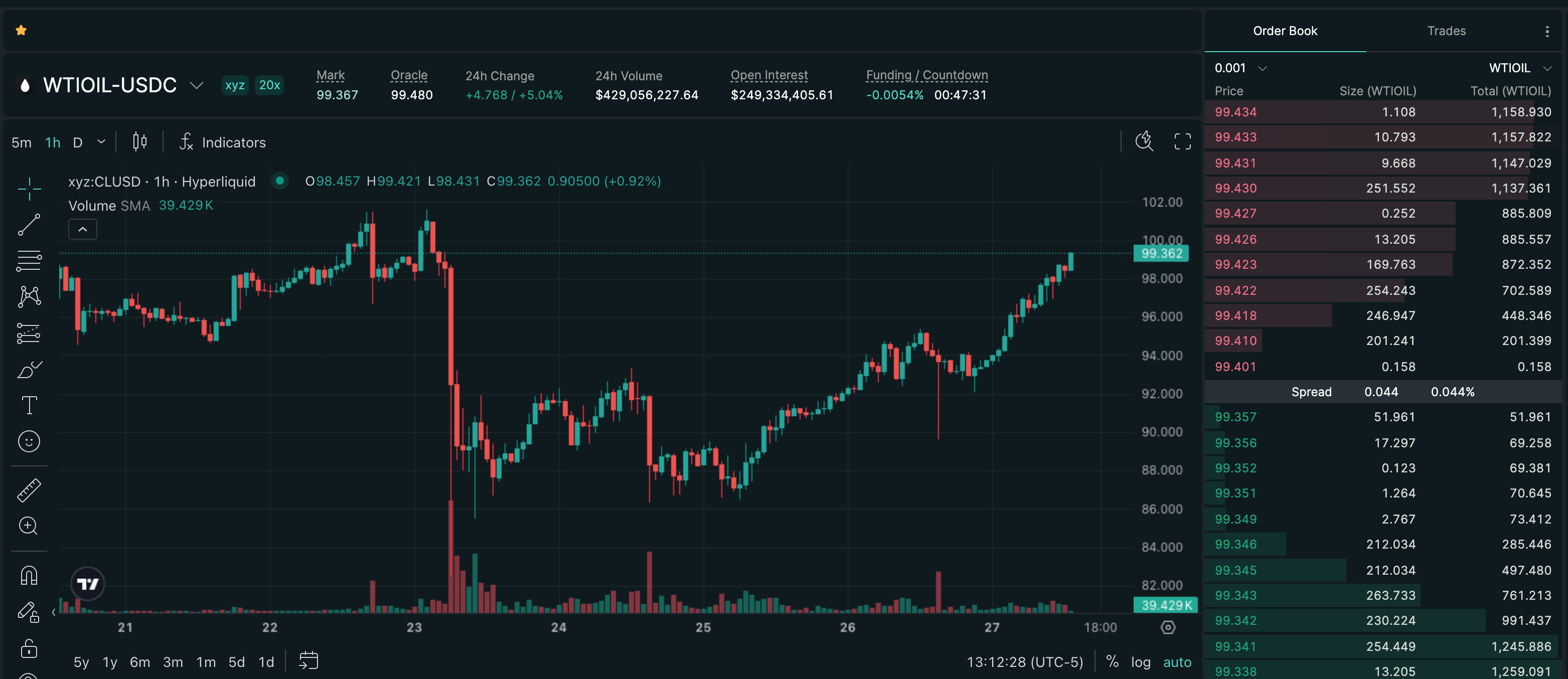
Two independent supply shocks are now running simultaneously. Ukrainian drone strikes on Primorsk, Ust-Luga, and a major Leningrad refinery have halted an estimated 2.3 million barrels per day of Russian oil exports — the worst disruption in Russia's modern history — while the Strait of Hormuz remains effectively closed with traffic down 95% since March 2. WTI has gained nearly 40% in a month.
Mover Brief
The Second Supply Shock
The Iran-Hormuz crisis has dominated oil markets since late February, but the catalyst for WTI's push toward $100 is a second, independent disruption: Ukraine's coordinated drone campaign against Russian oil infrastructure along the Baltic Sea.
The strikes came in rapid succession. On March 23, drones hit fuel reservoirs at Primorsk, Russia's largest Baltic loading port. Two days later, Ukraine launched its biggest overnight drone attack of the year against the Ust-Luga oil terminal — 948 drones and 34 missiles in 24 hours. On March 26, the Kirishinefteorgsintez refinery in the Leningrad region took hits, a facility processing roughly 350,000 barrels per day — about 7% of Russia's total refining capacity.
Reuters calculates the combined effect at approximately 2.3 million barrels per day offline, factoring in the Baltic port damage, reduced Black Sea traffic through Novorossiysk, the Druzhba pipeline halt since January, and seizures of shadow-fleet tankers. That is 40% of Russia's total crude export capacity — the most severe disruption in the country's modern history as an oil exporter.
Hormuz Stays Closed, Pipelines Can't Compensate
The Strait of Hormuz has been effectively shut since March 2, with traffic down more than 95% and roughly 2,000 foreign-flagged ships stuck on either side. Iran is operating what analysts call a 'toll booth' system — a vetting regime run by the IRGC that selectively allows certain vessels through, primarily Chinese-flagged ships, while charging transit fees in yuan.
The three pipeline alternatives that could bypass the strait — Saudi Arabia's East-West Petroline, the UAE's ADCOP line, and Iraq's Kirkuk-Ceyhan route — have a combined capacity of roughly 9 million barrels per day, covering only 45% of the strait's normal 20 million bpd throughput. Saudi Arabia has ramped Petroline flows from 770,000 bpd in January-February to 2.9 million bpd by March 25, but every route faces its own vulnerability — the Petroline terminates at Red Sea ports within Houthi strike range, and the Kirkuk-Ceyhan line is within range of Iranian missiles.
Diplomacy has produced nothing. Iran's five-point counterproposal demands permanent sovereignty over the strait, including toll rights — fundamentally incompatible with Washington's demand to reopen it. Trump extended the deadline for military action on Iran's energy infrastructure to April 6, which briefly eased Brent back from its $126 peak, but the underlying supply deficit hasn't changed.
The Market Math
The numbers explain why WTI is ignoring bearish domestic data. The EIA reported a 6.926 million barrel build for the week ending March 20 — the fifth consecutive weekly surplus and nearly 14 times consensus. In normal conditions, that pressures prices. Instead, WTI added another 5% this week.
The global supply picture overrides U.S. stockpile data. Between Hormuz (8+ million bpd disrupted) and the Russian export cuts (2.3 million bpd), the market is dealing with the removal of over 10 million barrels per day of export capacity from a system where global demand averages 103 million bpd against supply capacity of roughly 104 million. The spare-capacity cushion is gone.
Brent is at $107.81, and the Brent-WTI spread has blown past $12 — the widest in over a decade — reflecting the acute premium global buyers are paying for waterborne crude. WTI has gained roughly 40% in a single month, from $71 in late February to $99 today. The irony for Moscow: Russia was positioned to profit from the Iran crisis by selling more crude to Asia at elevated prices, but Ukraine's strikes specifically targeted that advantage, cutting the export routes Russia needed to capitalize on $100+ oil.
Sources & Provenance
Citations below are preserved as structured Postgres source rows for this brief.
Citations Preserved
7
Reference links carried forward from the published mover record.
Original Signal
Open source tweetMarket Route
Direct route preserved for readers who want to inspect the tracked Hyperliquid market behind this archive entry.
Already onboarded? Open tracked market- 1NBC News — At Least 40% of Russia's Oil Export Capacity Halted (Reuters calculations)nbcnews.com
- 2Al Jazeera — Can Three Pipelines Help Oil Escape the Strait of Hormuz?aljazeera.com
- 3Moscow Times — Ukraine Hits Ust-Luga Oil Terminal in Largest Drone Attack of the Yearthemoscowtimes.com
- 4Al Jazeera — Tehran's Toll Booth: How Iran Picks Who Passes Through Hormuzaljazeera.com
- 5Dallas Fed — What the Closure of the Strait of Hormuz Means for the Global Economydallasfed.org
- 6Wikipedia — 2026 Strait of Hormuz Crisisen.wikipedia.org
- 7Bloomberg — Ukrainian Attacks Threaten Russia's Oil Profits From Iran Warbloomberg.com
This content is for informational purposes only and does not constitute financial advice. Trading perpetual futures involves substantial risk of loss.
Trade CL on Hyperliquid
Use referral code HIPERWIRE for 4% off trading fees on your first $25M in volume.
Live Market Metrics
Monitor real-time open interest and funding for CL.