Micron Beats Every Q2 Estimate and Still Drops 8% — The Memory Paradox in One Chart
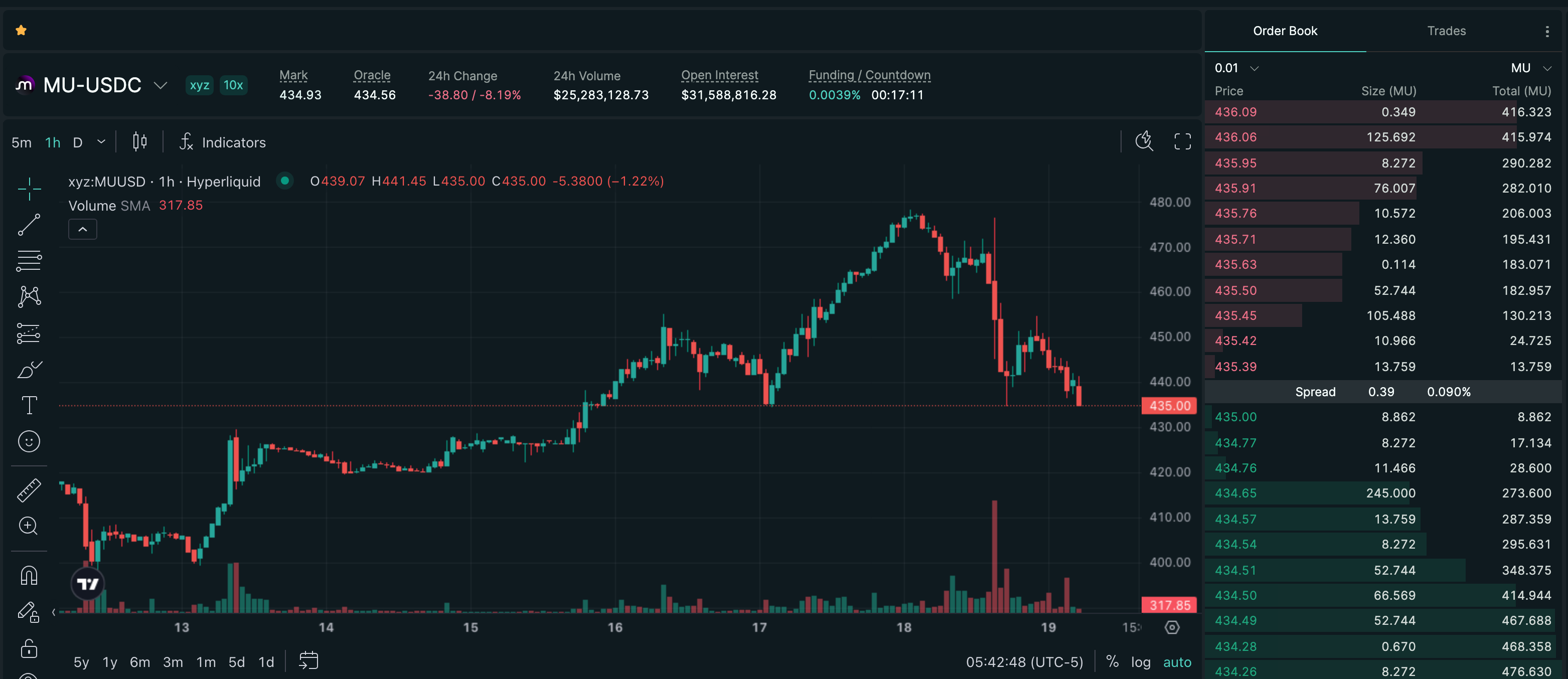
Micron posted $23.86 billion in fiscal Q2 revenue and $12.20 in adjusted EPS, crushing consensus by double digits on both lines. The stock sold off anyway. CEO Sanjay Mehrotra warned that PC and smartphone units could decline in the low double digits in calendar 2026 as Micron's own pricing power — the thing printing record margins — chokes downstream device demand. A broader market rout driven by escalating Iran-Israel tensions on March 19 accelerated the move.
Mover Brief
The Beat Nobody Rewarded
Micron reported fiscal Q2 2026 results after the close on March 18 that were, by any normal standard, exceptional. Revenue came in at $23.86 billion versus the $20.07 billion consensus — a 196% year-over-year increase and 75% sequential gain, marking a fourth straight quarter of records. Adjusted EPS hit $12.20 against the Street's $9.31. Operating cash flow reached $11.90 billion, up from $3.94 billion a year ago. Adjusted free cash flow was $6.9 billion. The board raised the dividend 30%.
The Q3 guide was even more aggressive: $33.5 billion in revenue, $19.15 in adjusted EPS, and gross margins around 81%. That margin number alone — up from the mid-50s just two quarters ago — tells you everything about the supply-demand imbalance in memory right now.
None of it mattered. MU dropped 4.4% in after-hours trading on March 18 and continued lower through the March 19 session, compounding to an 8% decline from the pre-earnings close of $461.73.
The Consumer Problem Micron Created
The catalyst for the selloff wasn't the numbers — it was the subtext. Mehrotra told analysts that PC and smartphone units could decline in the low double digits in calendar 2026 due to supply constraints. That's a polite way of saying Micron's own pricing power is destroying downstream demand.
Gartner quantified this dynamic in a February report: memory prices are projected to climb 130% by year-end, driving PC prices up 17% and smartphone prices up 13%. The result is a forecast for PC shipments to fall 10.4% and smartphone shipments to drop 8.4% — the steepest contraction in over a decade. IDC's numbers are even worse: PCs down 11.3%, smartphones down 12.9%.
Entry-level devices get hit hardest. Gartner expects basic smartphone buyers to exit the market five times faster than premium buyers. The memory boom is great for Micron's margins but corrosive to the volume story outside of data centers — and investors just noticed.
Sell-the-News Meets Geopolitics
The earnings reaction didn't happen in a vacuum. MU had already run 65% year-to-date heading into the print, hitting a high near $471 on March 18. At those levels, even a blowout quarter triggers profit-taking — especially when the capex guide lands at $25 billion-plus for fiscal 2026, with construction-related spending set to jump another $10 billion in fiscal 2027. That kind of capital intensity reintroduces the memory cycle risk that the AI narrative was supposed to have neutralized.
Then March 19 delivered a macro hit. Escalating hostilities between U.S.-Israeli forces and Iran sent oil higher and equities lower across the board. The Fed flagged energy-driven inflation risks. Semiconductors, already under post-earnings pressure, caught the worst of it. MU's 8% drawdown is partly Micron-specific and partly a broader risk-off move that punished the most extended names in tech.
What This Sets Up
The paradox is that Micron's fundamental position has never been stronger. HBM supply is sold out for all of 2026. Data center revenue is on a vertical trajectory. The Q3 guide implies sequential revenue growth of 40% — a number that would be absurd for almost any other company at this scale. Gross margins at 81% put Micron in the same territory as software businesses, not hardware cyclicals.
But the market is now pricing the other side of the trade: what happens when 130% memory price increases kill enough consumer demand that the cycle turns. SK Group's chairman has said the memory shortage will last until 2030, which would support the supercycle thesis — but that's a supplier talking his book. The $25 billion-plus capex cycle from Micron alone, plus Samsung and SK Hynix expansion, means new supply is coming. The question is whether AI demand absorbs it before consumer weakness creates a glut in commodity DRAM and NAND.
For now, the 8% pullback has brought MU back to roughly where it was before the pre-earnings analyst upgrade wave. The next test is whether the Q3 print in June confirms the margin trajectory or whether the consumer headwinds start showing up in the mix.
Sources & Provenance
Citations below are preserved as structured Postgres source rows for this brief.
Citations Preserved
6
Reference links carried forward from the published mover record.
Original Signal
Open source tweetMarket Route
Direct route preserved for readers who want to inspect the tracked Hyperliquid market behind this archive entry.
Already onboarded? Open tracked market- 1CNBC — Micron Q2 2026 Earnings Reportcnbc.com
- 2TechPowerUp — Micron Reports Q2 Fiscal 2026 Resultstechpowerup.com
- 3EBC Financial — Why MU Stock Dropped After Beating Earningsebc.com
- 4Gartner — Surging Memory Costs to Reduce PC and Smartphone Shipmentsgartner.com
- 5Investing.com — Micron Q2 2026 Earnings Call Transcriptinvesting.com
- 6Tom's Hardware — SK Group Chairman: Memory Shortage Until 2030tomshardware.com
This content is for informational purposes only and does not constitute financial advice. Trading perpetual futures involves substantial risk of loss.
Trade MU on Hyperliquid
Use referral code HIPERWIRE for 4% off trading fees on your first $25M in volume.
Live Market Metrics
Monitor real-time open interest and funding for MU.