Iran's Hormuz Blockade and a Payrolls Miss Put Micron in a Vise
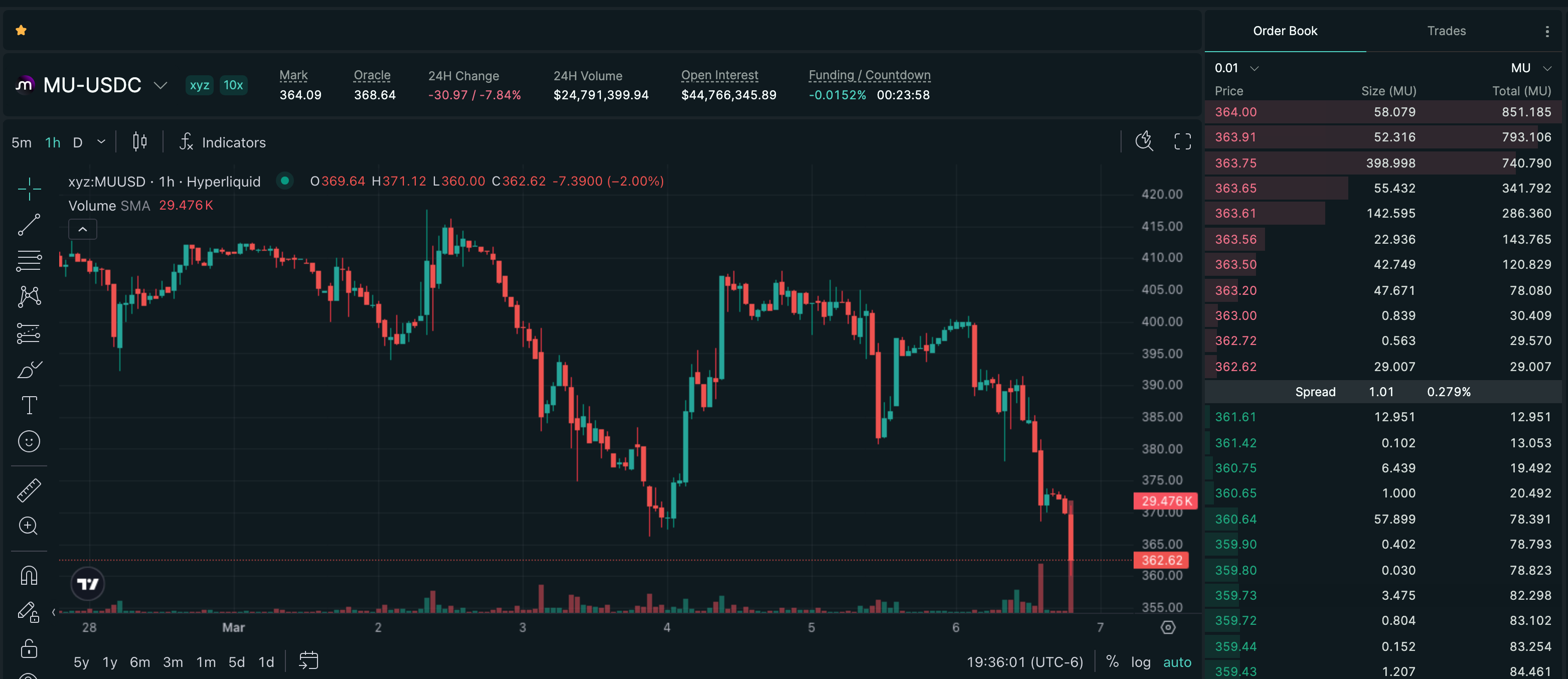
Micron has dropped over 9% in 20 hours as Iran's closure of the Strait of Hormuz triggered a historic selloff in Korean memory stocks, with SK Hynix falling 9.6% and Samsung losing 11.7% in a single session. A worse-than-expected February jobs report compounded the damage, and the combination of spiking energy costs for semiconductor fabs and mounting recession fears has put the entire memory complex under pressure heading into Micron's March 18 earnings.
Mover Brief
The Hormuz Shock
The primary catalyst is geopolitical. On March 2, Iran ordered the closure of the Strait of Hormuz in retaliation for joint U.S.-Israeli military strikes that killed Supreme Leader Ali Khamenei. Tanker traffic through the strait — which carries roughly one-fifth of global oil consumption — dropped to near zero as Iran threatened to attack any ship attempting passage. Over 150 vessels anchored outside the strait to wait it out.
Crude oil topped $80 per barrel by midweek, and Wall Street commodities strategists warned prices could breach $100 if the closure persists. RBC Capital Markets' Helima Croft called it "the biggest energy crisis since the oil embargo in the 1970s." For Micron, this isn't just a macro headwind — it's a direct threat to the cost structure of its biggest competitors and the demand environment for its products.
Korea's Fabs Face an Energy Crisis
The Hormuz closure hit Korean semiconductor stocks with unusual force. South Korea's KOSPI crashed 7% on March 3, wiping out $270 billion in market value and triggering circuit breakers for the first time in 576 days. SK Hynix fell 9.6%. Samsung lost 11.7%.
The reason is structural: South Korea imports roughly 70% of its crude from the Middle East, much of it through the Strait of Hormuz. Over 55% of the country's electricity comes from imported coal and LNG. Korean memory fabs run 24/7 and consume enormous power — when LNG prices spike, fab operating costs follow directly. A sustained Hormuz closure doesn't just raise energy prices; it threatens the viability of running these facilities at current margins.
Micron competes head-to-head with SK Hynix and Samsung in DRAM and NAND. While higher costs for Korean rivals could theoretically benefit Micron's competitive position, the near-term effect is a sector-wide risk repricing that drags everything down.
Payrolls Miss Compounds the Damage
The February jobs report landed Friday morning and made things worse. The economy shed 92,000 nonfarm jobs, nearly double the 50,000 consensus estimate. Unemployment ticked up to 4.4%. December's numbers were revised down sharply — from +48,000 to -17,000 — meaning the economy has now lost jobs in three of the last five months.
For a cyclical name like Micron, this data cuts both ways. Weakening employment directly threatens consumer and enterprise demand for memory-intensive products. It also complicates the Fed's path — with oil prices rising on geopolitical supply shocks and the labor market softening simultaneously, the central bank faces a stagflationary setup that limits its ability to cut rates in support.
Into Earnings With a Changed Setup
Micron reports fiscal Q2 results on March 18, with consensus expecting $8.50 per share — a 445% year-over-year increase — on $18.87 billion in revenue. The AI-driven HBM story remains intact on paper, but the market context around it has shifted materially.
Nvidia halted production of H200 chips for the Chinese market this week, and the U.S. is reportedly considering export license requirements for AI processor sales to all foreign countries. Since Micron's HBM chips are key components in Nvidia's and AMD's high-end processors, any friction in the AI chip supply chain flows upstream. Morgan Stanley shifted its semiconductor preference from Micron to Nvidia, adding another headwind.
The stock is now down 13.3% over 20 days. Insider selling has been notable — CEO Sanjay Mehrotra sold shares as low as $201.89 in Q4 2025, and other officers sold in the $337–$431 range through January and February. Institutional investors still hold 80.84% of shares, but the setup going into earnings is meaningfully more uncertain than it was two weeks ago.
Sources & Provenance
Citations below are preserved as structured Postgres source rows for this brief.
Citations Preserved
7
Reference links carried forward from the published mover record.
Original Signal
Open source tweetMarket Route
Direct route preserved for readers who want to inspect the tracked Hyperliquid market behind this archive entry.
Already onboarded? Open tracked market- 1Al Jazeera — Shutdown of Hormuz Strait raises fears of soaring oil pricesaljazeera.com
- 2CNBC — Oil and natural gas surge after Iran orders Strait of Hormuz closurecnbc.com
- 3CNBC — U.S. crude oil tops $80 per barrel as escalating Iran war disrupts global fuel suppliescnbc.com
- 4Disruption Banking — KOSPI plunges 7%, $270B wiped out in Iran war shockdisruptionbanking.com
- 5Bureau of Labor Statistics — Employment Situation Summary, February 2026bls.gov
- 6Semafor — Nvidia stops making China-bound AI chipssemafor.com
- 7ainvest — Micron's 8% drop: a flow analysis of the selloffainvest.com
This content is for informational purposes only and does not constitute financial advice. Trading perpetual futures involves substantial risk of loss.
Trade MU on Hyperliquid
Use referral code HIPERWIRE for 4% off trading fees on your first $25M in volume.
Live Market Metrics
Monitor real-time open interest and funding for MU.