WTI Reclaims $91 as Saudi Arabia and UAE Edge Toward Joining the Iran War
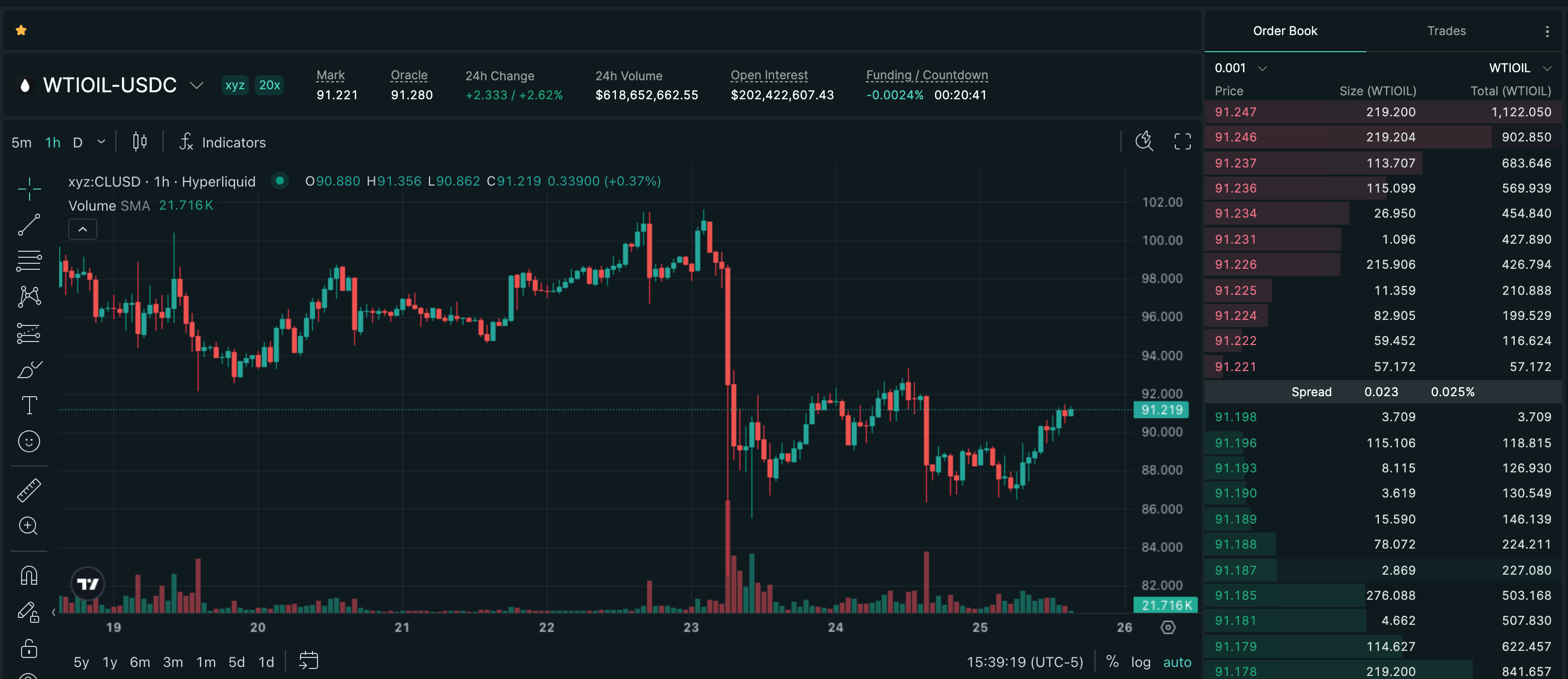
WTI crude snapped back above $91 in under 48 hours, erasing most of the 12% selloff triggered by Trump's since-debunked claims of productive Iran negotiations. The catalyst for the reversal: a Wall Street Journal report that Saudi Arabia and the UAE are inching toward active participation in the US-Israel campaign against Iran, with Riyadh granting access to King Fahd Air Base. A separate explosion at Valero's 380,000 bpd Port Arthur refinery compounded the supply picture on the same day the war premium reasserted itself.
Mover Brief
The De-escalation That Wasn't
CL's 12% drop on March 23 was the third de-escalation trade of the month — each triggered by Trump claiming progress toward ending the Iran conflict, each unwinding within days. This time the catalyst was a Truth Social post claiming "very good and productive conversations" with Iran, which was briefly deleted and reposted with edits. Iran's parliament speaker Ghalibaf called the talks "fake news designed to manipulate oil markets". Iran's Foreign Ministry acknowledged receiving messages from "friendly countries" but denied any direct bilateral contact.
The pattern is now familiar enough that the market's response time is compressing. The first de-escalation dump in early March took nearly a week to reverse. The second took three days. This one unwound in under 48 hours, with WTI recovering from $87 to above $91 as each pillar of the ceasefire narrative — the unnamed intermediaries, the Swiss "framework," Trump's five-day strike pause — failed to produce any verifiable follow-through.
Gulf States Cross the Rubicon
The proximate driver for the snapback was a Wall Street Journal report that Saudi Arabia and the UAE are "inching toward" joining the US-Israel campaign. Riyadh granted the US military access to King Fahd Air Base in Taif — an apparent reversal after both kingdoms initially insisted their bases could not be used to attack Iran. The UAE separately informed Washington it is prepared for the conflict to last up to nine months.
The shift makes strategic sense from the Gulf states' perspective. The UAE has intercepted 338 ballistic missiles and 1,740 drones since February 28. Saudi Arabia's Eastern Province has been targeted repeatedly. Iran struck Kuwait International Airport, sparking a fire. At some point, absorbing attacks without fighting back becomes more costly than joining the coalition — and that tipping point appears to have arrived.
For oil, the implication is direct: the conflict's geographic footprint is widening, not narrowing. Saudi and Emirati military participation reduces the probability of a near-term ceasefire and increases the chance of further infrastructure damage on both sides of the Gulf. The Pentagon's decision to deploy elements of the 82nd Airborne Division — fewer than 1,500 ground troops — reinforces that Washington is preparing for sustained operations, not a withdrawal.
Supply Tightening From Both Directions
Separate from the geopolitics, the US lost 380,000 barrels per day of refining capacity when Valero's Port Arthur facility exploded on the evening of March 23. The blast at a 47,000 bpd diesel hydrotreater unit forced a full refinery shutdown — Valero's largest facility, responsible for a meaningful share of Gulf Coast diesel output. The fire burned for five hours and triggered shelter-in-place orders across Port Arthur.
The timing compounds the war premium. With the Strait of Hormuz still effectively closed — Iran has refused to even discuss reopening while under attack — and a major domestic refinery offline, the supply picture is tightening from both directions simultaneously. The EIA's weekly report showed a +6.156 million barrel crude inventory build, the kind of number that would normally pressure prices. Instead, WTI shrugged it off entirely. When a bearish inventory print can't hold crude down, the war premium is in control.
Sources & Provenance
Citations below are preserved as structured Postgres source rows for this brief.
Citations Preserved
6
Reference links carried forward from the published mover record.
Original Signal
Open source tweetMarket Route
Direct route preserved for readers who want to inspect the tracked Hyperliquid market behind this archive entry.
Already onboarded? Open tracked market- 1Times of Israel — WSJ: Saudi Arabia and UAE 'inching toward' joining fighting against Irantimesofisrael.com
- 2Middle East Eye — Saudi Arabia and UAE inch closer to US-Israeli war on Iranmiddleeasteye.net
- 3CBS News — Iran war: Pentagon expected to send 82nd Airborne troops to Middle Eastcbsnews.com
- 4MarineLink — Explosion forces shutdown of Valero's 380,000 bpd Port Arthur refinerymarinelink.com
- 5Al Jazeera — Iran's closure of the Strait of Hormuz is an international crisisaljazeera.com
- 6Investing.com — EIA crude oil inventories March 25 releaseinvesting.com
This content is for informational purposes only and does not constitute financial advice. Trading perpetual futures involves substantial risk of loss.
Trade CL on Hyperliquid
Use referral code HIPERWIRE for 4% off trading fees on your first $25M in volume.
Live Market Metrics
Monitor real-time open interest and funding for CL.